Can Cats Eat Cheese? Lactose, Fat, and Safe Treat Limits
If you've ever watched a cat's eyes lock onto a dropped cube of cheddar, you already know how this story starts. So — can cats eat cheese? The honest answer is: only in a very small amount, and only occasionally. The bigger questions, whether do cats like cheese and is cheese bad for cats, are wrapped up in the same fact: most adult cats are lactose-intolerant, so a food they often crave is one their digestion isn't built to handle.
Cheese isn't toxic the way some human foods are, but it isn't a natural fit for a cat either. Cats are obligate carnivores, and dairy simply isn't part of what their bodies expect. A tiny piece of plain, hard, aged cheese now and then is the outer limit of what's reasonable — and anything flavored with garlic, onion, or herbs, or any mold-ripened blue cheese, is off the table entirely.
Key takeaways
- Most adult cats are lactose-intolerant, so cheese is not a natural fit for their digestion, no matter how much they seem to want it.
- A pea-sized piece of plain, hard, aged cheese, given rarely, is the outer limit — not a regular treat.
- Never offer cheese with garlic, onion, herbs, or any mold-ripened or blue variety, as these carry real toxicity risks.
Cheese for Cats — Quick Reference
| Cheese type | Lactose level | Safe verdict |
|---|---|---|
| Hard aged (e.g. cheddar, parmesan) | Low | Rare, tiny piece OK |
| Semi-hard (e.g. mozzarella) | Moderate | Very occasional only |
| Soft / fresh (e.g. cream cheese, cottage cheese) | High | Avoid |
| Flavored (e.g. garlic-onion, herb) | Toxic additives | Never |
| Blue / mold-ripened (e.g. roquefort) | High + mold risk | Never |
Can Cats Eat Cheese?
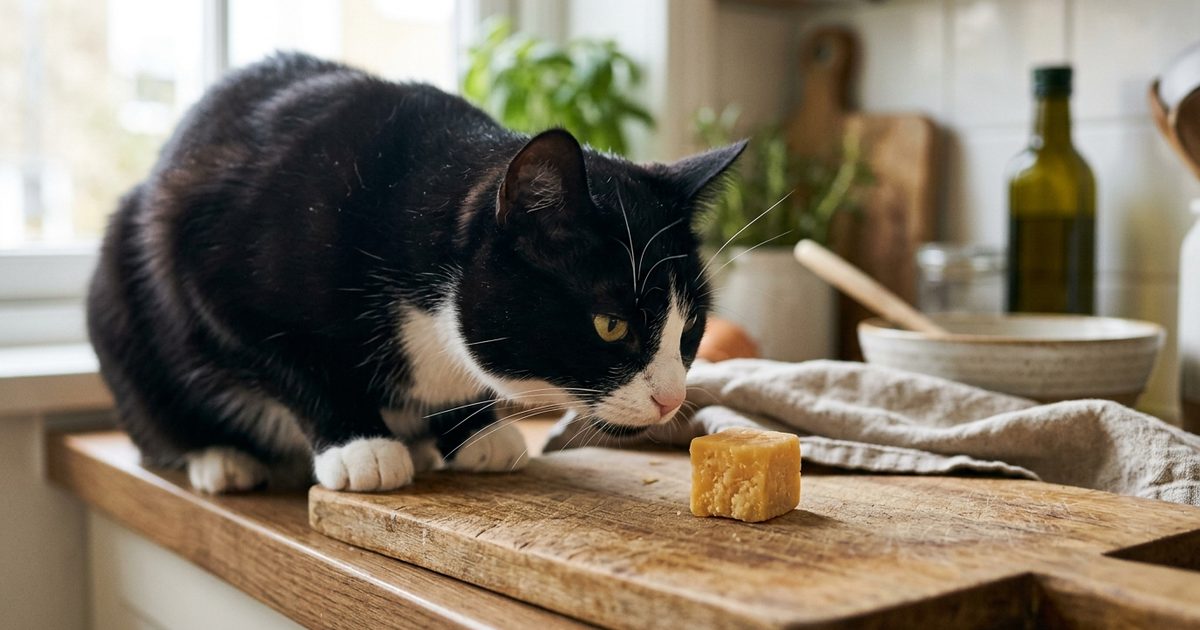
Cats can eat cheese only in very small amounts and only occasionally. Most adult cats are lactose-intolerant because they produce little lactase, the enzyme that breaks down milk sugar — so even a cheese they enjoy can cause stomach upset. Cheese is not toxic, but it is not a healthy cat food either.
The short answer
The honest verdict is that cheese is not toxic to cats, but it is not a good regular food either. Cats are obligate carnivores, which means their bodies are built to run on meat — protein and fat from prey, not dairy from a cow. They have no nutritional need for cheese, and their digestive systems are not designed to handle it well. That does not mean a tiny taste will harm them, but it does mean cheese should never be a staple.
The "cats love a saucer of milk" image is one of the most persistent myths in pet culture, and it is also one of the most misleading. The same stereotype fuels confusion around whether cats can drink milk at all. The truth is that most adult cats lose the ability to comfortably digest milk sugar after kittenhood, so the very thing they are imagined to adore is the thing most likely to upset their stomach. For balanced feline nutrition guidance, the Cornell Feline Health Center is a reliable authority on feeding and dairy's limited role in a cat's diet.
Do cats even like cheese?
Many cats genuinely do seem to love cheese. They come running when a block comes out of the fridge, beg at the cutting board, and stare with fixed intensity at a grilled cheese sandwich. That attraction is real — cheese is rich in fat and salt and has a strong smell, all of which appeal to a cat's senses. A cat drawn to cheese is responding to its smell and richness, not signaling that cheese is good for it.
This is where you, as the owner, are the gatekeeper. The fact that your cat wants something does not mean it should have it, and "she loves it" is not the same as "it is safe." Plenty of cats, for that matter, ignore dairy entirely — interest in cheese varies from cat to cat, and many cats walk away from it uninterested. Whether your cat adores it or could not care less, the safety decision is yours to make, not theirs.
Why Is Cheese Problematic for Cats?
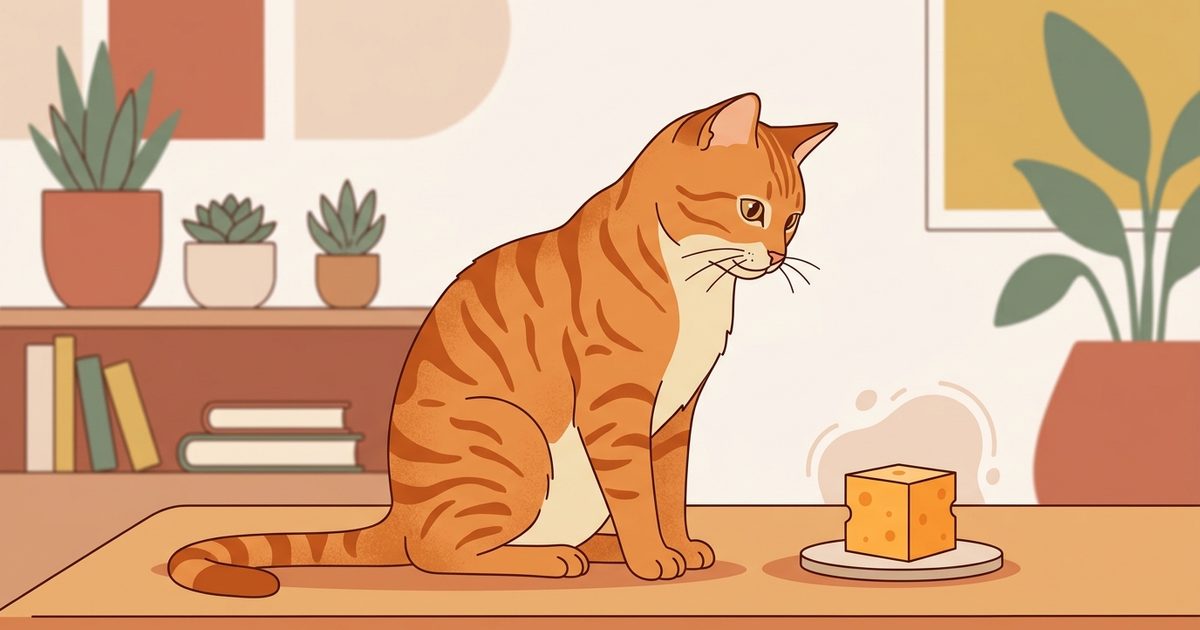
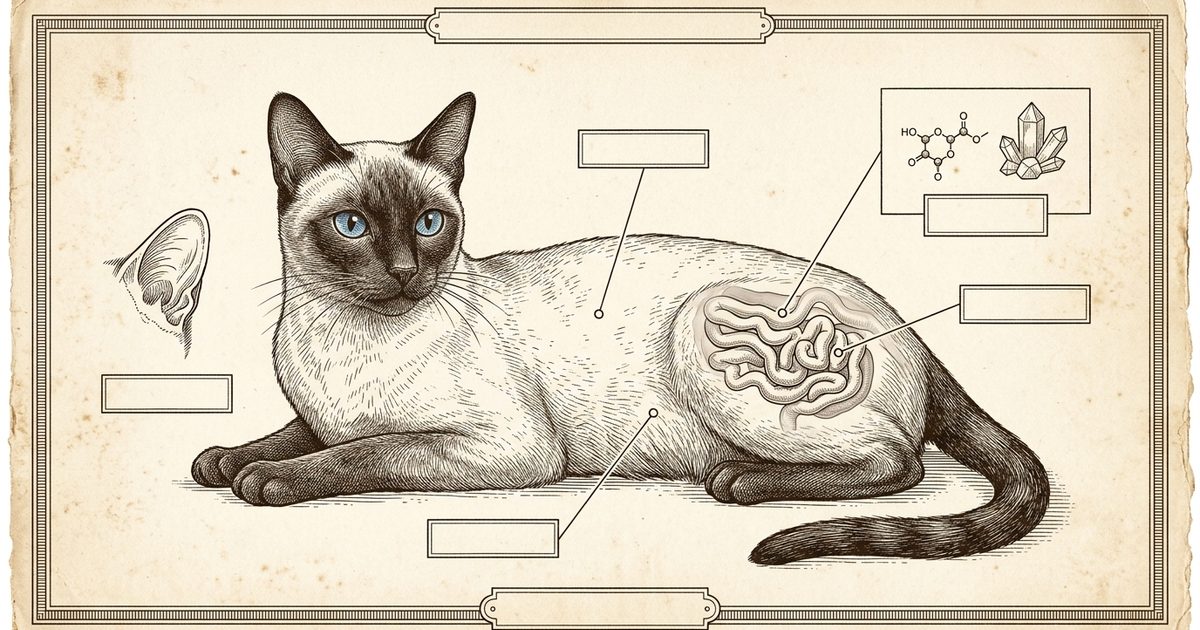
Cheese is problematic for cats for three reasons: lactose, which most adult cats can't digest well; high fat, which stresses the pancreas and adds empty calories; and salt, which in large amounts is unhealthy. Hard aged cheeses are lower in lactose, but the fat and salt concerns remain.
Lactose and low lactase
The core problem is lactose — the natural sugar found in milk. To digest lactose, the body needs an enzyme called lactase, which breaks the sugar down so the gut can absorb it. Kittens produce plenty of lactase because their entire diet is milk. But after weaning, as a kitten transitions to solid food, lactase production drops sharply. By adulthood, most cats make only small amounts of the enzyme, which is why the majority of adult cats are, to varying degrees, lactose-intolerant.
When a cat eats cheese, any lactose it contains that the body cannot break down passes undigested into the lower gut. There, gut bacteria ferment it, producing gas and drawing water into the intestines. The result is the familiar pattern of dairy upset: bloating, gas, and diarrhea, usually within a few hours. The degree of intolerance varies from cat to cat — some tolerate a little dairy without obvious trouble, others react to a single taste. We cover the liquid-milk side of this same mechanism in more detail in our guide on whether cats can drink milk; the principle is identical here, just delivered in a denser, solid form.
High fat and calories
Cheese is also one of the most calorie-dense foods in a typical kitchen. A small piece packs a large share of fat and calories relative to a cat's daily needs — and because cats are small animals, what looks like a modest bite to you is a meaningful caloric load to them. Regular cheese treats can quietly contribute to weight gain, and obesity in cats raises the risk of diabetes, joint strain, and reduced lifespan.
There is also a more acute concern with very rich, fatty foods: pancreatitis, an inflammation of the pancreas that can be triggered by a sudden surge of dietary fat. This is a risk to be aware of, not a certainty — not every cat who eats a piece of cheese will develop pancreatitis — but it is one of the reasons veterinarians caution against high-fat people food. For treats that fit sensibly into a cat's calorie budget, our overview of what cats eat frames the 10-percent rule for treat calories.
Salt and additives
The third concern is sodium and the extras that often come with it. Aged and processed cheeses tend to be saltier than fresh ones, and while a tiny amount of sodium is not dangerous on its own, the cumulative load matters in a small animal. More importantly, many flavored and specialty cheeses contain ingredients that are genuinely toxic to cats. Garlic, onion, chives, and certain herbs show up in seasoned cheeses, and the allium family is one of the most dangerous food groups for felines — capable of damaging red blood cells even in small amounts. If you want to understand why, our articles on cats and garlic and cats and onion lay out the mechanism. International Cat Care maintains a clear list of foods to avoid giving cats, and allium-containing cheeses belong firmly on it.
Which Cheeses Are Safer — and Which to Avoid?
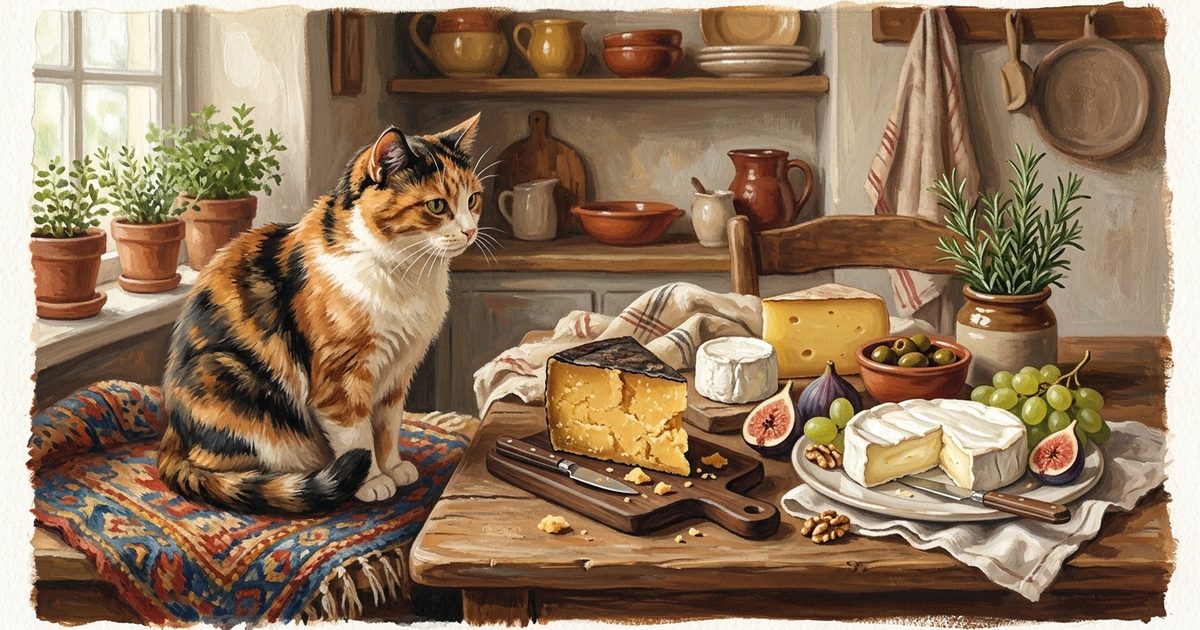
Hard, aged cheeses like cheddar and parmesan carry the least lactose and are the only kinds worth considering in a tiny, rare amount. Soft, fresh, high-moisture cheeses like cream cheese, cottage cheese, and ricotta carry more lactose. Never give a cat blue or mold-ripened cheese, or any cheese with garlic, onion, or herbs.
Not all cheese is equal when you're weighing the question can cats eat cheese. The single biggest variable is lactose, and lactose tracks moisture — the harder and drier a cheese is, the less milk sugar it retains. That gradient is the whole decision tool.
Lower-lactose (hard, aged)
Cheddar, parmesan, and swiss sit at the low end of the lactose spectrum. As cheese ages, the bacteria that ripen it consume most of the lactose, which is why an aged parmesan can be nearly lactose-free. If you're ever going to offer cheese, this is the tier. But don't mistake "lowest lactose" for "safe": these cheeses are still dense with fat and salt, and that load doesn't disappear just because the lactose did. Aged cheese is a smaller risk, not a free food.
Higher-lactose (soft, fresh)
Cream cheese, cottage cheese, ricotta, and fresh mozzarella hold a lot more moisture, and with it a lot more lactose. Because most adult cats have so little lactase to work with, this extra lactose moves straight to the gut, where it ferments and triggers the gas and loose stools you're trying to avoid. The soft, spreadable cheeses people tend to have around the kitchen are exactly the ones most likely to cause gastrointestinal upset — so they're best left off the treat list entirely.
Always avoid (toxic or risky)
Some cheeses aren't a question of degree — they're a hard no regardless of the lactose count. Blue and mold-ripened cheeses like roquefort, gorgonzola, and the rind of brie carry molds a cat's system isn't built to handle. Flavored cheeses containing garlic, onion, chives, or herbs are worse than risky — alliums are genuinely toxic to cats and can damage red blood cells, so even a small piece of garlic-and-herb cheese is a vet concern, not a wait-and-see one. See why in our deep dives on whether cats can eat garlic and whether cats can eat onion. The International Cat Care guidance on foods dangerous to cats places alliums firmly in the never category, alongside very salty and heavily processed cheeses.
Is Cheese Ever OK as a Treat?
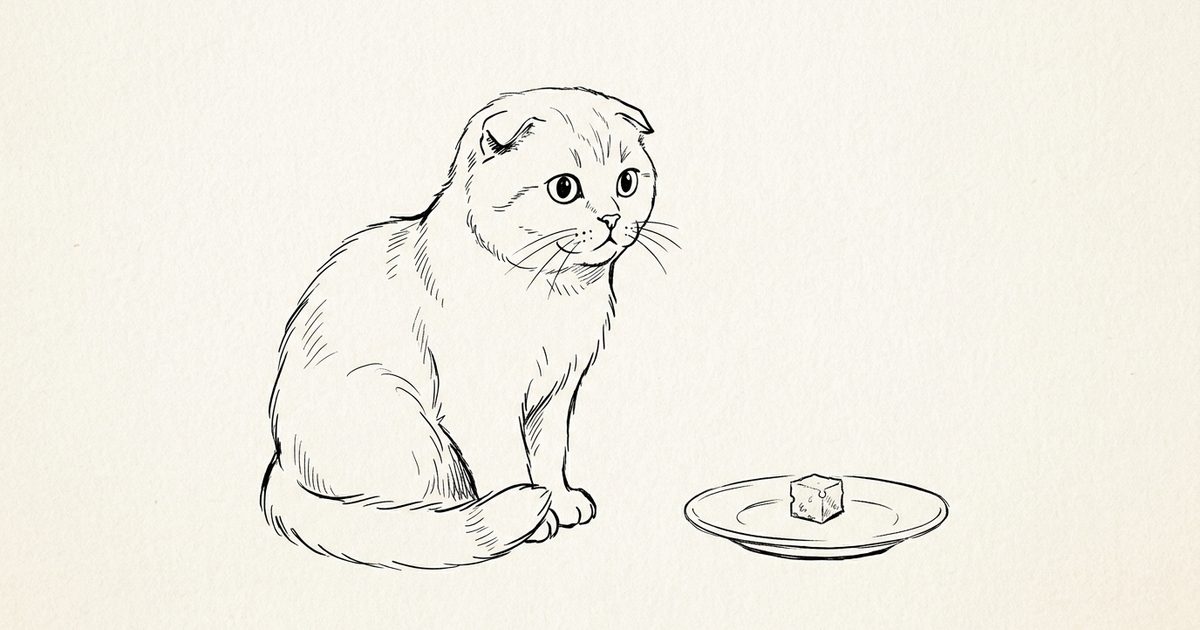
A piece of plain hard cheese about the size of a pea, given rarely and only if your cat tolerates it, is the outer limit of safe. It should never be a daily treat, never replace cat food, and never be given to a cat with a sensitive stomach, pancreatitis history, or known dairy intolerance.
If you've read this far, you already know cheese is not a healthy cat food. But the honest, non-alarmist version of is cheese bad for cats isn't "never, ever" — it's "almost never, and then only a crumb." Here's how to draw that line.
The pea-sized rule
The widely cited guideline is that treats of all kinds should stay under roughly 10% of a cat's daily calories — and cheese is so calorie-dense that its 10% is tiny. A piece of plain hard cheese about the size of a pea, once in a great while, is the realistic ceiling. Frequency matters as much as size: "rare and occasional" means a surprise morsel every few weeks, not a nightly ritual. Routine turns a tolerated indulgence into a steady fat-and-salt load your cat doesn't need, which is exactly why the Cornell Feline Health Center frames treats as occasional, not habitual.
When not to offer cheese at all
For some cats, even the pea-sized piece is too much. Skip cheese entirely if your cat has a sensitive stomach, a history of pancreatitis, is already carrying extra weight, or has reacted to dairy before. Kittens are also poor candidates — their digestion is still maturing and they should be on nutritionally complete kitten food. And if your cat is on a therapeutic or special diet for any reason, run any treat — cheese included — past your vet first. The risk of derailing a carefully balanced feeding plan isn't worth a moment of begging.
If your cat loves dairy, read this first
If your cat is one of the many who genuinely adore the smell and richness of dairy, there's a better answer than cheese or a saucer of milk — both of which we unpack in our companion piece on whether cats can drink milk. Lactose-free cat milk, formulated specifically for feline digestion, exists as a designed alternative that delivers the dairy experience without the lactose that causes the trouble. We won't endorse specific brands here, but the category is worth knowing about if dairy is your cat's favorite thing.
What Happens If a Cat Eats Too Much Cheese?
If a cat eats too much cheese, the most common result is gastrointestinal upset — diarrhea, gas, vomiting, and loss of appetite — usually within hours. Most cases resolve on their own, but persistent vomiting, lethargy, or signs of pancreatitis warrant a vet call.
Common symptoms
When the lactose in cheese reaches a cat's intestine undigested, it ferments and draws water into the gut — and the body's response is what you see outwardly. The most common sign is diarrhea, which can range from slightly soft stool to something more urgent, along with noticeable gas or bloating and a grumbling belly. Some cats vomit once or soon after eating the cheese, and most will go off their food for a few hours as the stomach settles. Symptoms typically appear within a few hours of the treat, and their severity tracks roughly with how much was eaten and how lactose-sensitive that particular cat is. A cat that stole a tiny crumb may show nothing at all; a cat that worked through a generous wedge will usually make its discomfort obvious.
When to call the vet
Most mild cheese reactions pass within a day with access to water and a brief rest from food. The exceptions are where the "mild GI upset" framing breaks down and a call to your vet — or the Cornell Feline Health Center's guidance on digestive signs — becomes the right move. Call if the vomiting persists beyond two or three episodes, if your cat becomes lethargic or seems painful when you touch the belly, or if diarrhea is severe or bloody. And critically: if the cheese was flavored with garlic, onion, chives, or herbs, or was a blue or mold-ripened variety, don't wait and see. Allium toxicity and mold exposure are genuine emergencies, not a tolerance question, and the sooner a vet is involved, the better the outcome.
Better Treat Alternatives to Cheese
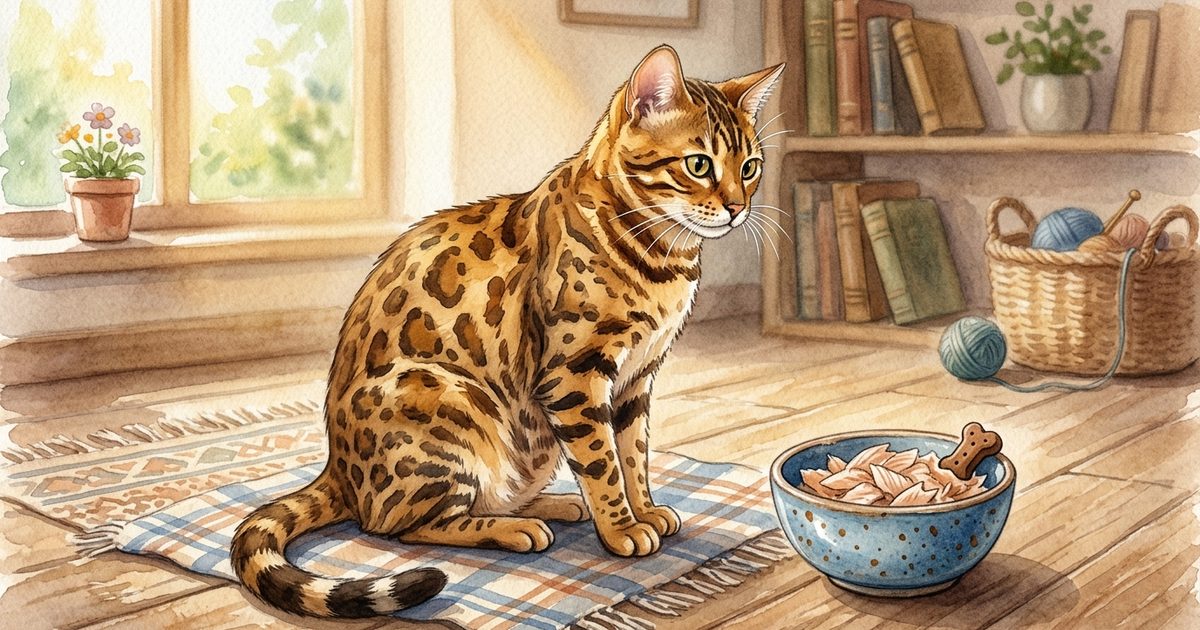
Safer alternatives to cheese include small amounts of plain cooked meat or fish, commercial cat treats formulated for feline nutrition, and the occasional cat-safe fruit or vegetable. These deliver flavor and bonding without the lactose, fat, and salt load of cheese.
Cat-appropriate treats
The treats that sit best with a cat's biology are the ones that resemble what a cat is built to eat in the first place: animal protein. Small pieces of plain cooked chicken, turkey, or salmon — unseasoned, unbreaded, and fully cooked — are about as close to an ideal treat as you can get, and most cats find them just as exciting as cheese without any of the lactose, fat, or salt baggage. Good commercial cat treats work too, because they're formulated with a cat's nutritional needs rather than a human's palate. A few cats also enjoy tiny tastes of cat-safe produce like a shred of steamed carrot, but these should stay occasional and small.
Whatever you offer, the 10% rule still holds: treats of any kind should make up no more than roughly 10% of your cat's daily calories, with the rest coming from a complete cat food. For the broader picture of what fits into a healthy feline diet, our guide to what cats eat walks through the essentials — and it leaves plenty of room for the kind of treat that rewards your cat without weighing her down.
Cheese for Cats at a Glance — Summary
Most cats can tolerate cheese only as a rare, pea-sized piece of plain hard cheese — and even then, it is a tolerable-in-extreme-moderation treat rather than a healthy one. Soft, flavored, and mold-ripened cheeses belong firmly in the "never" category. The table below condenses everything in this article into the choices that matter when you are standing in the kitchen with a curious cat at your feet.
Cheese for Cats — Quick Summary
| Question | Short answer |
|---|---|
| Can cats eat cheese? | Rarely — a tiny piece of plain hard cheese only |
| Are cats lactose-intolerant? | Most adult cats, yes |
| Which cheese is safest? | Hard, aged cheese like cheddar or parmesan |
| Which to never give? | Blue/moldy cheese, plus garlic/onion/herb flavored |
| How much is safe? | Pea-sized, occasional — never daily |
| What if they ate too much? | Watch for diarrhea and vomiting; call the vet if persistent |
| Better treat? | Plain cooked meat or commercial cat treats |
If your cat has helped herself to a larger piece and you are unsure whether to wait it out or call, the safest next step is always to ask your vet — mild stomach upset usually passes, but persistent vomiting, lethargy, or any cheese containing garlic or onion warrants a professional call rather than a wait-and-see. The Cornell Feline Health Center and International Cat Care both maintain reliable, up-to-date guidance on foods that are unsafe for cats when you need a trusted second opinion.
Curious What Your Cat Would Say?
Upload a photo and get a warm, personalized reading from your cat's perspective.
Start Your Free ReadingFrequently Asked Questions
Can cats eat cheddar cheese?
A tiny piece of cheddar, given rarely, is the closest thing to a safe cheese for a cat. Cheddar is hard and aged, so it holds less lactose than softer cheeses, but it is still rich in fat and salt. Think pea-sized and occasional, never a regular treat.
Can cats eat cream cheese?
No — cream cheese is best avoided. It is a soft, high-moisture cheese, which means it carries more lactose that most adult cats cannot digest, and it tends to cause gas and diarrhea. Save cream cheese for your own bagel, not your cat's bowl.
Is cheese toxic to cats?
Plain cheese is not toxic on its own, but certain cheeses are genuinely dangerous. Blue and mold-ripened varieties, and any cheese flavored with garlic, onion, chives, or herbs, can be toxic and warrant a vet call rather than a wait-and-see.
Why does my cat love cheese?
Cats are drawn to the strong smell, the richness of fat, and the saltiness of cheese — not because it is good for them. Attraction and safety are different things, and most cats that beg for cheese are lactose-intolerant even if they enjoy the taste.
How much cheese can a cat eat?
If you offer cheese at all, keep it to a pea-sized piece of plain hard cheese, given rarely rather than daily. Treats of all kinds should stay under roughly ten percent of a cat's daily calories, and cheese is calorie-dense, so that ceiling is very small.
What should I do if my cat ate a lot of cheese?
Watch for diarrhea, gas, vomiting, and loss of appetite over the next few hours, and offer water. Most mild reactions pass within a day, but persistent vomiting, lethargy, belly pain, or any cheese containing garlic, onion, or mold means a vet call, not a wait-and-see.
Can kittens eat cheese?
No. A kitten's digestion is still maturing, and they should be on nutritionally complete kitten food rather than dairy treats. Kittens produce more lactase than adults, but cheese still adds fat and salt they do not need at this stage of growth.
What is a safer treat than cheese for cats?
Plain cooked meat or fish — unseasoned chicken, turkey, or salmon, fully cooked — is far closer to what a cat's body is built for. Commercial cat treats formulated for feline nutrition are also a good choice, delivering flavor and bonding without the lactose, fat, and salt.
Are all cats lactose-intolerant?
Not all, but most adult cats are to some degree. Lactase production drops sharply after weaning, so the ability to comfortably digest milk sugar fades. Some cats tolerate a little dairy without obvious trouble, while others react to a single taste, so the degree varies.
Sources & References
You Might Also Like
Kitten Teething: Timeline, Symptoms & How to Help
Kitten teething runs from 3 to 7 months as baby teeth fall out. Learn the timeline, signs to watch for, and how to soothe a teething kitten safely.
15 min readWhen Do Cats Stop Growing? A Complete Timeline
When do cats stop growing? Most cats reach adult size by 12-18 months, but large breeds like Maine Coons keep growing until 3-4 years. Full timeline inside.
14 min readCan Cats Eat Cherries? Flesh, Pit & Toxicity Facts
Can cats eat cherries? Pitted flesh is safe in tiny amounts — but the pit, stem, and leaves are toxic (cyanide precursors). Learn what's safe and what isn't.
15 min read