Can Cats Eat Mushrooms? The Store-Safe vs Wild-Deadly Rule
The question "can cats eat mushrooms?" has a split answer that most owners never see coming: the plain, cooked, store-bought kind is safe, while the wild kind can be fatal within hours. That is a genuine first-principles distinction, not marketing fluff — and it is the entire basis of this article. So are mushrooms bad for cats? That depends entirely on which mushroom. Cultivated ones are harmless in small amounts; wild ones carry some of the most lethal natural toxins on the planet. The single rule that matters is the store-safe versus wild-deadly split, and everything else — how to serve, what to watch for, what to do in an emergency — follows from which side of that line the mushroom sits on.
Key takeaways
- Store-bought button, cremini, or portobello mushrooms, cooked plain, are a safe occasional treat — not toxic, just not very useful nutritionally.
- Wild mushrooms are a different category entirely: species like the death cap contain amatoxins that destroy the liver and kidneys, and a single bite can be lethal.
- The store-safe vs wild-deadly split is the whole rule — everything else (how to serve, what to watch for) follows from which side of that line the mushroom sits on.
Mushrooms for Cats — Quick Reference
| Mushroom type | Safe for cats? | Notes |
|---|---|---|
| Store-bought button/cremini, cooked plain | Safe as a small treat | Non-toxic; low nutritional value; occasional only |
| Store-bought, raw | Avoid | Hard to digest raw; offer little benefit |
| Wild mushrooms | Never — deadly | May contain amatoxins; identification is unreliable |
| Seasoned or cooked with garlic/onion | Toxic | Alliums cause anemia; added salt and fat are harmful |
Can Cats Eat Mushrooms?
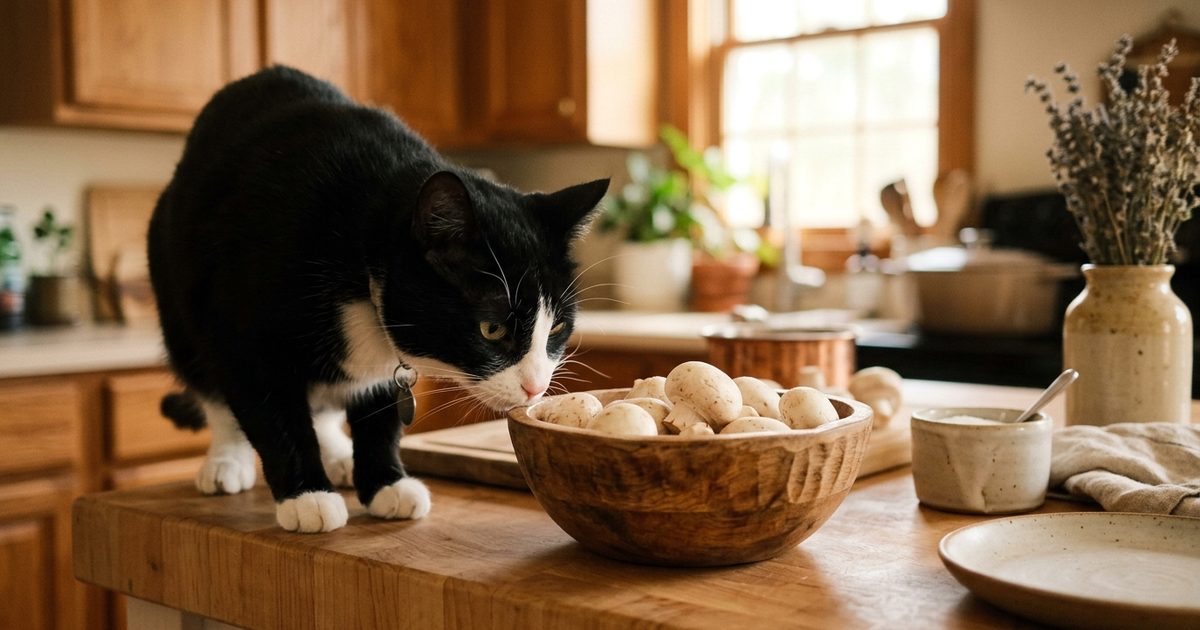
Yes — cats can eat plain, cooked, store-bought mushrooms like button, cremini, or portobello in small amounts. They are not toxic. But wild mushrooms are a different story entirely: many species are deadly to cats, and a single bite of the wrong one can be fatal. The store-safe vs wild-deadly split is the whole rule.
The short answer
The honest answer comes in two halves, and mixing them up is where the real danger lies. The common mushrooms you buy at the grocery store — button, cremini, and portobello — all belong to one cultivated species, Agaricus bisporus, at different stages of maturity. They are non-toxic to cats and are safe to share in tiny amounts when cooked plainly.
Wild mushrooms, on the other hand, are an entirely different category. Among the thousands of species that grow outdoors, several contain lethal toxins, and there is no reliable visual rule a cat owner can use to tell a safe one from a deadly one. That is why every veterinary source draws the same line: store-bought is fine, wild is never fine. If you want a broader view of where mushrooms fit in a cat's overall diet, see our guide on what cats eat.
Are mushrooms good for cats?
Here is the part that gets overstated. A mushroom can be safe for a cat without being good for one. Cats are obligate carnivores, which means their bodies are built to extract everything they need from animal tissue — meat, organs, fat — and they digest plant and fungal matter poorly. A bite of cooked mushroom won't harm your cat, but it also won't do much for her.
It's best to think of a plain cooked mushroom as you would any other safe-but-pointless human food: a tiny, occasional novelty, never a staple, never a supplement. Pushing it as a health food would misrepresent what it is. The Cornell Feline Health Center is clear that a cat's nutritional needs are met by complete, meat-based diets, not by plant or fungal additions.
No nutritional need
Cats synthesize most of the compounds they require directly from the meat they eat, so the B vitamins and trace minerals a mushroom offers are things a complete cat food already covers in the right form and amount. Adding mushroom to the bowl doesn't fill a gap — there is no gap.
This is worth saying plainly because "safe" and "beneficial" are easy to blur. A plain cooked mushroom is the former, not the latter. Feeding it is optional, and if your cat shows zero interest, you've lost nothing by skipping it. If you're weighing other foods against the same standard, our look at whether cats can eat grapes is a useful contrast: there the answer is a flat no, whereas here the answer is a qualified yes.
Store-Bought vs Wild Mushrooms — What's the Difference?
Store-bought mushrooms are cultivated Agaricus species — non-toxic, traceable, and safe for cats when cooked plain. Wild mushrooms include deadly species like the death cap, whose amatoxins destroy the liver and kidneys. Never let a cat eat any wild mushroom — safe identification is impossible without an expert.
The mushroom question — can cats eat mushrooms — hinges almost entirely on one split: cultivated versus wild. The species you buy in a sealed grocery tray and the species pushing up through the soil in your yard live in different risk universes, even when they look similar. One is traceable and benign; the other carries some of the most lethal natural toxins on the planet.
Store-bought: the safe Agaricus family
The mushrooms you find at the grocery store — white buttons, brown cremini, and large portobellos — are not three different species. They are all one species, Agaricus bisporus, harvested at different ages. Buttons are the youngest, cremini are slightly more mature, and portobellos are the fully grown, open-cap form of the same fungus. Because they are commercially cultivated in controlled, traceable conditions, the risk of a toxic look-alike slipping into the tray is effectively zero. That traceability is the entire basis of their safety for cats. For context on how mushrooms fit into the wider feline diet — as an occasional treat rather than a staple — see our guide on what cats eat.
Wild mushrooms: the deadly amatoxin species
Wild mushrooms are a different matter. Several species produce amatoxins — cyclic peptides that inhibit RNA polymerase II, the enzyme cells use to read DNA and build proteins. When that machinery stops, cells die, and the cells hit hardest are the ones doing the most work: hepatocytes in the liver and the cells of the renal tubules in the kidneys. The species most often responsible are the death cap (Amanita phalloides), the destroying angel, and the autumn skullcap, and even a small fragment of any of them can be lethal to a cat. The ASPCA Animal Poison Control Center classifies wild mushroom exposure as a veterinary emergency precisely because the lethal dose is so small and the window for treatment so narrow. Never assume a wild mushroom is safe because it looks ordinary or the cat only tasted it.
Why identification is impossible for owners
A persistent and dangerous belief is that a careful owner can tell a toxic wild mushroom from an edible one by color, shape, or where it grows. They cannot. Toxic and edible species routinely look nearly identical to the unaided eye, and reliable identification requires a spore print examined under magnification by a trained mycologist — not a guess in a backyard. The safe generalization is absolute: any mushroom found outdoors, on a walk, or growing in the yard is treated as potentially lethal until proven otherwise. If a cat mouths one, the response is the same regardless of how harmless it looked — call your vet or a poison control hotline immediately. As International Cat Care stresses across its toxic-food guidance, when the stakes are organ failure, the only correct threshold for certainty is an expert, not your eyes.
How to Serve Mushrooms Safely to a Cat
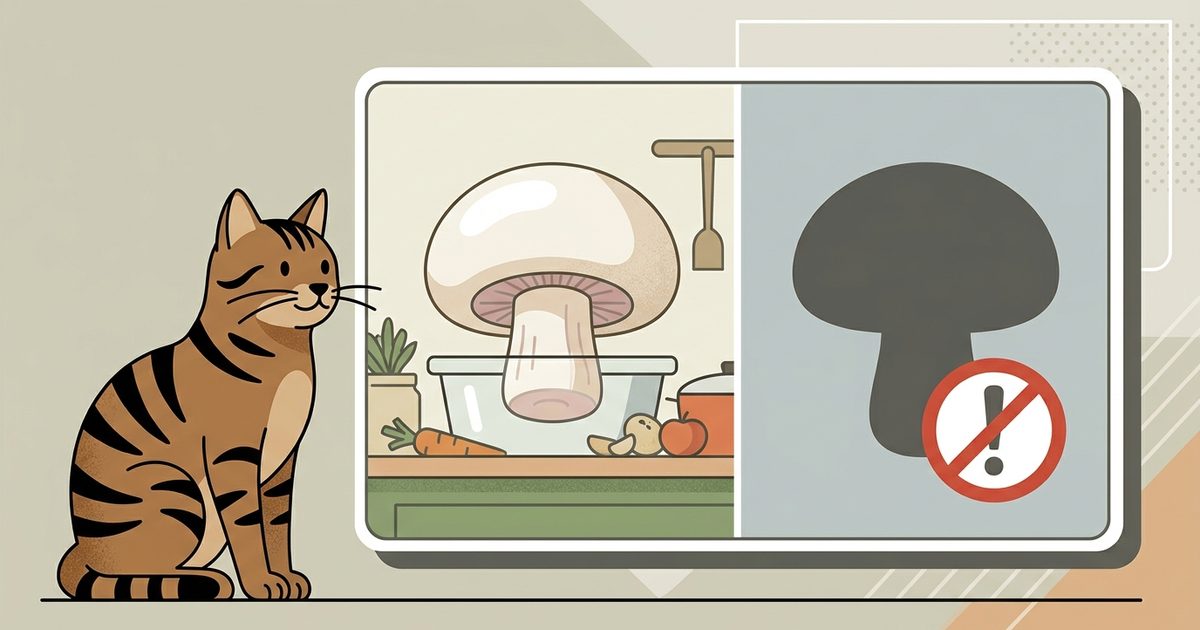
If you offer a mushroom, use plain cooked store-bought button or cremini — never raw, never seasoned. Cook it lightly, cut it into tiny pieces, and give only a small bite as an occasional treat. No garlic, onion, salt, butter, or sauces — each is toxic or harmful to a cat on its own.
So you've decided to share a mushroom with your cat. The good news: it's perfectly fine, as long as you follow a few simple preparation rules. The catch is that a cat's digestive system is nothing like ours, so most of what we do to make mushrooms tasty for humans — butter, salt, garlic — actively hurts them.
Cooked, not raw
A raw mushroom is tough going for a cat. Mushroom cell walls are made of chitin — the same sturdy material found in insect shells — and a cat's short, meat-oriented digestive tract struggles to break it down. Light cooking softens those fibers and makes what little nutrition a mushroom offers marginally more available. A quick steam or a plain sauté (no oil, nothing else in the pan) is enough. Cooking also makes the mushroom easier to chop small and less of a choking hazard, which matters for a cat that bolts its food. Raw isn't dangerous the way a wild species is — it's just a bad deal for your cat's stomach.
No seasoning, garlic, or onion
This is where well-meaning owners get into trouble. That delicious garlic-and-butter mushroom you made for yourself? It's off-limits to your cat. Garlic and onion belong to the allium family, and alliums cause Heinz body anemia in cats — a condition where red blood cells are damaged and destroyed. Even small amounts, cooked or raw, are dangerous, which is the full reason behind our guide on whether cats can eat garlic. Salt, butter, cream sauces, and broth add sodium and fat that a cat's kidneys and liver handle poorly. Serve the mushroom plain, exactly as it came out of the pan with nothing added — then take a separate, seasoned portion for yourself. International Cat Care keeps a clear list of foods that are harmful to cats, and the allium family sits near the top of it.
Portion and frequency
Think of a mushroom as a treat, not a meal — and a small treat at that. A piece about the size of your thumbnail, offered once in a while, is plenty. Cats don't need mushrooms nutritionally, so there's no reason to make them a daily habit. Offer the piece, watch your cat for the next day, and if you notice any soft stool, vomiting, or reduced appetite, stop and don't offer it again. Most cats tolerate a plain cooked mushroom just fine, but every cat's gut is its own, and some are simply more sensitive than others. When in doubt, less is always the safer answer.
Why Are Wild Mushrooms an Emergency?
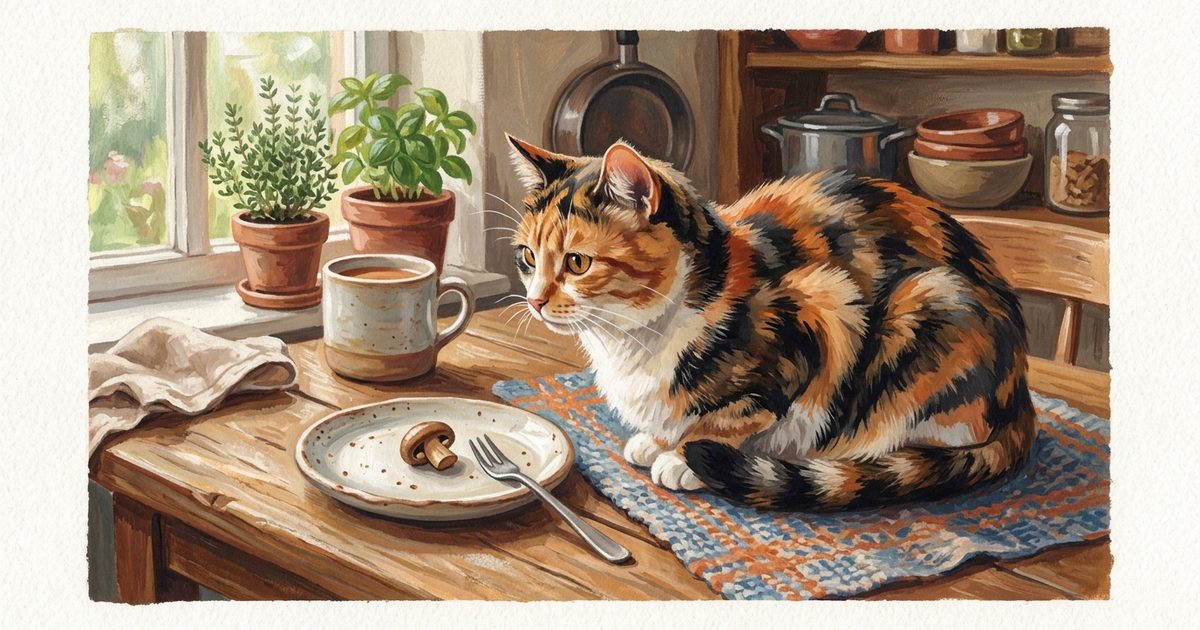
Wild mushrooms like the death cap contain amatoxins that no preparation — cooking, drying, or freezing — can destroy. Amatoxins silently destroy liver and kidney cells over 6 to 24 hours, then trigger delayed, severe organ failure. Even a small bite is a medical emergency: call your vet or a pet poison hotline immediately.
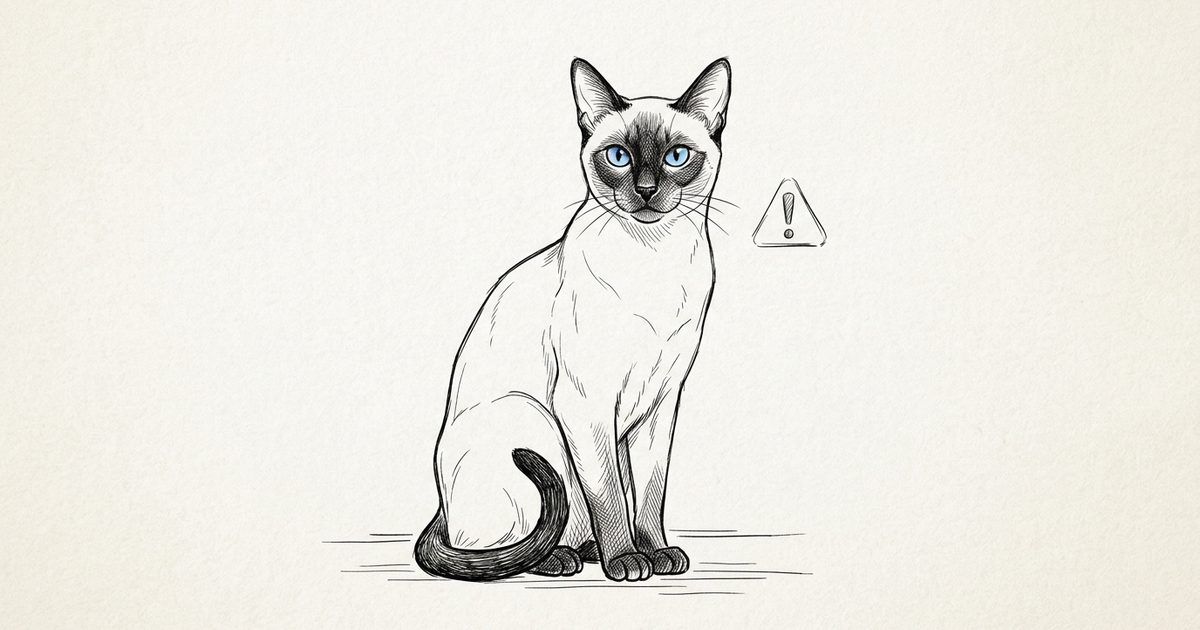
Not all dangers move fast. The horror of amatoxins is how quietly they work. When a cat ingests even a fragment of a death cap (Amanita phalloides), a destroying angel, or an autumn skullcap, the toxin begins its damage while the animal looks perfectly normal for hours. That is why any known wild mushroom exposure must trigger an immediate call to the vet, not a "let's watch" approach. Both the Cornell Feline Health Center and International Cat Care stress that when a known toxic species is involved, time is the single most protective factor.
Amatoxins and how they kill
The culprit is a compound called alpha-amanitin. Inside the cell, it binds to RNA polymerase II — the enzyme a cell needs to turn genetic instructions into the proteins that keep it alive. Block that enzyme, and the cell can no longer maintain itself or repair damage. Because the liver and kidneys process the most material, they carry the heaviest workload and die first. Hepatocytes and renal tubular cells collapse one by one, and the organs shut down from the inside. If this acute-injury pathway sounds familiar from our discussion of chronic renal failure, that is no coincidence — both end in the same outcome, except cat kidney disease develops over years while amatoxin does it in days.
Cooking does NOT neutralize amatoxins
A common thought is, "If I cook the wild mushroom, it's fine." The instinct is understandable, and the belief is widespread — but it is dangerously wrong. Amatoxins are extremely heat-stable. Boiling, frying, baking, air-drying, and freezing all leave the toxin essentially intact. A cooked poisonous mushroom is still a poisonous mushroom. The people arguing "cooking makes them safe" and the people arguing "they are never safe" are not debating a close call; the science has decisively settled the matter in favor of the latter. So the rule leaves no gray area for half-belief: no home kitchen preparation neutralizes amatoxins, and the only safe move is to assume any wild mushroom is deadly and to seek veterinary help immediately.
The false-recovery window
The most deceptive feature of amatoxin is its delayed timeline. In the first 6 to 24 hours, the cat usually shows gastrointestinal distress — vomiting, diarrhea, drooling, abdominal pain — and then the symptoms subside. The cat eats, drinks, and looks normal. This phase is the trap. The toxin is still destroying liver and kidney cells, with no outward sign. Roughly one to three days later, a second wave of symptoms erupts: jaundice, extreme lethargy, collapse, seizures. Because of this "looks better" window, owners sometimes hesitate to call the vet — and that delay is exactly what leads to irreversible organ damage. The next section walks through that timeline in detail, because recognizing each stage is the only advantage you have.
Symptoms of Mushroom Poisoning in Cats
Early symptoms — vomiting, diarrhea, drooling, and abdominal pain — appear within 6 to 24 hours, then seem to resolve as the cat appears to recover. This false recovery is the trap: one to three days later, organ failure erupts. Never assume a cat that "seems fine" after a wild mushroom is safe.
Mushroom poisoning in cats does not follow a straight line, and that is precisely what makes amatoxin so lethal. The toxin works in two distinct waves with a deceptive calm in between, and owners who recognize the pattern have the best chance of helping their cat.
Early phase (6–24 hours)
Within the first 6 to 24 hours after a cat eats a toxic wild mushroom, the gastrointestinal system reacts. You may see sudden vomiting, diarrhea, heavy drooling, and clear signs of abdominal pain — a hunched posture, reluctance to be touched around the belly, or hiding. Dehydration can set in quickly as fluids are lost. These early symptoms are the body's first attempt to expel the toxin, and they feel alarming — but they are not the most dangerous part.
The false recovery
Here is the cruelest feature of amatoxin poisoning: the early symptoms fade on their own. Within a day, the vomiting stops, the cat seems brighter, and it may even eat or drink normally. Owners understandably read this as recovery — "the worst is over." It is not. During this quiet window, the toxin is still actively destroying liver and kidney cells internally, with no outward sign. This false recovery is the single most dangerous feature of amatoxin, because it lulls owners into waiting exactly when every hour counts.
Late phase (1–3 days)
Roughly one to three days after exposure, the silent damage becomes visible. The liver and kidneys begin to fail. Watch for jaundice — a yellow tint to the gums, the inside of the ears, and the whites of the eyes. Lethargy deepens into collapse; the cat may drink and urinate excessively as the kidneys struggle, or conversely shut down entirely. Seizures, coma, and death can follow. By this late stage, organ failure is often irreversible, which is why acute kidney injury triggered by a toxin is so hard to reverse. The window for effective treatment is the early phase — not this one.
What to Do If Your Cat Eats a Wild Mushroom
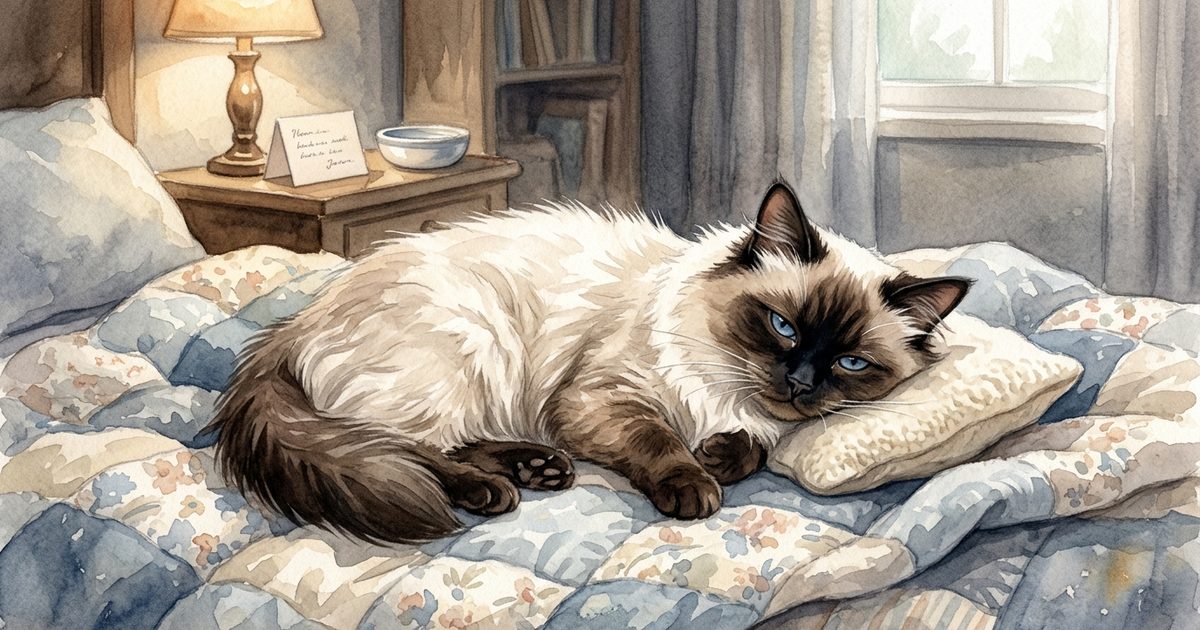
If your cat eats or even mouths a wild mushroom, treat it as an emergency: call your vet or a pet poison hotline immediately and bring the mushroom sample if you can. Do not wait for symptoms, and do not assume a small amount is harmless — early treatment is the only real chance.
The single most important variable in amatoxin poisoning is time. What you do in the first hours shapes whether treatment can succeed.
Act immediately
Call your veterinarian right away, or contact the ASPCA Animal Poison Control Center or Pet Poison Helpline. If you can, bring the mushroom with you — ideally in a paper bag, never plastic, which traps moisture and speeds decay. If you cannot safely collect it, take several clear photos from different angles so an expert can attempt identification. Note the time your cat may have eaten it, how much you think was consumed, and any symptoms you have already seen. Every one of these details helps the vet act faster.
What NOT to do
Do not wait and watch, even if your cat looks perfectly fine — remember the false-recovery window. Do not induce vomiting unless a veterinarian instructs you to; some substances cause more harm coming back up. Avoid home remedies like milk, oil, or salt, none of which neutralize amatoxin and some of which cause additional harm. And do not assume that "just a nibble" is safe — with amatoxin species, even a small amount can be lethal, so the size of exposure is not a reliable gauge.
Why early treatment matters
In the first hours after exposure, a vet can decontaminate (induce vomiting safely, administer activated charcoal to bind toxin still in the gut) and begin supportive care — IV fluids, liver-protective medications, and monitoring. This early intervention can prevent organ damage before it begins. Once liver or kidney failure is underway, the available options narrow sharply, and survival often depends on how little damage occurred before treatment started.
Mushrooms at a Glance — Summary
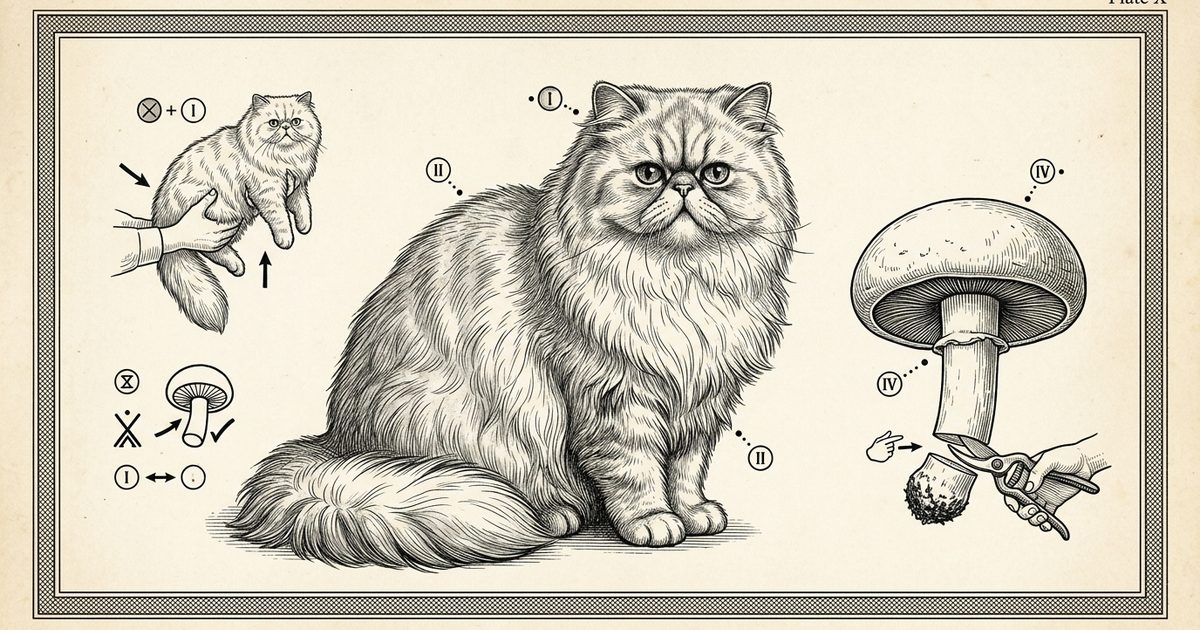
| Question | Short answer |
|---|---|
| Can cats eat mushrooms? | Plain cooked store-bought ones are safe; wild mushrooms can be deadly |
| Are store-bought mushrooms safe for cats? | Yes — button, cremini, and portobello, cooked plain, in small amounts |
| Are raw mushrooms okay for cats? | Not ideal; raw chitin is hard to digest, so cook them lightly |
| Are wild mushrooms dangerous to cats? | Yes — many species are lethal, and safe identification is impossible without an expert |
| Can cooking make a wild mushroom safe? | No — amatoxins are heat-stable and survive cooking, drying, and freezing |
| What if my cat ate a wild mushroom but seems fine? | Treat it as an emergency anyway; the "fine" phase is the dangerous false-recovery window |
Curious What Your Cat Would Say?
Upload a photo and get a warm, personalized reading from your cat's perspective.
Start Your Free ReadingFrequently Asked Questions
Can cats eat raw mushrooms?
It's not recommended. Raw mushroom cell walls are made of chitin, which a cat's short, meat-oriented digestive tract struggles to break down. Raw store-bought mushrooms aren't toxic, but they offer little benefit and are hard to digest — light cooking is the better choice.
Are cooked mushrooms safe for cats?
Yes — plain cooked store-bought button, cremini, or portobello mushrooms are safe for cats in small amounts. Cook them without oil, salt, garlic, onion, or sauces, and offer only a tiny piece as an occasional treat, never as a regular part of the diet.
What happens if a cat eats a wild mushroom?
Treat it as a medical emergency. Wild mushrooms such as the death cap contain amatoxins that silently destroy liver and kidney cells over 6 to 24 hours, followed by an apparent recovery, then catastrophic organ failure one to three days later. Call your vet or a poison hotline immediately.
How do I know if my cat has mushroom poisoning?
Early signs appear within 6 to 24 hours: vomiting, diarrhea, heavy drooling, and abdominal pain. The danger is the false-recovery phase that follows, where the cat seems fine while the toxin continues damaging organs. Any known wild mushroom exposure is reason enough to call a vet before waiting for symptoms.
Can cats eat portobello mushrooms?
Yes. Portobellos are simply the fully grown, open-cap form of Agaricus bisporus — the same cultivated species as button and cremini mushrooms. Cooked plain, in a small piece, they are non-toxic and safe as an occasional treat.
Are button mushrooms safe for cats?
Yes. Store-bought white button mushrooms are the youngest form of the cultivated Agaricus bisporus species, and they are non-toxic to cats. Serve them cooked plain, in a thumbnail-sized piece, as an occasional treat rather than a meal.
What should I do if my cat ate a mushroom outside?
Call your veterinarian or a pet poison hotline immediately, and bring the mushroom with you in a paper bag if you can safely collect it, or take clear photos from several angles. Do not wait for symptoms, do not induce vomiting unless a vet tells you to, and do not assume a small nibble is harmless.
Are mushroom poisoning symptoms delayed in cats?
Yes, and that delay is what makes amatoxin poisoning so lethal. Early gastrointestinal symptoms fade within a day and the cat appears to recover, while the toxin keeps destroying liver and kidney cells internally. One to three days later, severe organ failure can erupt — so never trust a 'seems fine' window.
Can cooking make a wild mushroom safe for cats?
No. Amatoxins are extremely heat-stable and survive boiling, frying, baking, drying, and freezing. There is no home kitchen preparation that neutralizes them — a cooked toxic mushroom remains toxic. Any wild mushroom should be assumed deadly and treated as an emergency.
Sources & References
You Might Also Like
Kitten Teething: Timeline, Symptoms & How to Help
Kitten teething runs from 3 to 7 months as baby teeth fall out. Learn the timeline, signs to watch for, and how to soothe a teething kitten safely.
15 min readWhen Do Cats Stop Growing? A Complete Timeline
When do cats stop growing? Most cats reach adult size by 12-18 months, but large breeds like Maine Coons keep growing until 3-4 years. Full timeline inside.
14 min readCan Cats Eat Cherries? Flesh, Pit & Toxicity Facts
Can cats eat cherries? Pitted flesh is safe in tiny amounts — but the pit, stem, and leaves are toxic (cyanide precursors). Learn what's safe and what isn't.
15 min read