
Can Cats Eat Yogurt? Safety, Risks & How Much (Plain Only)
If you've ever wondered whether can cats eat yogurt, the honest answer is a small yes, with conditions. Plain, unsweetened yogurt is one of the few dairy foods most adult cats tolerate in tiny amounts — and that leads owners straight to the next question, is yogurt good for cats? Not really, in any meaningful way. It's a treat, not a supplement or a meal, and only the plain kind earns that cautious "yes." Fermentation lowers the lactose that makes most cats lactose-intolerant, so yogurt sits a little gentler on the stomach than a saucer of milk — but it's still dairy, still carries calories, and still demands portion control.
What makes yogurt worth understanding is the sharp line between the safe and the dangerous versions. Plain yogurt and plain Greek yogurt are tolerable in small, occasional servings. Flavored, sweetened, and especially sugar-free yogurts are a different story — some contain xylitol, an artificial sweetener that is highly toxic to cats. The safety of yogurt depends entirely on which carton you open, not on the word "yogurt" itself.
Key takeaways
- Only plain, unsweetened yogurt (regular or Greek) is safe — flavored, sweetened, and sugar-free varieties are not.
- Yogurt is a tiny occasional treat, not a supplement or meal replacement; it should never stand in for balanced cat food.
- Xylitol — found in some flavored, low-fat, and sugar-free yogurts — is deadly to cats. If you suspect ingestion, contact a vet immediately.
Yogurt for Cats — Quick Reference
| Yogurt type | Safe for cats? | Notes |
|---|---|---|
| Plain unsweetened yogurt | Yes, in tiny amounts | Best choice; lowest lactose, no added sugar |
| Plain Greek yogurt | Yes, in tiny amounts | Strained — higher protein, slightly less lactose |
| Flavored / fruit yogurt | No | Added sugar, syrups, and artificial flavors; no benefit |
| Low-fat / artificially sweetened | No — dangerous | May contain xylitol; potentially deadly |
| Frozen yogurt | Usually no | Often sweetened, flavored, or contains mix-ins |
| Yogurt with mix-ins (granola, fruit, chocolate) | No | Add-ins add sugar, fat, or toxic ingredients like chocolate |
Can Cats Eat Yogurt?
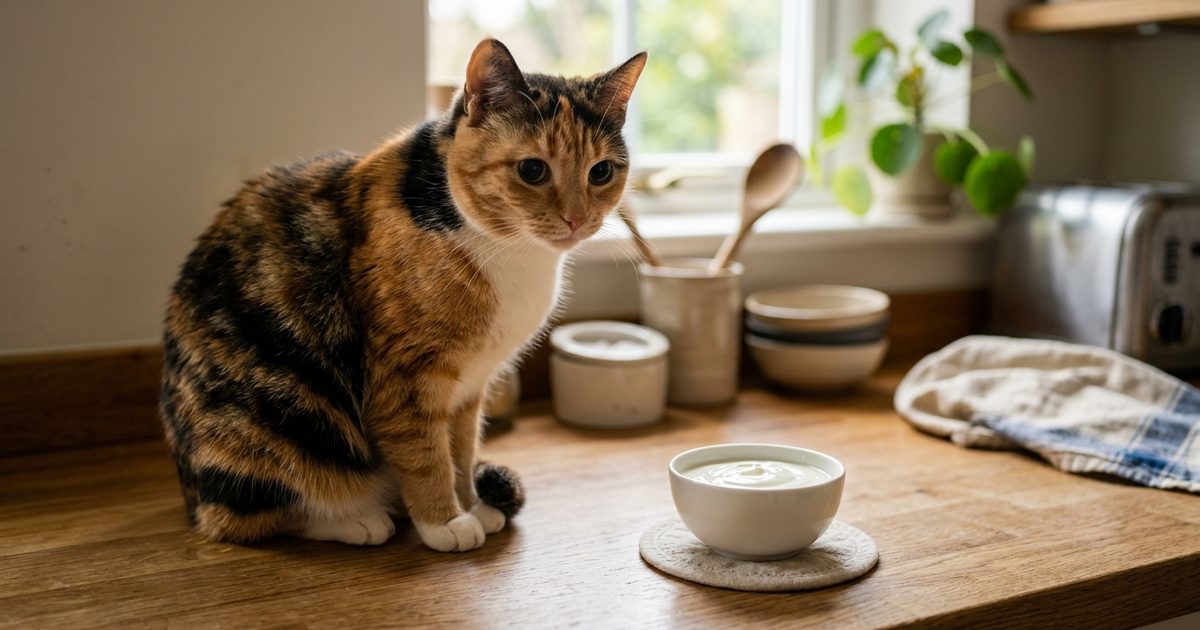
Yes — cats can eat small amounts of plain, unsweetened yogurt as an occasional treat. Most adult cats are lactose-intolerant, so portion size matters, but fermentation makes yogurt easier on a cat's digestion than regular cow's milk.
The short answer
The only yogurt that fits the "yes" is plain, unsweetened yogurt — nothing flavored, nothing sweetened, nothing with mix-ins. Even then, it's a treat, not a meal and not a supplement. A teaspoon or two once in a while is the right scale, offered because your cat finds it interesting, not because it needs it. A cat's daily nutrition should come from balanced cat food; yogurt is a small edible moment, not part of the menu.
The reason the answer is "small amounts" rather than "freely" comes down to lactose. Most adult cats produce very little lactase, the enzyme that breaks down milk sugar — which is the same root cause behind whether cats can drink milk at all. Yogurt sidesteps some of that problem, but not all of it.
Why it's not a free pass
Yogurt is still a dairy product. It still carries calories, still contains some lactose, and still varies wildly from cat to cat in how well it's tolerated. One cat may lick a spoonful with no issue; another may get loose stool from the same amount. Individual tolerance is the real variable, and there's no way to predict it without trying a very small portion first and watching closely.
For cats that are already overweight, diabetic, or on a managed diet, yogurt offers nothing nutritionally that justifies the calories — it's energy the cat doesn't need, and the fats and sugars work against the goals you're already managing. The Cornell Feline Health Center treats dairy as, at most, an occasional treat — not something that earns a regular place in a cat's feeding routine. If your cat doesn't strictly need it, the honest answer is that it's optional.
Why Is Yogurt Better Tolerated Than Milk?
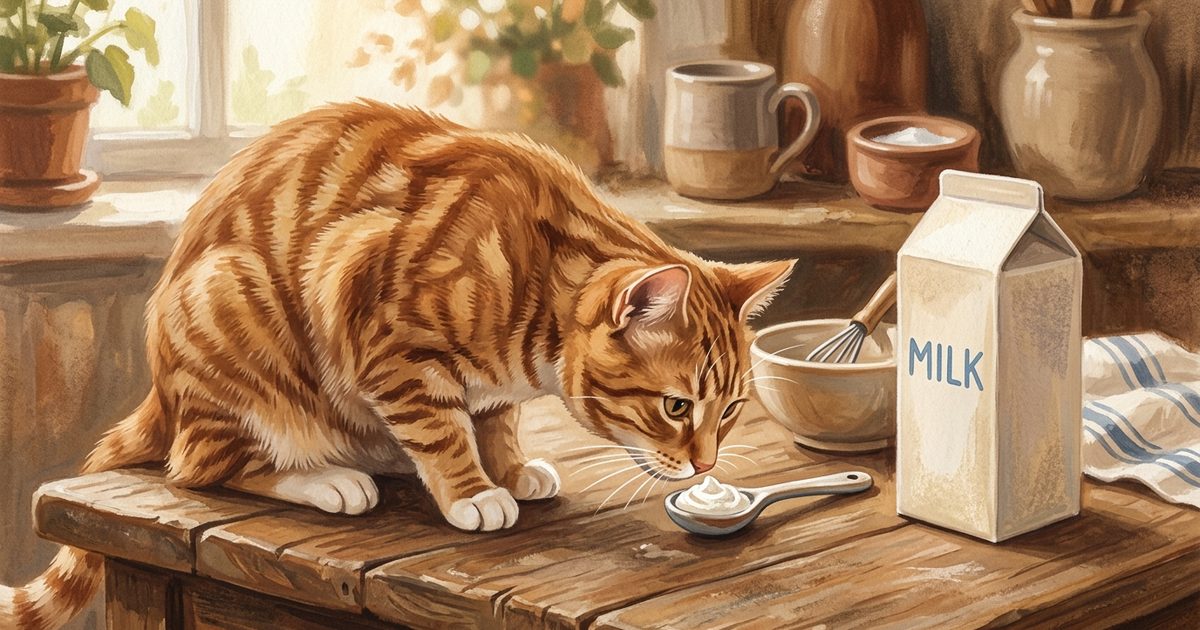
During fermentation, the live bacteria in yogurt break down much of the lactose into simpler sugars before the cat ever eats it. That's why yogurt causes less digestive upset than milk in lactose-intolerant cats — though it still contains enough lactose to cause problems in larger amounts.
How fermentation lowers lactose
Yogurt is milk that has been deliberately cultured with live bacteria — typically Lactobacillus bulgaricus, Streptococcus thermophilus, and sometimes additional Lactobacillus or Bifidobacterium strains. These bacteria do something useful before the yogurt ever reaches the bowl: they consume lactose as fuel and convert it into lactic acid. That's what thickens the milk and gives yogurt its tang, and it's also what lowers the lactose content compared with the milk it started from.
The practical effect is that plain yogurt typically contains meaningfully less lactose, gram for gram, than whole milk. That doesn't make it lactose-free — it doesn't — but it does mean a small taste is less likely to trigger the gas, bloating, and loose stool that plain milk tends to cause in cats whose lactase production has already dropped off after weaning. The same reason yogurt is gentler than milk is also the reason a slice of cheese is often tolerated when milk isn't — processing removes a share of the lactose. You can read more about that comparison in our piece on whether cats can eat cheese. With yogurt, the work is done by bacteria rather than by straining or aging, but the direction is the same: less lactose than the milk it came from, never zero.
Live cultures and the gut
Those same live bacteria are what gives yogurt its reputation as a "probiotic" food, and that angle deserves a moment here — though we go deeper into it later in the article. In principle, the cultures can contribute to the balance of bacteria living in a cat's gut. In practice, the strains and doses in human yogurt weren't chosen for cats, so the benefit is real but modest, and yogurt shouldn't be treated as a digestive remedy. For the underlying lactose question itself — why so many adult cats react to dairy at all — the full picture is in our guide on whether cats can drink milk.
Which Kinds of Yogurt Are Safe for Cats?
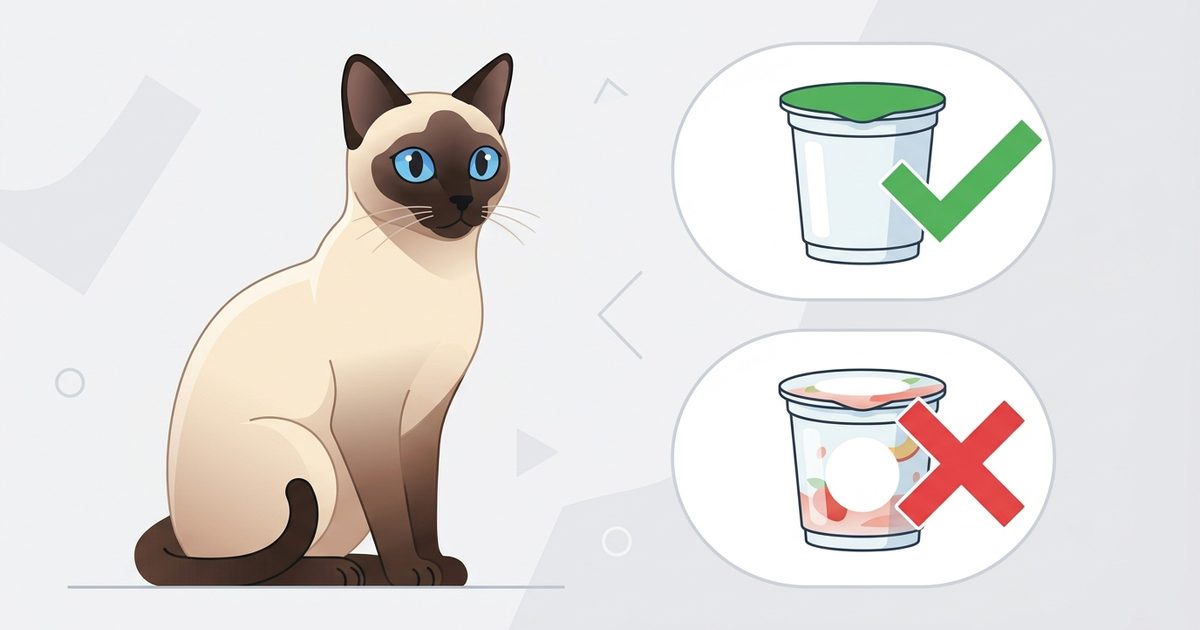
Only plain, unsweetened yogurt is safe for cats — regular or Greek both work. Never offer flavored, sweetened, fruit-on-the-bottom, or artificially sweetened yogurt. Some sugar-free yogurts contain xylitol, an artificial sweetener that is highly toxic and potentially deadly to cats.
Plain regular vs Greek
Both plain regular yogurt and plain Greek yogurt are acceptable in small amounts. The difference is that Greek yogurt is strained, which removes much of the whey — leaving it higher in protein, lower in lactose and sugar, and noticeably thicker. For a lactose-sensitive cat, the lower lactose content makes Greek the marginally better choice, though the gap is small and either is fine as long as the label lists only milk and live cultures. So if you've wondered whether cats can have Greek yogurt, the answer is yes — plain, unsweetened, in the same tiny portions as regular yogurt. The same plain-only rule applies: no honey, no vanilla, no "light" versions with added thickeners or sweeteners.
Flavored and sweetened yogurt — avoid
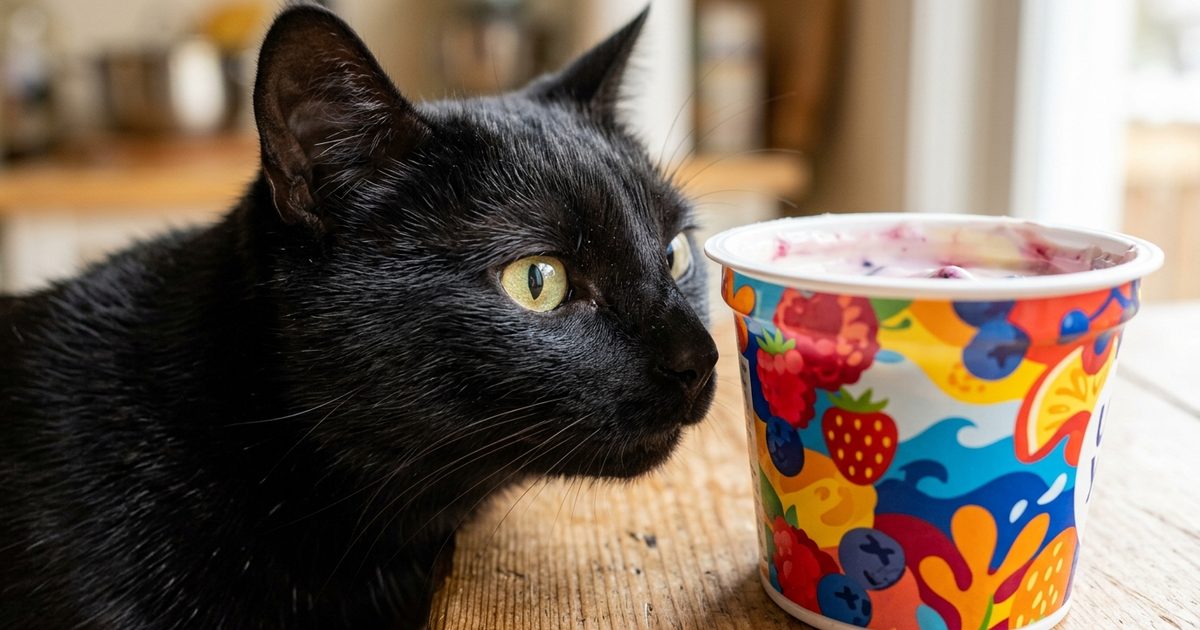
Flavored yogurts — vanilla, strawberry, fruit-on-the-bottom, chocolate, key lime — all belong firmly on the do-not-share list. They carry added sugars, fruit syrups, and artificial flavorings that cats gain nothing from and can genuinely be harmed by. Cats lack a functional sweet receptor, so they cannot taste sweetness at all; whatever makes a flavored yogurt appealing to you is invisible to your cat. What your cat does absorb is the sugar load: unnecessary calories that contribute to weight gain, upset the gut, and over time damage teeth. There is no scenario where flavored yogurt is the right treat. If your cat is curious about dairy, the fermented, lower-lactose cousin of milk — plain yogurt — is the only safe direction.
Xylitol and artificial sweeteners — the real danger
The single most important rule on this list: never give a cat sugar-free, low-fat, or "diet" yogurt. Many of these products are sweetened with xylitol (also labeled as birch sugar), and xylitol is acutely toxic to cats. In dogs it causes a rapid, dangerous drop in blood sugar and liver damage; while cats appear less dramatically affected, xylitol ingestion is still treated as a medical emergency, and the consequences can be fatal. Symptoms of xylitol toxicity include vomiting, weakness, staggering, collapse, seizures, and lethargy. If your cat eats any sweetened or sugar-free yogurt — even a few licks — contact your vet or a pet poison hotline immediately, and don't wait for symptoms to appear. We cover what to watch for when a cat vomits after eating something toxic in our cat vomiting guide.
Do the Probiotics in Yogurt Help Cats?
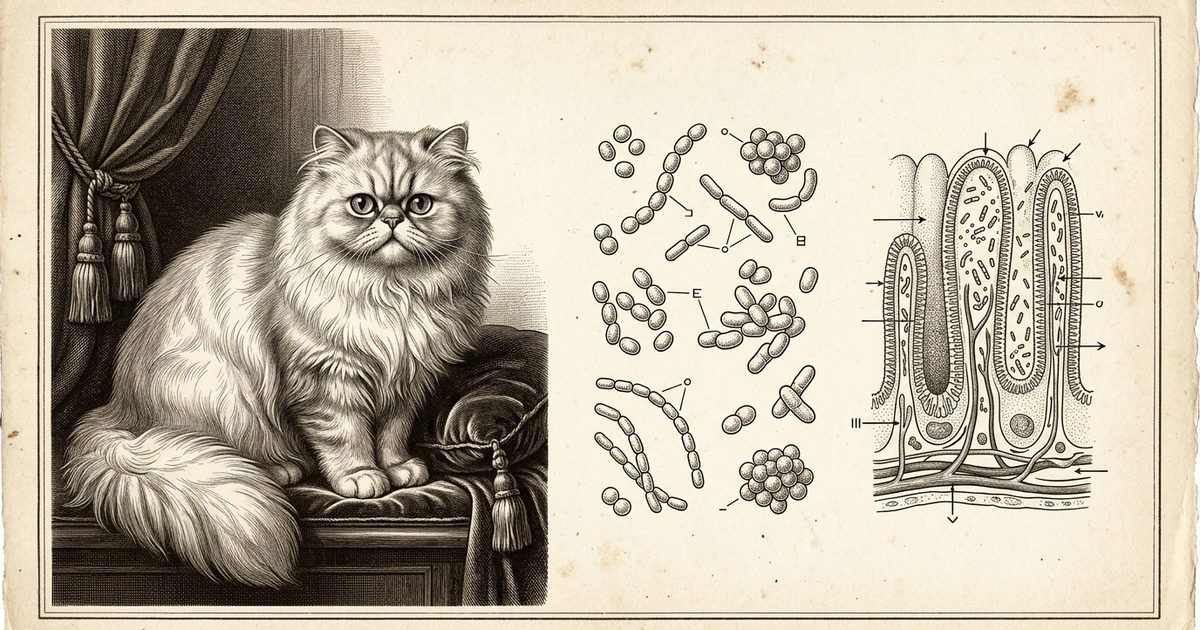
The live cultures in yogurt can support gut bacteria in principle, but yogurt is not a good probiotic supplement for cats. Human yogurt's strains and doses aren't designed for felines — a cat-specific probiotic from your vet is far more effective and safer for ongoing digestive support.
Real but limited benefit
The idea of yogurt for cats as a probiotic source is appealing — and it isn't entirely wrong. Plain yogurt does contain live cultures such as Lactobacillus and Bifidobacterium, which are genuinely involved in gut health. In a healthy cat eating a balanced diet, a small lick of yogurt now and then isn't going to hurt the microbiome and may offer a minor supporting effect. But those cultures were selected and dosed for human guts, not feline ones, and the colony counts in a spoonful of supermarket yogurt are tiny and inconsistent compared with what a cat would need to shift its intestinal flora in any meaningful way. Yogurt is a treat that happens to contain bacteria, not a reliable way to fix a digestive problem. If your cat has chronic loose stools or recurring upset, yogurt won't be the thing that resolves it.
Why cat-specific probiotics are better
When a cat actually needs probiotic support — after antibiotics, during a bout of diarrhea, or with a sensitive gut — a veterinary probiotic is the right tool, not yogurt. Cat-specific products are formulated with strains like Enterococcus faecium and feline-origin Lactobacillus species, delivered at colony-forming-unit (CFU) counts that have been studied in cats, and they come without the lactose load that dairy carries. Your vet can recommend a product matched to your cat's situation rather than you guessing at the yogurt aisle. International Cat Care is a reliable source on feline nutrition and the role of probiotics in managing diet-related digestive issues. The short version: enjoy yogurt with your cat as a shared moment if she likes it, but reach for a real probiotic when the goal is digestive health.
How Much Yogurt Can a Cat Eat?
Limit yogurt to about one to two teaspoons per serving, offered only occasionally — not daily. Treats of any kind, yogurt included, should make up no more than 10% of a cat's daily calories, and yogurt should never replace balanced cat food.
Portion and frequency
For an average adult cat, one to two teaspoons of plain yogurt is plenty for a single treat — and that's the upper end. Smaller cats and kittens get even less. Frequency matters as much as size: think once a week at most, or rarer. Yogurt is a taste experience, not a meal, so it should never crowd out the nutrients your cat actually needs. The standard guidance, echoed by the Cornell Feline Health Center, is that all treats combined should stay under 10% of daily calories, with complete and balanced cat food making up the rest. For the full picture of how that balanced diet fits together, see our guide on what cats eat.

Kittens and senior cats
Kittens are a special case. Their digestive systems are still developing and their lactose tolerance is even lower than an adult's, so dairy is best avoided entirely in young cats — their nutrition should come from kitten-formulated food, not treats. Senior cats, especially those with sensitive stomachs or chronic conditions, should generally skip yogurt too. And for any cat with a known health issue — diabetes, kidney disease, obesity — always check with your vet before adding a new food, however small the amount.
What Are the Risks of Giving Cats Yogurt?
The main risks are lactose intolerance (diarrhea, gas, bloating), the sugar in flavored yogurt, and xylitol toxicity from sugar-free varieties. Some cats are also allergic to dairy proteins. Any vomiting, diarrhea, or lethargy after eating yogurt means stop and call your vet.
Lactose intolerance symptoms
Because most adult cats can't fully digest lactose, the most common reaction to too much yogurt is digestive: loose or runny stool, noticeable gas, and mild belly discomfort. These symptoms are usually mild and pass on their own within a day as the lactose works its way through. They're not an emergency, but they are a clear sign you've overdone the portion — next time, give less or skip it. For what to watch and when loose stool crosses from "wait it out" into "call the vet," see our guide on cat diarrhea. International Cat Care has useful guidance on managing diet-related digestive upset in cats.
Sugar, additives, and xylitol
Flavored and sweetened yogurt carries the biggest avoidable risks. Added sugar contributes to weight gain, dental problems, and gastrointestinal upset — and since cats can't taste sweetness, there is zero palatability upside to balance that out. Worse, some sugar-free and low-fat yogurts use xylitol, an artificial sweetener that is toxic and potentially deadly to cats; if you suspect your cat ate a xylitol-sweetened product, contact a vet immediately. Common stabilizers and thickeners (like pectin or cornstarch) are generally harmless, but they add nothing nutritionally — another reason plain unsweetened is the only yogurt worth offering.
Allergy and when to call the vet
True dairy-protein allergy is rare in cats, distinct from lactose intolerance, but it can happen — watch for itchy skin or persistent GI signs. The red flags that warrant an immediate vet call are persistent vomiting, severe or bloody diarrhea, lethargy, or refusal to eat. Mild, brief loose stool after a small taste usually isn't urgent — anything more than that is.
Curious What Your Cat Would Say?
Upload a photo and get a warm, personalized reading from your cat's perspective.
Start Your Free ReadingYogurt for Cats at a Glance — Summary
| Question | Short answer |
|---|---|
| Can cats eat yogurt? | Yes — plain unsweetened only, in tiny amounts, as an occasional treat |
| Is plain yogurt safe? | Yes — plain unsweetened regular yogurt is the only safe base choice |
| Is Greek yogurt safe? | Yes, if plain — it's strained, so it's higher in protein and lower in lactose |
| Is flavored yogurt safe? | No — added sugars, syrups, and artificial flavors cause GI upset and weight gain |
| Is sugar-free xylitol yogurt safe? | No — xylitol is highly toxic and potentially deadly to cats; never risk it |
| How much yogurt can a cat eat? | About 1–2 teaspoons per serving, once a week or rarer; treats stay under 10% of daily calories |
| Can kittens eat yogurt? | Best avoided — their digestive systems are still developing and are more sensitive to dairy |
| Are the probiotics helpful? | Mildly, but a cat-specific probiotic from your vet is far more effective and safer |
Frequently Asked Questions
Can cats eat plain yogurt?
Yes — cats can eat small amounts of plain, unsweetened yogurt as an occasional treat. Plain yogurt has less lactose than milk because fermentation pre-digests it, so it sits a little gentler on a cat's stomach. Keep it to a teaspoon or two once in a while, never as a meal.
Is yogurt good for cats' digestion?
Only mildly. The live cultures can support gut bacteria in principle, but human yogurt's strains and doses aren't designed for cats, so the benefit is modest. For real digestive support, a cat-specific probiotic from your vet is far more effective — yogurt is a treat, not a supplement.
Can cats eat Greek yogurt?
Yes, if it's plain and unsweetened. Greek yogurt is strained, so it's higher in protein and slightly lower in lactose than regular yogurt — a marginally better pick for sensitive cats. The same tiny portion and plain-only rules still apply.
Can cats eat flavored or sweetened yogurt?
No. Flavored and sweetened yogurts are loaded with added sugars, syrups, and artificial flavors, and cats can't taste sweetness anyway — so there's zero benefit and real harm. Stick to plain unsweetened yogurt only.
Can cats have yogurt with xylitol or artificial sweeteners?
Never. Some sugar-free and low-fat yogurts contain xylitol, an artificial sweetener that is highly toxic and potentially deadly to cats. If you suspect your cat ate even a few licks, contact your vet or a pet poison hotline immediately — don't wait for symptoms.
How much yogurt can I give my cat?
About one to two teaspoons per serving, offered no more than once a week. Like all treats, yogurt should stay under 10% of your cat's daily calories and never replace balanced cat food. Less for small cats, and skip it for kittens entirely.
Can kittens eat yogurt?
Best to avoid it. Kittens' digestive systems are still developing and they're even more sensitive to dairy than adults, so their nutrition should come from kitten-formulated food. Save yogurt as an occasional treat for grown cats instead.
What happens if a cat eats too much yogurt?
The most likely result is lactose intolerance symptoms — loose stool, gas, bloating, and mild belly discomfort that usually pass within a day. Anything more severe, like persistent vomiting, bloody diarrhea, or lethargy, means stop and call your vet right away.
Sources & References
You Might Also Like
Kitten Teething: Timeline, Symptoms & How to Help
Kitten teething runs from 3 to 7 months as baby teeth fall out. Learn the timeline, signs to watch for, and how to soothe a teething kitten safely.
15 min readWhen Do Cats Stop Growing? A Complete Timeline
When do cats stop growing? Most cats reach adult size by 12-18 months, but large breeds like Maine Coons keep growing until 3-4 years. Full timeline inside.
14 min readCan Cats Eat Cherries? Flesh, Pit & Toxicity Facts
Can cats eat cherries? Pitted flesh is safe in tiny amounts — but the pit, stem, and leaves are toxic (cyanide precursors). Learn what's safe and what isn't.
15 min read