
Do Cats Know Their Names? What Research Really Shows
If you've ever wondered do cats know when you're pregnant — or whether the cat watching you across the room knows anything at all about you — you're closer to the truth than the old "aloof" stereotype suggests. The same question fans out into the things owners ask every day: do cats know their names, and more broadly, do cats understand us when we talk to them? Decades of feline-behavior research, capped by the University of Tokyo's 2019 name-recognition study, say the answer is a surprising yes — cats know far more about you than their reputation implies.
Key takeaways
- Yes — cats recognize their own name. The Saito 2019 research showed cats consistently distinguish their name from similar words and other cats' names.
- They read your voice, tone, mood, and daily routine — attunement that makes them far more aware of you than "aloof" suggests.
- They don't understand language, causality, or the future. Cats live in associations and the present moment, not in plans or grudges.
What Cats Know About You — Quick Reference
| What cats know | Yes or partly | How we know |
|---|---|---|
| Their own name | Yes | Saito 2019 — cats distinguish their name from other words |
| Your voice & face | Yes | They orient to their owner's voice and face over a stranger's |
| Your mood | Partly | They track tone, posture, and tears; individuals vary |
| Your routine & schedule | Yes | They anticipate feeding time and your return |
| When you're sick or sad | Partly | Many cats stay close; supported by owner reports + behavior research |
| Spite or guilt | No | No evidence; what looks like guilt is a stress response |

Do Cats Know Their Names?
Yes — cats know their names. In a 2019 University of Tokyo study, Saito and colleagues played cats recordings of their own name mixed with similar words and other cats' names. Cats consistently distinguished their own name, shown by ear and head movements — even when the voice was a stranger's.
For a long time, the common wisdom was that cats just respond to any friendly tone — that they don't actually recognize the specific sound of their own name the way a dog does. The research now says otherwise. Cats don't merely react to a pleasant voice; they pick their word out of the stream of sound around them. And that distinction matters, because it reframes a lot of what looks like "ignoring" you.
The Saito 2019 name-recognition study
The clearest evidence comes from a 2019 study by Atsuko Saito and her team at the University of Tokyo. To test whether cats truly recognize their name versus just any sound, they used a method called habituation-dishabituation. It works like this: play a cat four similar words or other cats' names one after another, and the cat's reaction — a flick of the ear, a turn of the head — gradually fades as the sound becomes boring and predictable. Then play the cat's own name. If the cat perks up again, ear or head moving back toward the speaker, that rebound tells you the cat heard something new and meaningful — its name.
Across the experiments, cats discriminated their own name from general nouns, from the names of other cats living in the same household, and even from similar-sounding nickname variants. The effect held whether the voice was their owner's or a stranger's, and it appeared in both home cats and café cats. You can read the study itself in Scientific Reports, and the Cornell Feline Health Center covers feline cognition and behavior more broadly. The takeaway: name recognition is a robust, well-supported finding, not a sentimental owner's wish.
Why your cat sometimes ignores you
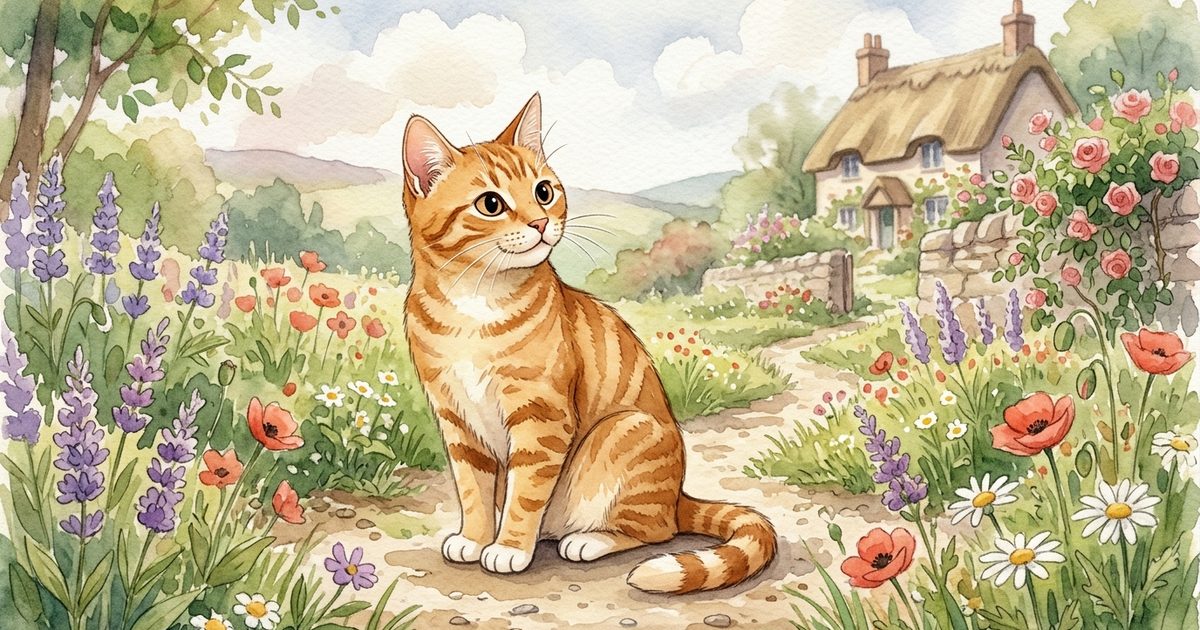
Here's the part every cat owner recognizes. You call your cat's name. She flicks one ear — nothing else. No turn, no approach, no acknowledgement you can see. It feels personal.
It isn't. The cat almost certainly heard you. The same research showing cats recognize their name also shows that recognizing a sound and choosing to respond to it are two different things. Cats are not dogs bred for thousands of years to check in with humans; they decide whether a response is worth the effort based on reinforcement history — have responses to this name paid off before? — and on their current mood. A cat resting in a warm patch of sun, or mid-hunt through a dust bunny, may simply decide this particular summons doesn't rate a reply.
So selective deafness is a choice, not ignorance. That distinction matters: your cat isn't failing to know her name, she's exercising judgment about it. And when she does respond — turning, approaching, slow-blinking — it's a genuine signal of the bond between you, one of the quieter ways cats show affection. Individual cats vary, of course; some come running at the first syllable, others barely bother. But the knowing is there either way.
Do Cats Understand Human Words and Tone?
Cats understand some words — their name, common cues like "dinner" or "no" — but their real strength is reading your tone and emotion. They don't parse grammar; they learn that specific sounds predict specific outcomes, and they pick up on whether your voice is warm, tense, or scolding.
It's tempting to imagine your cat following the meaning of your sentences — the way she trots to the kitchen when you say "hungry?" can feel uncanny. But what cats actually understand is narrower and more interesting than full language. They build a small, practical vocabulary out of sounds that reliably predict something, and layered on top of that is an ear for how you say things — the emotional texture of your voice — which may matter to them more than the words themselves.
A small vocabulary, a big ear for tone
Cats learn words the way they learn anything: through association and consequence. A sound that repeatedly precedes food — "dinner," "treat," the rustle of a bag — gets filed away as food-predicting. Their own name gets filed as addressed-to-me. "No" and "come" and a handful of other cues join the lexicon if they're used consistently and if the cat finds the outcome worth tracking. Over time, most cats accumulate a modest working vocabulary of a dozen or so meaningful sounds.
What they don't do is parse grammar, syntax, or sentences. "Do you want to go outside now?" is, to a cat, a stream of tone and a few salient fragments — not a question with structure. This is word-recognition, not language-comprehension, and the difference matters: your cat isn't misunderstanding your sentences, she's reading a different layer of them entirely. Communication, of course, runs both ways — the meow directed at humans is essentially the reverse channel, a sound cats reserve almost entirely for us.

How cats read your emotional tone
If the words are limited, the tone-reading is not. Cats are exquisitely sensitive to pitch, tempo, and prosody — the music of speech. A high, warm, rising voice tends to draw them in; a low, sharp, clipped one tends to make them wary or withdraw. Owners who talk to their cats in a gentle singsong often find their cat approaching, rubbing, settling close. The same cat, hearing a tense or scolding tone, may flatten her ears, leave the room, or simply go still.
This is why cats sometimes seem to "know" you're upset or irritated before you've said a specific word — they're tracking the emotional contour of your voice and adjusting their behavior to match, approaching what feels safe and avoiding what feels charged. Notice this cuts in a specific direction: your cat reads your emotion accurately, but whether she then feels an emotion of her own in response is a separate and harder question — one we explore in do cats have feelings. The perception is real and well-documented; the inner experience behind it is where the certainty ends.
Do Cats Know Time and Your Routine?
Yes — cats have a strong internal clock and learn your daily schedule. They anticipate feeding time, your return from work, and bedtime, often waiting at the door or food bowl minutes before the event. This is associative time-keeping, not clock-reading.
Anyone who has watched a cat materialize by the food bowl five minutes before dinner knows something is going on. Cats aren't reading the clock on the wall — they're running a surprisingly accurate internal schedule built from cues stacked on top of each other, and it's one of the clearest signs of just how closely they track you.
The cat's internal clock
Cats, like most animals, follow circadian rhythms — roughly 24-hour biological cycles tied to light and dark. They're also crepuscular, meaning their natural activity peaks at dawn and dusk, which is why your cat may be wide awake exactly when you're trying to sleep (we dig into that in are cats nocturnal). On top of that biology, cats layer learned cues: the first light through the curtains, the sound of your alarm, the click of the kettle, the rattle of your keys. Each one becomes a time-marker, and together they let the cat predict what happens next.
Predictability is genuinely good for cats. A household that runs on a rhythm gives a cat a stable map of the day, which lowers background stress — the cat knows when to expect food, company, and quiet, and can settle between them. The Cornell Feline Health Center notes that environmental consistency is a key factor in feline well-being, which is why major disruptions hit cats harder than they hit us.
Why routine matters to cats
Cats are territorial and, above all, predictability-seeking. Their sense of safety is wired to what stays the same: the same paths through the house, the same feeding spot, the same person arriving at the same hour. When the routine holds, the world feels safe; when it breaks — a move, a new shift at work, a new baby shifting the whole household's rhythm — that map shakes, and stress behaviors can follow (hiding, over-grooming, litter-box changes, appetite shifts).
So when your cat seems to "know" your schedule, what's really happening is more meaningful than clock-reading: the routine has become the cat's model of safety, and she tracks it because predictability is security. That's not a small thing — it's the cat treating your comings and goings as the architecture of her world.

Curious what your cat would say about all the things she notices about you? Get a MeowMind reading — your cat clearly knows a lot about you. But what is she actually thinking? Upload a photo and hear your cat's perspective in her own first-person voice.
Do Cats Know When You're Sad or Sick?
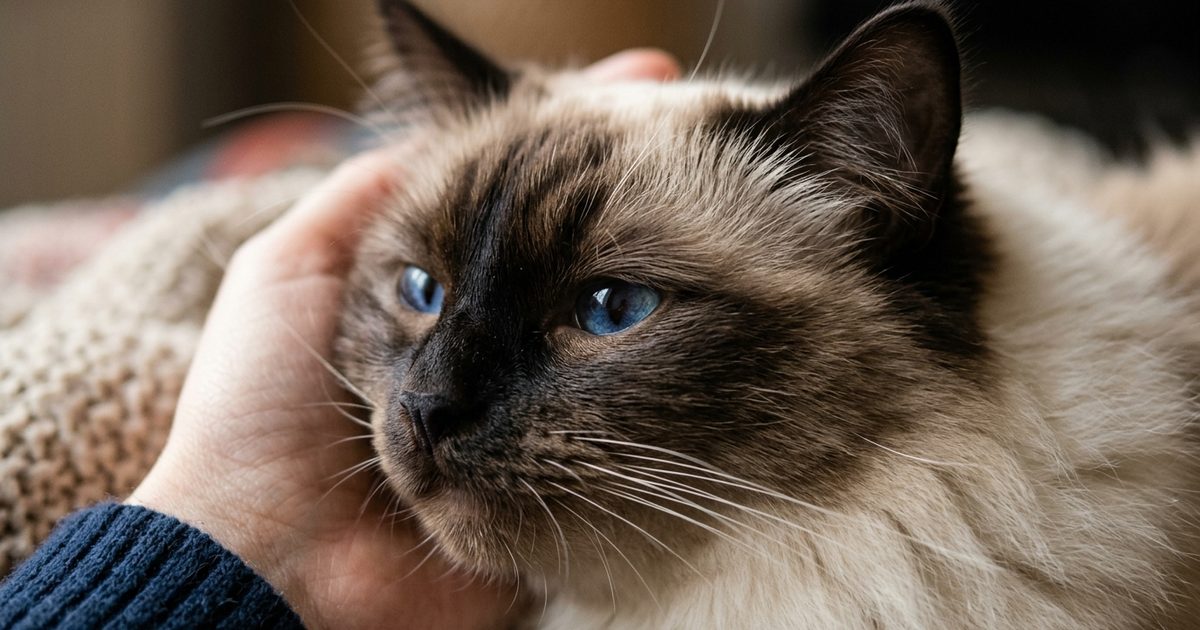
Many cats notice when their human is sad or unwell — they pick up on changed body language, voice, scent, and routine. Some cats respond by staying close, vocalizing, or resting on the person. Research and abundant owner reports support this attunement, though the mechanism is behavioral, not supernatural.
This is where the question of what cats know gets most personal — and most contested. Owners swear their cats respond to tears, illness, even pregnancy. The honest answer is somewhere in between: cats are deeply attuned to us through real, observable channels, and some of what they pick up on is genuinely surprising — but it's grounded in scent, behavior, and routine, not mysticism.
Sensing sadness
If you've wondered can cats sense sadness, the evidence — both behavioral research and the sheer volume of owner reports — points to yes, as a tendency rather than a guarantee. Cats read the visible and audible shifts that come with low mood: tearfulness, a slumped or closed-off posture, slower movement, a voice gone flat or tight. To a cat, those are big, salient changes in a person she monitors constantly.
Some cats respond by staying close — settling beside you, head-butting, purring, or simply lying on or near you. The purring in particular is worth noting: cats purr in a frequency range associated with comfort and even low-level self-soothing, and a cat purring against an upset person looks a lot like an attempt to calm. Not every cat does this — individual personality, history, and bond all matter — but it's common enough that behaviorists treat owner-comfort as a recognized feline response pattern. How that reads against the cat's own emotional life is a separate question we explore in do cats have feelings — here the point is that she detects your mood, and very often acts on it.
Do cats sense pregnancy or illness?
This is the question that drives the search do cats know when you're pregnant — and it deserves a careful, both-sides answer. The realistic mechanism is scent and behavior, and it's genuinely plausible. Pregnancy changes a person's hormones, which alter body scent in subtle ways a cat's olfactory system can register (the feline sense of smell is many times more acute than ours — International Cat Care covers just how finely tuned feline senses are). Pregnancy also shifts posture, energy, how much you move, how you carry yourself, and — crucially — the whole household's rhythm, which a routine-tracking cat absolutely notices. So a cat acting differently around a pregnant owner is not magic; it's the cat registering a constellation of real changes.
What about cats reportedly detecting cancer, seizures, or oncoming illness? Those stories exist and deserve to be heard, but the honest framing is that the evidence is anecdotal and case-level, not proven. There's no controlled research confirming that cats can reliably diagnose disease. The more defensible claim is that some cats become acutely attuned to a sick person's scent and behavior changes and react to them — attunement and scent sensitivity, not mystical diagnosis. Hold both sides: the owner experiences are real and often striking, and the science isn't there to call it a confirmed ability. Either way, a cat can't replace a doctor — if you're ill, the cat's concern is touching, but the test belongs to a clinic.
How to tell your cat is attuned to you
Signs your cat is reading you closely: she comes over or settles near you when you're upset; her behavior shifts around illness or exhaustion in the house; she seems to anticipate your moods and routines before you've acted on them. None of this proves mind-reading — it proves attention. Your cat has been studying you, quietly, the whole time.
What Do Cats NOT Know?
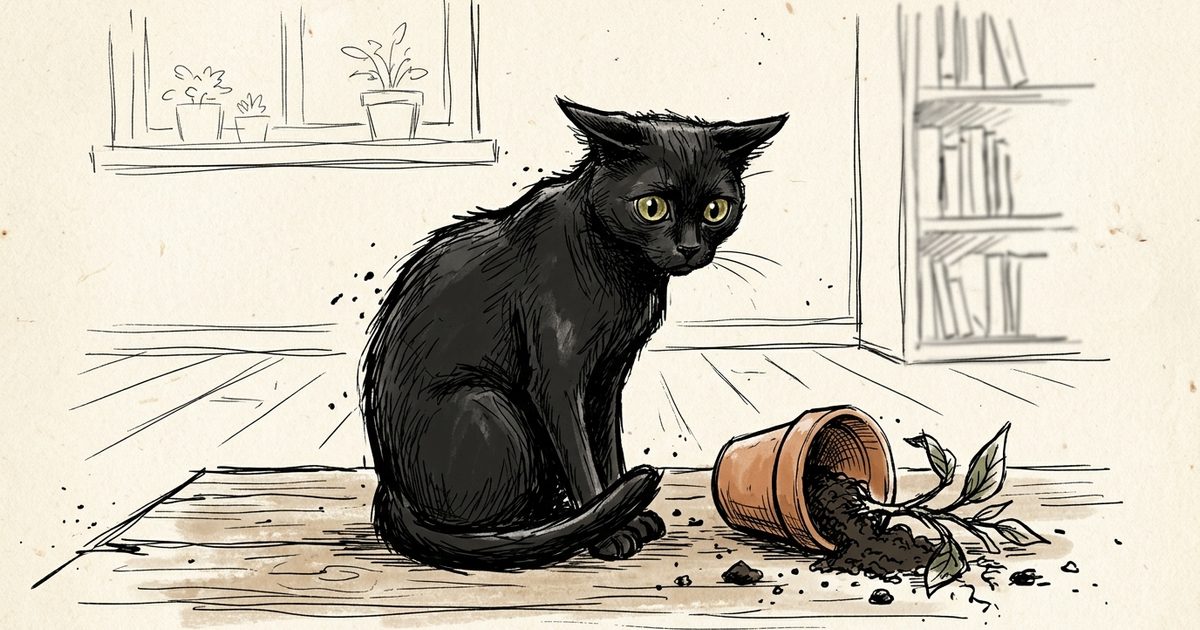
Cats don't understand complex causality, abstract concepts, spite, guilt, or the future. They don't plot revenge after a perceived wrong, and they don't feel guilty after knocking over a plant — what looks like guilt is a stress response to your angry tone. Cats live in the present, learning associations.
For all they pick up about us, cats have clear cognitive edges. Knowing where those edges sit makes you a better reader of your cat — and stops you from projecting very human motives onto a creature whose mind works on a different, simpler, and equally elegant logic. Cornell's Feline Health Center frames feline cognition as associative and present-focused rather than reflective or deliberative.
No spite and no real guilt
The classic "revenge pee" — your cat urinates on your bed or clothes right after you scolded her — feels intensely personal. It isn't. Cats don't hold grudges, and they lack the self-concept needed for malice. Inappropriate urination is almost always a signal of stress, a litter-box problem (location, cleanliness, substrate), or a medical issue like a urinary tract infection. When the trigger is emotional — a new pet, a move, a disrupted routine — the cat isn't punishing you; she's seeking your scent on the softest, most "you"-saturated surface because that scent is safety. The same projection myth drives the "guilty look": the crouched body, flattened ears, and wide eyes you see after a knocked-over plant aren't remorse — they're appeasement, a response to your sharp tone and stiff posture. Your cat reads your anger and tries to defuse it. This is the identical dynamic behind why your cat may bite you after overstimulation rather than out of meanness.
No future planning or abstract concepts
Cats don't plan tomorrow, budget their treats, or grasp concepts like ownership, money, or death. They operate in an associative present layered over learned routines: the alarm means food is coming, the coat by the door means you're leaving, the carrier means the vet. That's powerful in its own way — it's how a cat knows your schedule without a clock — but it stops short of abstraction. This isn't a deficit so much as a different cognitive niche, honed for a solitary hunter's life where reading the immediate environment mattered far more than reflecting on it. The same species-specific logic underpins the broader question of whether cats are smarter than dogs — intelligence in animals is shaped by what each species needed to survive, not ranked on a single human scale.
Common Myths About What Cats Know
Three myths need correcting: cats don't just respond to any sound — they specifically distinguish their own name; they don't understand everything you say — they read tone and learn a few words; and ignoring you doesn't mean they didn't hear — it usually means they chose not to respond.
Cats' real abilities are impressive enough that they don't need exaggeration. Correcting the three most common myths helps you meet your cat on accurate terms — appreciating what she genuinely knows, rather than what we wish she did. The International Cat Care resource library is a good anchor for separating evidence from folklore.
Myth: Cats only respond to tone, not their name. Fact: The Saito 2019 study showed cats specifically discriminate their own name from other similar-sounding words, from cohabiting cats' names, and even from their own nickname variants — responding with characteristic ear and head movements. They aren't just reacting to any pleasant sound; they recognize the specific sound that means them. Generalize this as a well-supported finding across the cats tested, while remembering individual variation in how overtly a cat shows recognition.
Myth: Cats understand full sentences. Fact: Cats build a small associative vocabulary — their name, food cues like "dinner," "no," "come" — and they read your emotional tone with real sophistication. But they don't parse grammar or syntax. "Do you want your dinner?" lands because of the words "dinner" plus your warm, rising pitch, not because your cat decoded the sentence. Overstating comprehension sets up frustration for both of you.
Myth: If my cat ignores me, she doesn't know I called. Fact: Selective deafness is a choice, not ignorance. Cats hear their name and decide whether to respond based on reinforcement history (do responses usually pay off?) and current mood. Silence is often a deliberate opt-out — the feline equivalent of reading a notification and putting the phone back down. A cat that doesn't come isn't a cat that didn't hear.
What Cats Know — At a Glance
| Question | Short answer |
|---|---|
| Do cats know their name? | Yes — they distinguish it from other words |
| Do cats know your voice? | Yes — they recognize your voice and face |
| Do cats know your mood? | Yes — they read tone, posture, and scent |
| Do cats know your routine? | Yes — strong internal clock, anticipates events |
| Do cats sense illness or pregnancy? | Partly — attunement, not diagnosis |
| Do cats feel spite or guilt? | No — those are projections, not feline emotions |
Curious What Your Cat Would Say?
Upload a photo and get a warm, personalized reading from your cat's perspective.
Start Your Free ReadingFrequently Asked Questions
Do cats know their own name?
Yes. The 2019 Saito study showed cats consistently distinguish their own name from similar words, other cats' names, and even their own nickname variants — reacting with characteristic ear and head movements, whether the voice is their owner's or a stranger's.
How do cats know their name without training?
Cats learn their name through everyday association, not formal training. The sound of their name repeatedly predicts that something relevant to them is about to happen — attention, food, play — so they file it away as a meaningful, addressed-to-them sound.
Do cats understand what we say to them?
Partly. Cats learn a small vocabulary of meaningful sounds — their name, food cues like 'dinner,' 'no,' 'come' — and they read your tone with real sophistication. But they don't parse grammar or sentences; they're tracking key words and the emotional texture of your voice.
Do cats know when you're sad?
Most cats notice. They pick up on the visible and audible shifts that come with low mood — tearfulness, slumped posture, a flat or tight voice — and some respond by staying close, purring, or resting on you. It's a common tendency, not a guarantee, since individual cats vary.
Do cats know when you're pregnant or sick?
They likely notice real changes — pregnancy and illness shift your scent, posture, energy, and the household's rhythm, all of which a routine-tracking cat registers. Reports of cats detecting disease are anecdotal, not proven; the realistic mechanism is scent and behavioral attunement, not mystical diagnosis.
Why does my cat ignore me when I call her name?
She almost certainly heard you. Recognizing a sound and choosing to respond are two different things for a cat. Based on reinforcement history and her current mood, she may simply decide this particular summons doesn't rate a reply — selective deafness is a choice, not ignorance.
Do cats know your daily routine and schedule?
Yes. Cats run a surprisingly accurate internal clock built from stacked cues — first light, your alarm, the kettle, your keys — that lets them anticipate feeding time, your return, and bedtime. It's associative time-keeping, not clock-reading.
Do cats feel guilty when they do something wrong?
No. What looks like guilt — the crouched body, flattened ears, wide eyes after a knocked-over plant — is actually appeasement, a response to your sharp tone and stiff posture. Cats lack the self-concept for remorse and live in the present, learning associations.
You Might Also Like
Do Cats Have Feelings? What Science Really Says
Do cats have feelings? Science says yes — cats feel joy, fear, attachment, and stress. Learn the signs, the neuroscience, and what your cat is feeling.
26 min readAre Orchids Toxic to Cats? The Good News for Plant Lovers
Are orchids toxic to cats? No — the ASPCA lists true orchids like Phalaenopsis as non-toxic. Learn which are safe, the real risks, and what to do.
15 min readAre Roses Toxic to Cats? The Safe Bloom With a Catch
Are roses toxic to cats? True roses are safe — but thorns, pesticides, and bouquet fillers like baby's breath can harm them. What to check and how to stay safe.
17 min read