
What Colors Can Cats See? Feline Color Vision Explained
If you've ever watched your cat completely ignore a bright red mouse toy only to lose her mind over a crumpled blue wrapper, you've already glimpsed the answer to what colors can cats see. The short version: cats are not, as the old myth insists, stuck in a black-and-white world — but they don't see the full rainbow the way you do, either. Whether you've wondered "are cats color blind" or simply "what colors do cats see," the honest answer is that your cat lives in a softer, bluer, greener version of your world. Reds and pinks fade; blues and yellows pop. Below is a warm, science-based walk through exactly what your cat sees — and what it means for the toys, beds, and everyday colors you choose for her.
Key takeaways
- Cats are dichromatic, not fully colorblind — their eyes use two color channels instead of the three humans use, so they see a real but limited palette.
- They see blues, greens, and the yellows in between clearly, while reds, oranges, and pinks appear muted, dull, grayish-yellow or greenish-gray.
- Cats are red-green colorblind, much like some humans — a closer match than most owners expect.
What Cats See — Quick Reference
| Color | How cats see it | Why |
|---|---|---|
| Blue | Vivid and clear | Matches one of the cat's two cone channels |
| Green | Clear and natural | Falls in the cat's second cone channel |
| Yellow | Clear, slightly greenish | Sits between the blue and green channels |
| Red | Dull grayish-yellow-green | No red-tuned cone to register it |
| Pink | Faded, pale gray-pink | Red component drops out, leaving a faint wash |
| Orange | Muted yellowish-gray | Collapses toward the green-yellow channel |

What Colors Can Cats See?
Cats see blues, greens, and the yellows between them clearly, while reds, oranges, and pinks fade into dull yellowish-gray or greenish-gray. Cats are not fully colorblind — they are dichromatic, with two color channels instead of the three humans use.
The colors cats see best
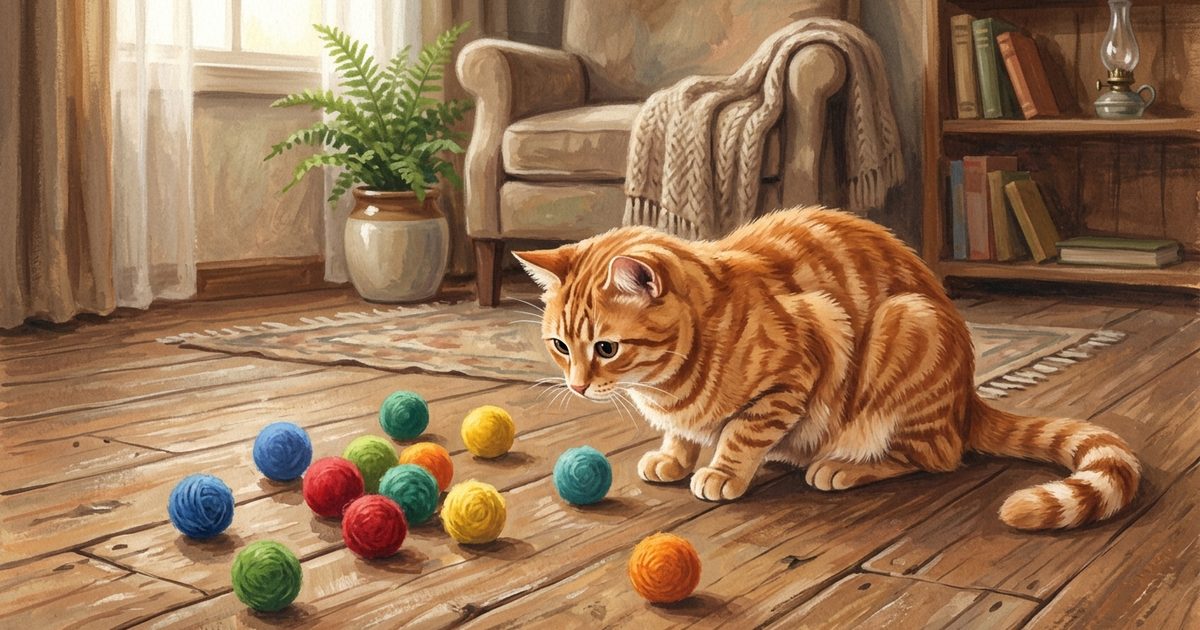
Blues and blue-greens are where feline vision shines. A cat's eyes include a cone cell tuned to the blue end of the spectrum, so cool hues — sky blue, teal, deep indigo — register as vivid and distinct. Yellow-greens also come through well, sitting comfortably inside the cat's second cone channel. This is why a vivid blue wand toy or a bright green feather dancer stands out so sharply against a warm wooden floor or beige carpet: your cat genuinely sees the contrast. The same scene tells a different story with warm colors. A red mouse lying still on a brownish rug nearly disappears, because to a dichromatic eye red and the background fold into the same dull yellow-green band. If you've ever felt your cat was selectively ignoring a toy, sometimes the color — not the attitude — is the real reason.
The colors cats see poorly
Reds, oranges, and pinks are where cat vision falters. Without the long-wavelength cone cell that humans use to isolate red, your cat's brain cannot separate red light from neighboring green wavelengths, so all of these warm hues collapse toward a muted grayish-yellow-green (the cone mechanism, covered in How Does Cat Color Vision Work). The classic red laser dot doesn't look like a brilliant crimson spark to your cat — it reads as a dim, slightly greenish moving spot. A salmon-pink blanket looks like pale gray-pink. An orange kicker toy on a warm floor blends into the same washed-out band as the floor itself. The perceptual result, rather than precise wavelength math, is what matters: warm colors desaturate, cools stay crisp. This is also why the long-standing claim that cats love red toys is better understood as a love of motion and novelty — the dart, the rustle, and the silhouette — not the color red.
So are cats color blind?
Honestly, it depends on what you mean. The old belief that cats see only in black and white is simply wrong — they clearly perceive blues and greens and live in a colorful, if muted, world. But "color blind" in the everyday sense still fits, because cats share the same kind of red-green colorblindness that some humans have. If you know someone who can't pick out the red berries hidden in a green hedge, your cat sees that hedge the same way. "Color-limited" is a fairer description than "color blind," since it acknowledges what your cat can see rather than what she can't. International Cat Care, a leading authority on feline welfare, describes cat vision as tuned for motion and dim light rather than fine color detail — a trade-off that makes perfect sense for a dawn-and-dusk hunter.
How Does Cat Color Vision Work? The Retina Science
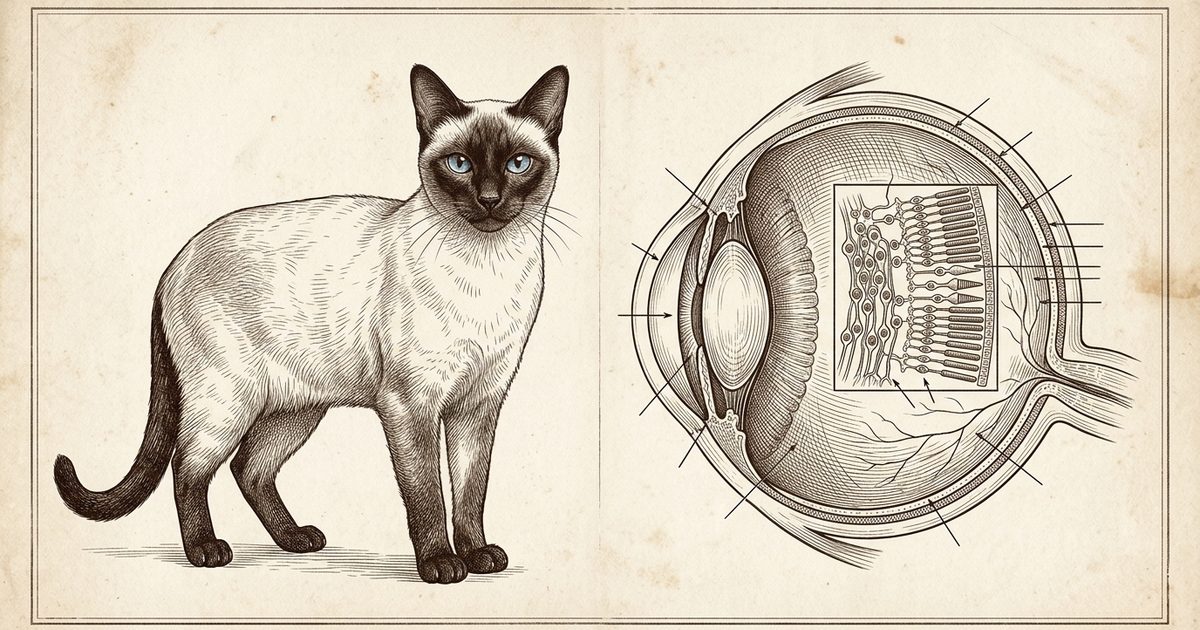
Cat color vision comes from cone cells in the retina. Humans have three cone types (red, green, blue), while cats have only two, tuned to blue-violet and green-yellow, so they cannot separate red from green. Cats trade color for sensitivity, packing in more rod cells for motion and dim light.
To understand what colors cats can see, you have to look inside the eye — at the retina, the thin layer of light-sensitive tissue at the back. The retina is built from two kinds of photoreceptor cells, and the balance between them decides whether a cat experiences a world of vivid hue or one of muted tone. Cats come down firmly on the muted side, and the reason is mechanical, not mysterious.
Cones: the color cells
Cones are the photoreceptors responsible for color vision. They work in bright light, and each cone type is tuned to a particular range of wavelengths. Humans are trichromatic — we have three cone types, commonly described as short-wavelength (blue), medium-wavelength (green), and long-wavelength (red). Working together, those three channels let the human brain reconstruct a wide spectrum of millions of distinct hues.
Cats, by contrast, are dichromatic. They have only two functional cone types — one tuned roughly to blue-violet, the other to green-yellow. The long-wavelength, red-tuned cone that humans rely on to perceive red and orange is effectively absent in the feline retina. Without that third channel, a cat's brain has no way to cleanly separate red wavelengths from green ones, so the two fold together — the root mechanism behind feline red-green colorblindness and the reason cats cannot see red. The Cornell Feline Health Center is an excellent reference for the underlying feline eye anatomy and photoreceptor biology if you want to go deeper.
Rods: the motion-and-dim-light cells
If cones give color, rods give everything else: low-light sensitivity, motion detection, and the ability to register shape in near-darkness. Cats have a strongly rod-dominant retina — roughly six rod cells for every cone, compared to about four-to-one in humans. That ratio is the trade-off that defines feline vision: superb motion tracking and extraordinary dim-light sensitivity, bought at the cost of color range and fine detail.
So when your cat snaps her head toward a moth you never even noticed, she is not seeing its color — she is seeing it move, and her rods are built to make the tiniest motion pop (why motion fires the rod cells, not color, is covered in Does Color Matter to Cats). The rod story also connects to the tapetum lucidum, the reflective layer behind the retina that gives cats their eyeshine and amplifies dim light. That is the low-light side of the same eye, and it is a separate article: if you want the full rod-and-tapetum picture, read can cats see in the dark. Here we stay on the cone side — the color side — of the story.
Why evolution made this trade
None of this is an accident. Domestic cats descend from crepuscular ambush hunters — animals built to hunt at dawn and dusk, when light is low and prey like mice and small birds begin to stir. In those conditions, what matters is whether something moves, how bright it is against the background, and where its silhouette sits. Whether the prey is red or blue is irrelevant in dim twilight; color is the first thing the eye sacrifices when photons are scarce.
Evolution optimized the cat retina for the conditions prey actually move in, not for a daytime color test. The rod-heavy, cone-light design is tuned to motion, contrast, and low light — exactly the signals an ambush hunter needs at dawn. For the wider picture of how the eye fits into the whole feline sensory system, our guide to cat anatomy walks through how vision, hearing, and touch work together in the hunting cat.
Can Cats See Red?
Effectively, no. Cats lack the red-tuned cone cell, so red light registers as a dull yellowish-gray or greenish-gray to them. A bright red toy, a red laser dot, or a salmon-pink blanket all look muted and washed out to your cat, not vivid.
Why red disappears
Red sits at the long-wavelength end of the visible spectrum, and that is precisely the cone cell cats are missing — the missing-red-cone mechanism covered in How Does Cat Color Vision Work. Humans carry a long-wavelength (red) cone alongside green and blue cones; cats keep only the blue-violet and green-yellow pair. Without a red channel, the feline brain has no way to separate red wavelengths from green ones — both feed into the same green-yellow signal, so reds simply fold into that channel and read as dull gray-green.
The result isn't darkness — a cat still detects that something is there — but the hue is gone. A fire-engine red and a forest green, which look nothing alike to you, can land on a cat's retina as nearly the same muted tone. Red hasn't vanished into black; it has dissolved into the green-yellow wash that defines a dichromatic world.
Red toys, red lasers, red blankets
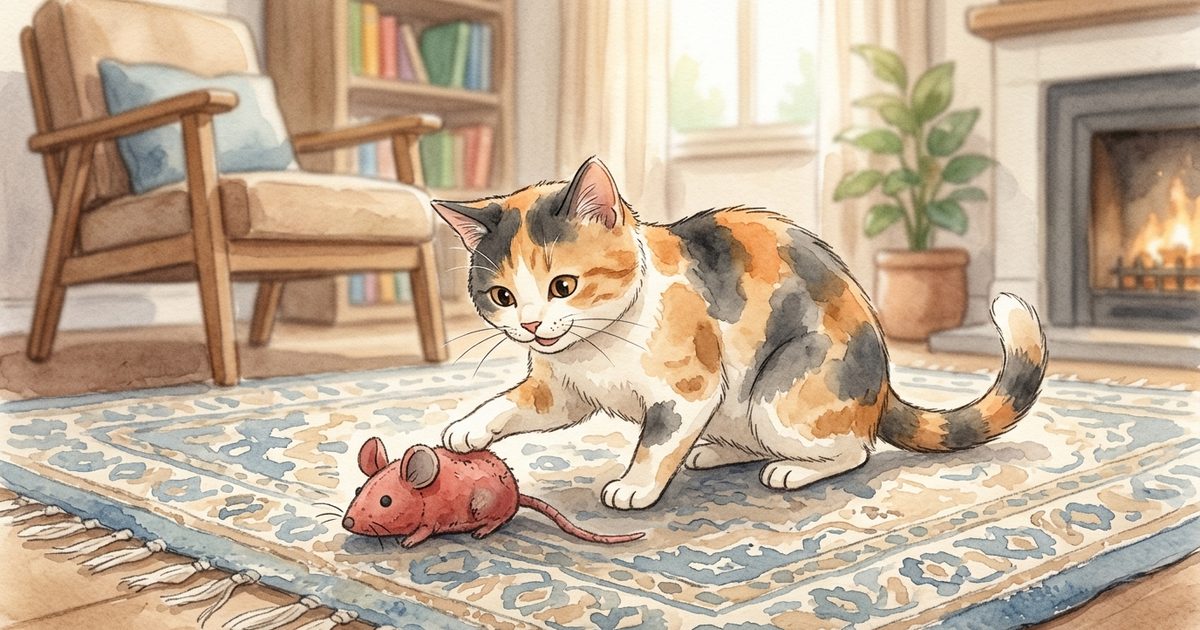
This is where the science meets your living room. That classic red laser dot? To your cat it looks like a dim, pale spot — the vividness is lost, but the motion still fires the rod cells, which is exactly why laser play still works. The color red does almost nothing; the darting movement does everything (the motion-fires-rods mechanism is explained in Does Color Matter to Cats). A red mouse toy lying still against beige carpet is genuinely low-contrast for a cat, nearly camouflaged, while the same toy skittering becomes instantly visible.
Pink beds and salmon-colored blankets fare no better — they read as pale gray-pink, washed out rather than warm. If you've ever wondered why your cat ignores an expensive red toy, this is why. And when that same toy triggers a flurry of excited chirping, it's the prey drive answering the motion, not the color — the same instinct behind why cats chirp at birds outside the window.
Is it the same as human colorblindness?
Yes — mechanistically, feline dichromacy is a close analog of human red-green colorblindness. People with deuteranopia (missing green-sensitive cones) or protanopia (missing red-sensitive cones) experience a color world remarkably similar to a cat's: blues and yellows remain clear, while reds and greens collapse together into muddy, overlapping tones. It's the most useful empathy frame an owner has. If you want to imagine what your cat sees, picture the world through the eyes of a red-green-colorblind friend — that muted palette of blues, yellows, and gray-greens, with no true red, is roughly your cat's everyday reality. International Cat Care confirms that this dichromatic, red-green-limited vision is now the well-established scientific consensus on feline sight.
Cat Color Vision vs Human, Dog & Colorblind Humans
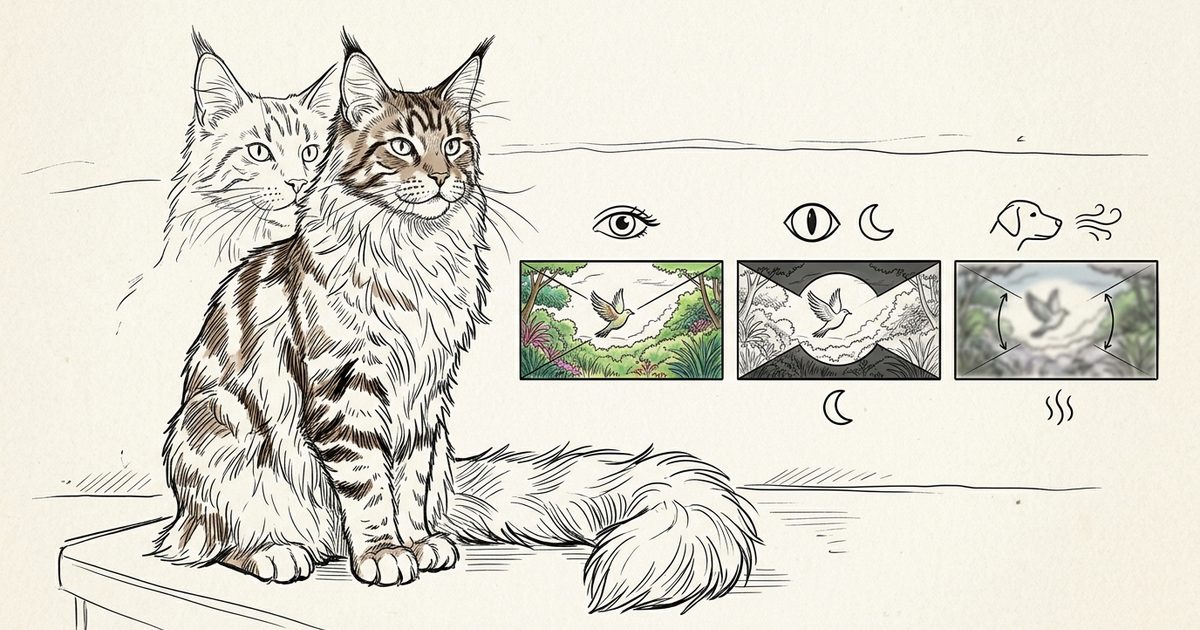
Compared to humans, cats see fewer hues — dichromatic versus trichromatic — but far better in low light. Compared to dogs, cats are similar: both dichromatic, though cats edge slightly ahead on acuity. Cat vision most closely resembles a red-green-colorblind human: blues, yellows, and greens with muted reds.
Cat vs human
The gap between you and your cat comes down to one missing cone. Humans are trichromatic — three cone channels (blue, green, red) combine to produce the millions of hues you perceive, from crimson to teal to lavender. Cats are dichromatic, working from just two channels, so their hue range is dramatically smaller and especially collapsed across the red-green region where humans see the richest variation.
But the trade runs both ways. What cats lose in color, they gain in sensitivity. Your cat's retina is packed with roughly six rod cells for every cone, compared with a more balanced ratio in humans, giving the cat far sharper motion detection and a dramatically better grip on dim, dawn-and-dusk light. You win the daytime color contest; your cat wins the twilight one. For a deeper look at how cats turn that rod-rich retina into extraordinary night performance, see our companion piece on how cats see in the dark.
Cat vs dog
Cats and dogs share the same broad visual architecture — both are dichromatic, both tuned to roughly the same blue and green-yellow wavelengths, both red-green colorblind. If you lined up a cat and a dog in front of a color chart, they'd sort the hues in nearly the same order.
Where they diverge is fine detail and low-light reach. Cats tend to have slightly better visual acuity than dogs and a denser concentration of rod cells, which gives them a small but real edge in spotting motion at dusk — fitting for a precision ambush hunter versus a pursuit-and-scent predator. The differences are modest, though, and easily overstated; the honest summary is that cat and dog color vision are close cousins, with cats holding a slight advantage in sharpness and dim-light sensitivity.
Cat vs colorblind human
This is the frame owners find most useful. A red-green-colorblind person's perceptual world — clear blues and yellows, muddy reds and greens folding together, no vivid crimson — is a remarkably close match to what your cat sees moment to moment. The mechanisms differ in detail (a colorblind human still has three cone types, just with shifted or overlapping sensitivity, while a cat has only two), but the resulting experience is near-identical.
If you have a friend or family member with red-green colorblindness, you already have a living window into your cat's visual life. Ask them what a red toy looks like against a green lawn, and you'll get an answer that's essentially what your cat perceives: a low-contrast, grayish shape where you see a pop of vivid color. The Cornell Feline Health Center treats this human-analogy as a reliable, science-grounded way for owners to picture feline vision without needing a wavelength chart.
Curious what the world looks like from your cat's point of view — colors, motion, and all? Get a MeowMind reading and hear it described in her own voice.
Does Color Matter to Cats?
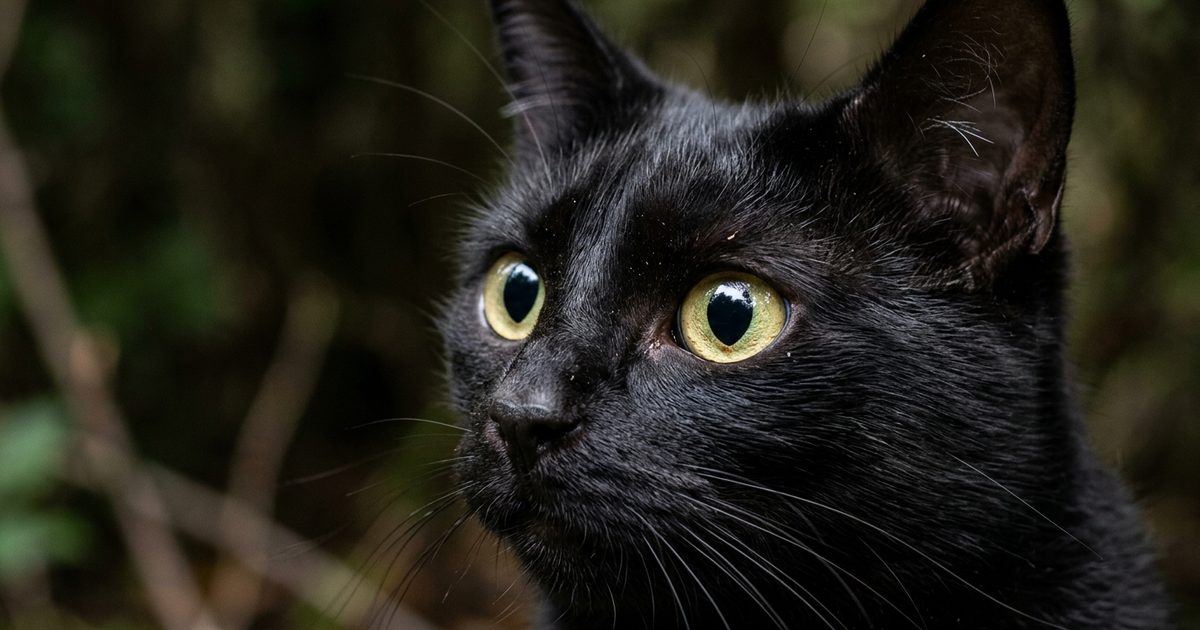
For a cat, color is a minor cue. What dominates perception is motion, then contrast against the background, then brightness — not hue. The dart, the rustle, and the silhouette are what trigger the hunt response, not whether the toy is blue or red.
Motion is the first signal
A cat's retina is rod-dominant, and those rod cells feed straight into a visual cortex tuned to detect movement before almost anything else — this is the authoritative home of why motion, not color, fires feline perception. The result is striking: a red mouse sitting perfectly still on a beige carpet is nearly invisible to your cat — the color is muted and there is nothing to catch the eye. The instant that same mouse skitters, the rods fire, the pupils lock, and the hunt is on. This is why a cat will stare with that intense, unblinking gaze at a dust mote drifting across a sunbeam and ignore a brightly colored toy sitting three feet away. Motion is the trigger that opens the door; color is a faint detail that comes in well after. It also explains the deep, focused hunting stare cats deploy before they pounce — they are tracking trajectory, not admiring hue.
Contrast beats hue
Once something is moving, what matters next is how different it looks from whatever is behind it. Contrast, not the color itself, is what makes a target pop. A vivid green toy lying on a green rug is effectively camouflaged, no matter how clearly cats can perceive green — the eye has nothing to grab onto. The same green toy on a warm wood floor stands out sharply. This is why a blue mouse on an orange or beige carpet looks almost fluorescent to a cat, while a red mouse on that same carpet all but vanishes. The color of the surface your cat plays on matters as much as the color of the toy itself.
Brightness and silhouette
Beyond contrast, cats read brightness and silhouette powerfully. Their vision is built for the low, slanted light of dawn and dusk, when prey is backlit against the sky. A small dark shape moving against a brighter background — a mouse outlined against pale grass, a moth against a lamp — triggers the chase response even when color detail is completely absent. A cat does not need to know whether that shape is brown, gray, or red; the outline alone, shifting against the light, is enough.
What This Means for Toys, Beds & Your Home
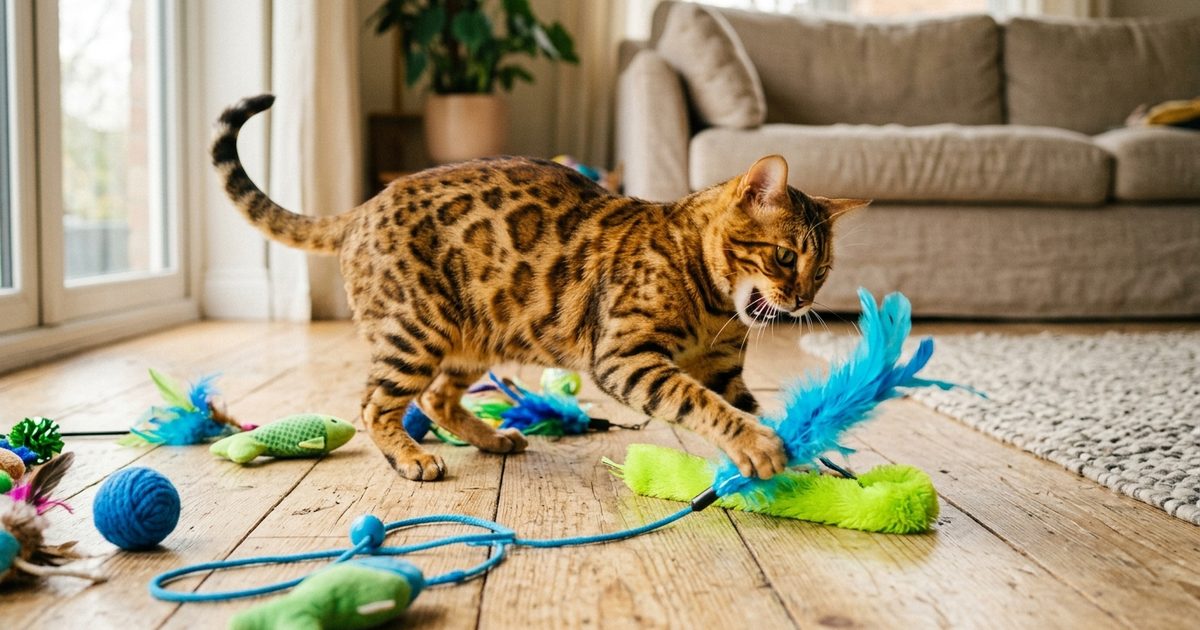
Choose toys in colors cats actually see well — blues, blue-greens, and high-contrast yellow-greens — and place them against backgrounds that make them pop. Red and pink toys still work because of motion, but they will not stand out to your cat the way a vivid blue mouse will.
Best toy colors for cats
For a dichromatic eye, blue and yellow-green sit in the sweet spot of feline perception — these are the hues cats see most vividly, so a toy in these colors offers the highest possible perceived contrast (the cone mechanism is covered in How Does Cat Color Vision Work). A blue mouse, a teal wand feather, or a chartreuse kicker will all read clearly to your cat where a red or pink equivalent would look muted. But the color of the toy is only half the equation. Pair that blue mouse with a play surface that contrasts with it — a warm beige mat, a pale blanket — and you have given your cat a target it can track effortlessly. The color of your floor, your rug, or the spot where you wave the wand matters as much as the toy's own hue, because contrast is what the eye actually locks onto.
Red and pink still work — sort of
Here is the honest, both-sides picture. Plenty of cats go wild for a red laser dot or a pink feather toy, and owners reasonably conclude red must be exciting to them. It is not the color doing the work — it is the motion, the novelty, and the prey-like darting (covered in Does Color Matter to Cats). The classic red laser still triggers chase because that bright moving spot lights up the rod cells, not because cats perceive red as red. So red and pink toys are far from useless; they simply will not stand out to your cat the way a vivid blue mouse will. If your cat loves a red toy, keep using it — just know it is the movement, not the hue, that is doing the captivating.
Beds, bowls and the everyday environment
When it comes to beds, bowls, scratching posts, and the quieter objects in your cat's world, color is a genuinely low-stakes choice. Cats do not care whether their bed is pink, gray, or patterned — what matters to them is placement (a safe, sheltered spot), warmth, and the routine of knowing it is theirs. A Russian Blue with vivid green eyes may look striking against a deep blue blanket, and that is a perfectly good reason to choose it, but your cat is responding to comfort and location, not hue. The same goes for food bowls and water fountains: cleanliness, stability, and a quiet spot matter far more than color. For a sense of how cats perceive moving color on screens — where motion and flicker dominate — see our piece on whether cats watch TV.
Common Myths About Cat Color Vision
Three myths persist: that cats see only in black and white (false — they see blues and greens), that cats can see red (no — they are red-green colorblind), and that cats see color the way humans do (no — dichromatic, with far fewer hues).
Cat color vision is one of those topics where folklore outran the science for decades. The picture has sharpened considerably — cats are dichromatic, not monochromatic — but the older, simpler stories still circulate. Let's separate the retina from the rumor.
Myth: Cats see only in black and white. Fact: False. Cats are dichromatic, meaning they have two functioning cone channels (tuned roughly to blue-violet and green-yellow), not zero. They see a muted world of blues, yellows, and greens — limited, but absolutely not grayscale. This myth held on for so long because early color-vision studies underestimated feline cones; the Cornell Feline Health Center and other authorities have since confirmed cats do perceive color.
Myth: Cats can see red. Fact: False. Cats lack the long-wavelength (red) cone that humans use to separate red from green, so reds register as dull grayish-yellow-green — this is red-green colorblindness, the same condition many humans have. A vivid red mouse toy isn't vivid to your cat at all; what excites her is the skittering motion, not the hue. Both sides are worth naming here: some owners swear red toys drive their cats wild, and that response is real — but it's motion and novelty doing the work, not the color red.
Myth: Cats see color the way humans do. Fact: False. Humans are trichromatic (three cone types) and distinguish millions of hues; cats, with only two cone types, see far fewer — and the red-green region collapses almost entirely. International Cat Care describes feline vision as similar to that of a red-green-colorblind person: a recognizable, blue-and-yellow world, but noticeably less colorful than ours.
Myth: Color is what cats care about. Fact: False. For a hunting animal, the signals that matter are motion, then contrast against the background, then brightness — hue comes a distant fourth. A still toy of any color barely registers; the same toy darting is locked onto instantly. We cover why motion dominates feline perception in our guide to why cats stare.

A brief word on the more imaginative end of the spectrum: claims that cats perceive ghosts or spirits — a question we address separately on can cats see ghosts — belong to folklore, not feline vision science. A cat staring at an empty corner is far more plausibly tracking a faint sound, a dust mote, or light her superior rod cells caught that yours didn't. The retina explains it; the supernatural does not need to.
Cat Color Vision at a Glance — Summary
| Question | Short answer |
|---|---|
| What colors can cats see best? | Blues and blue-greens, plus yellow-greens |
| Can cats see red? | Effectively no — red-green colorblind, like some humans |
| Are cats completely colorblind? | No — dichromatic, not monochromatic |
| Can cats see the color blue? | Yes, vividly — blue is their strongest color channel |
| Do cats see color like humans do? | No — two cone types vs our three, far fewer hues |
| Why can't cats see red? | They lack the long-wavelength (red) cone cell |
| What is the best color for a cat toy? | Blue or yellow-green, placed against contrasting background |
| Is cat color vision the same as dog color vision? | Similar — both dichromatic; cats edge ahead on acuity |
Curious What Your Cat Would Say?
Upload a photo and get a warm, personalized reading from your cat's perspective.
Start Your Free ReadingFrequently Asked Questions
What colors can cats see best?
Cats see blues and blue-greens most vividly, along with yellow-greens. These hues sit inside the two cone channels a cat's eye actually has, so a vivid blue or chartreuse toy reads clearly, while warm reds and oranges fade to dull gray-green.
Can cats see red?
Effectively, no. Cats lack the long-wavelength red cone that humans use, so red light folds into their green-yellow channel and registers as a dull grayish-yellow-green. The classic red laser still works because the motion fires the rod cells, not the color.
Are cats completely colorblind?
No. Cats are dichromatic, not monochromatic — they have two functioning cone channels and clearly perceive blues, yellows, and greens. The old idea that cats see only in black and white is a myth that lingers from early, flawed vision studies.
Can cats see the color blue?
Yes — vividly. Blue matches one of the cat's two cone channels, so sky blue, teal, and deep indigo all register as crisp and distinct. Blue is the strongest color in a cat's visual palette.
Do cats see color like humans do?
No. Humans are trichromatic with three cone types and see millions of hues; cats are dichromatic with two, so their hue range is far smaller, especially across the red-green region where humans see the most variation.
Why can't cats see red?
Cats are missing the long-wavelength cone cell that separates red light from green. Without that channel, a cat's brain cannot tell red and green apart, so reds collapse into the same muted green-yellow signal as nearby greens.
What is the best color for a cat toy?
Blue or yellow-green. These hues match a cat's cone channels and create the highest perceived contrast, especially when placed against a warm beige or neutral play surface. Contrast with the background matters as much as the toy's own color.
Can cats see TV in color?
Cats can detect some color on a screen, but they respond to the flicker and motion far more than the hue. A bird or a darting dot is what hooks them — the blue and green tones register, while reds on screen look washed out.
Do cats care about the color of their toys?
Not really. For a hunting animal, the signals that matter are motion first, then contrast against the background, then brightness — hue comes a distant fourth. A still toy of any color barely registers; the same toy darting is locked onto instantly.
Is cat color vision the same as dog color vision?
Very similar. Both cats and dogs are dichromatic, tuned to roughly the same blue and green-yellow wavelengths, and both are red-green colorblind. Cats hold a slight edge on visual acuity and dim-light sensitivity, but the differences are modest.
Sources & References
You Might Also Like
Kitten Teething: Timeline, Symptoms & How to Help
Kitten teething runs from 3 to 7 months as baby teeth fall out. Learn the timeline, signs to watch for, and how to soothe a teething kitten safely.
15 min readWhen Do Cats Stop Growing? A Complete Timeline
When do cats stop growing? Most cats reach adult size by 12-18 months, but large breeds like Maine Coons keep growing until 3-4 years. Full timeline inside.
14 min readCan Cats Eat Cherries? Flesh, Pit & Toxicity Facts
Can cats eat cherries? Pitted flesh is safe in tiny amounts — but the pit, stem, and leaves are toxic (cyanide precursors). Learn what's safe and what isn't.
15 min read