
Why Do Cats Bury Their Poop? The Real Instinct Explained
Cats bury their poop — scratching litter or earth over their feces until it is hidden — as a deep survival instinct inherited from wild ancestors, not a learned habit or a bid for tidiness. If you have ever watched your cat carefully cover their poop and wondered what is really going on, the short answer is scent control: hiding the smell from predators, from prey, and from rival cats. Knowing why do cats cover their poop helps you read the behavior, and recognize when a cat suddenly stops doing it.
Key takeaways
- Burying poop is a hard-wired instinct — even kittens raised without a mother still scrape litter over their waste.
- The behavior evolved to hide a cat's scent from larger predators and from the prey cats hunt, not to keep things clean.
- A cat that has always buried and suddenly stops is usually sending a medical, litter-box, or stress signal worth checking.
Why Cats Bury Their Poop — Quick Reference
| Question | Short answer | Read more |
|---|---|---|
| Do all cats bury their poop? | Most do, instinctively; a small minority never cover it | Do Cats Bury Their Poop? |
| Why do cats bury their poop? | To hide their scent from predators and from prey | Why Do Cats Bury Their Poop? |
| Is there a dominance angle? | Dominant cats (and big cats) often leave feces uncovered to mark territory | The Dominance and Submission Angle |
| Why do some cats not bury? | Pain, litter-box problems, stress, or territorial marking | Why Some Cats Don't Bury Their Poop |
| When should I worry? | When a lifelong buryer suddenly stops, especially with other signs | What It Means If Your Cat Stops Burying |
| What supports the instinct? | A large, clean, quiet box with unscented clumping litter | Litter Box Best Practices |
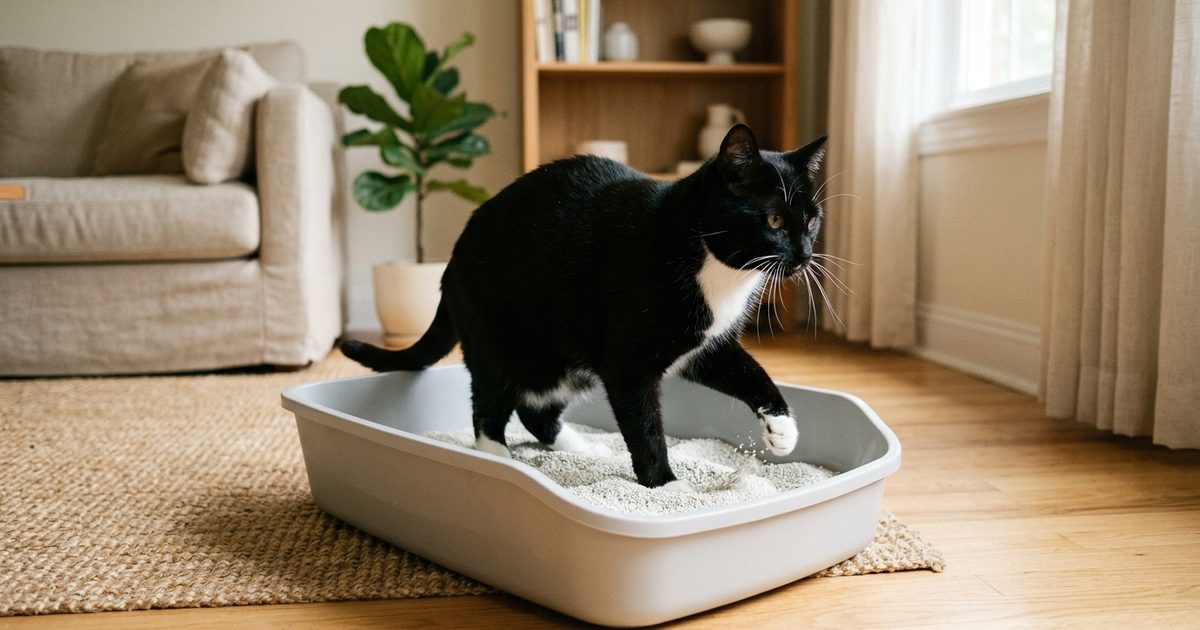
Do Cats Bury Their Poop?
Yes — most cats bury their poop instinctively, without being taught. Even kittens raised without a mother scrape litter over their feces, proving the behavior is hard-wired by evolution, not learned. A small minority leave it uncovered, and that is usually a signal worth reading.
An instinct, not a lesson
If you have ever watched a tiny kitten approach a litter box for the first time and bury its poop flawlessly, you have seen instinct at work. Kittens hand-reared by humans — with no mother cat to demonstrate the scrape-and-cover sequence — still perform it on their own. That is strong evidence that burying is inherited from wild ancestors, not a skill passed down by watching. The behavior appears before any meaningful social learning is possible, which is why it is so consistent across cats regardless of how they were raised. You can read more about feline behavioral development from the Cornell Feline Health Center, a leading authority on cat health and behavior.
When burying first appears
The burying instinct usually switches on around three to four weeks of age, right as kittens begin using litter on their own. The motion itself is a fixed motor pattern: the cat turns, scratches the litter forward and over the waste with alternating paws, then steps away. Some kittens are meticulous from day one; others take a few tries to land the sequence. Individual variation is normal — a sloppier scrape is not a warning sign on its own, just a personality trait.
The cats that don't bury
A minority of cats never bury, or stop burying, and the reason almost always falls into one of three buckets. The first is dominance-style marking — leaving feces uncovered as a territorial "I am here" signal. The second is a litter box or medical issue, where the box is too dirty, too small, or scraping hurts. The third is stress — a new pet, a move, or an outdoor cat visible through the window. We expand each of these in detail below, because reading the difference is the part worth getting right.
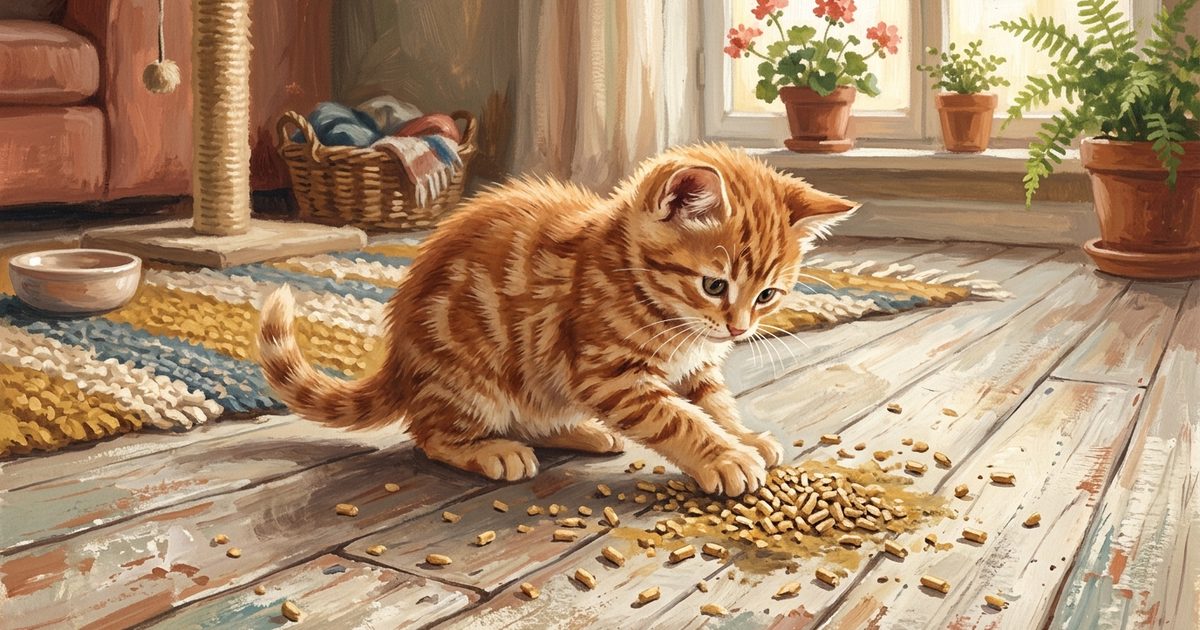
Why Do Cats Bury Their Poop? The Survival Science
Cats bury their poop to hide their scent from predators and from prey. An uncovered pile broadcasts who they are and what they ate, so it could attract a larger predator or warn off the very animals they hunt. Burying is camouflage — pure survival, not hygiene.
Hiding from predators — and from prey
Domestic cats sit in an unusual middle position in the food chain: they are predators to mice and birds, but they are prey to coyotes, foxes, and larger carnivores. To those bigger animals, a pile of cat feces is an olfactory beacon — a concentrated broadcast of "a small cat was here, recently." Burying that signal keeps the cat's presence hidden from anything that might hunt it. This is why even a well-fed house cat with no real predators performs the same scrape: the wiring predates the safety of your living room. International Cat Care describes feline elimination behavior as a deeply conserved survival pattern, not a cleanliness ritual.
The same logic works in reverse when the cat is the hunter. Cats are ambush predators whose entire strategy depends on surprise. A mouse or rabbit that catches the scent of cat waste in the area does not wait around — it flees early and avoids the hunting ground for days. A wildcat that leaves feces scattered near its territory is, in effect, ringing a dinner bell that scares the dinner away. Burying keeps the hunting grounds productive, which is the same reason cats choose quiet, concealed spots to eliminate: minimize the scent trail, maximize the next meal.
Ancestral roots
The burying instinct predates domestication by tens of thousands of years. The domestic cat's wild ancestor, the African wildcat (Felis lybica), lived in arid, open landscapes where loose sand and dry soil were abundant — substrate that rewarded scraping and burying. That desert origin is why the paw-scrape pattern feels so natural on modern clumping litter. Burying feces is one strand of a broader scent-management theme in cats; why cats groom is another. Grooming manages the scent of the cat's own coat; burying manages the scent of its waste. Different channels, same underlying goal: control what other animals can smell about you.
This also corrects a common myth: cats do not bury because the smell offends some feline sense of tidiness. They bury to control scent-signal leakage — the same mechanism above. A cat who stops burying is not "being messy"; she is usually telling you something has changed in her body, her box, or her territory.
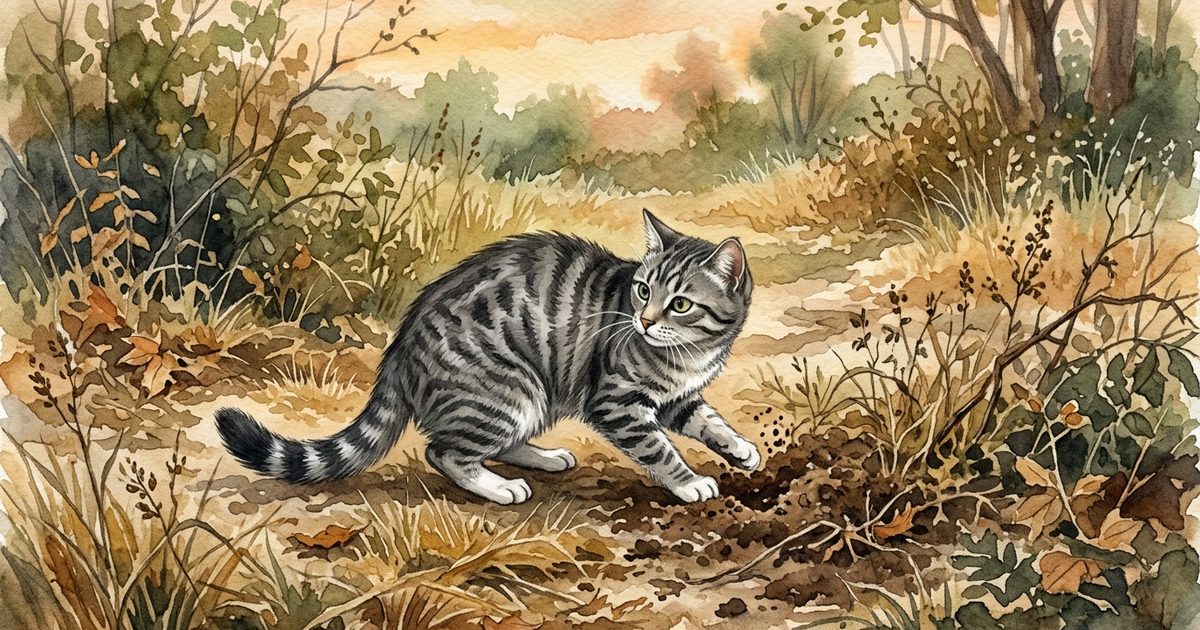
The Dominance and Submission Angle
In the wild, dominant cats like lions, leopards, and tigers often leave feces uncovered to mark territory and advertise presence. Smaller cats bury theirs to avoid challenging the local top animal. Your house cat burying may reflect recognizing you as the one in charge.
Big cats leave it uncovered
This is one of the most striking contrasts in feline behavior. Lions, leopards, tigers, and jaguars routinely leave their feces in prominent places — on trails, at the base of prominent trees, on raised vantage points — as deliberate scent marks that broadcast ownership. The message is loud and chemical: a large predator lives here. The bigger the cat, the more it wants that signal found. Your house cat, by comparison, is a small solitary hunter shaped by a very different evolutionary pressure: staying off the menu of something larger. So instead of advertising, she hides the evidence. The International Cat Care behavior library describes feline elimination as a deeply social signal, not just waste removal — and the size of the cat predicts the strategy.

What it means in a multi-cat home
In a household with more than one cat, you may notice that one cat consistently leaves feces uncovered while the others carefully bury theirs. Owners often read this as the "top cat" claiming the box as territory — a smaller-scale version of the leopard-on-the-trail. Whether that is true dominance or simply one confident individual varies, and behaviorists tend to describe it cautiously rather than as a strict hierarchy. The point is that burying is best read alongside everything else your cat is telling you — her body language at the box, how she shows affection toward people and the other pets, where she sleeps, who she grooms. A single habit rarely means much on its own; the pattern does.
Does burying mean your cat respects you?
It is tempting — and not entirely wrong — to read your cat's careful scraping as deference to you as the household's territory holder. One reasonable interpretation is exactly that: she treats you as the one in charge and keeps her scent-signature discreet as a result. But it is easy to over-psychologize a single behavior, and most veterinarians and behaviorists would caution against turning one litter-box habit into a grand statement about respect, love, or status. Burying is instinct first; any "she recognizes you as dominant" reading is a reasonable gloss, not a settled fact. Read it in context: if your cat is relaxed, affectionate, and uses her box comfortably, the burying is simply one healthy thread in a much larger picture of how she feels about sharing her home with you. For guidance on when behavior changes warrant a closer look, the Cornell Feline Health Center is a trusted starting point.
Get a MeowMind reading — your cat's daily habits are a whole language. Upload a photo and hear what else your cat has been trying to tell you, in her own words.
Why Some Cats Don't Bury Their Poop
When a cat stops burying, the usual culprits are pain or illness (arthritis, constipation, or urinary discomfort), a litter box problem (too small, too dirty, or the wrong litter), or stress and territorial marking. It is rarely spite — treat it as information, not an insult.
Most house cats bury. So when one doesn't, the absence is the signal — and the question isn't "why is my cat being difficult," it's "what is my cat trying to tell me." The reasons cluster into four groups, and only one of them has anything to do with you.
Medical causes — pain and discomfort
Pain is the most common reason a previously consistent burier stops. The burying motion looks simple, but it requires a cat to balance on its hind legs while repeatedly shifting weight across its front paws — a posture that demands flexible joints and a pain-free spine. In older cats, arthritis quietly makes that scrape-and-balance position hurt, so the cat steps out of the box leaving the waste uncovered rather than endure the motion.
Pain deeper inside tells the same story from the other direction. A cat straining with constipation or lower-urinary discomfort learns, sometimes in just a few visits, that the litter box is where it hurts. The box becomes associated with the pain rather than the relief, so the cat gets in, gets it over with, and leaves — no scraping, no lingering. Any cat that suddenly starts defecating outside the box, or in and out of it without covering, deserves a medical check before anything else.
Litter box problems
If the body is fine, the box is the next suspect. Burying needs room: a box too small for the cat to turn around in forces an awkward exit, and many cats simply give up on scraping when they can't position themselves comfortably. A dirty box works against the instinct too — cats won't spend extra time pawing in soiled substrate, and the smell that bothers us is also, for the cat, a signal that this spot isn't the clean, safe place the burying instinct expects.
The litter itself matters. Hooded boxes trap odor in a way that's tolerable for a quick visit but punishing during a longer scraping session, and the wrong texture — pellets where the cat expects sand, or a sharp scented litter — makes the paws want to leave, not dig. A box plonked in a high-traffic hallway adds one more reason to rush. We walk through the concrete fixes for all of these below in Litter Box Best Practices.
Stress and territorial marking
Sometimes the cause isn't the box or the body — it's the world around the cat. A new pet, a move, an outdoor cat suddenly visible through the window, or a change in the household routine can all push a cat to leave its feces uncovered as a deliberate signal. In the wild, an uncovered pile says "I am here, and this is my area" — the opposite of the submissive burying we covered earlier. Intact (unneutered) cats do this most often, but any stressed cat can fall back on it.
This is where the most common misreading creeps in. Owners assume a cat that stops burying is "mad at you" or acting out of spite. The behavior is real — the feces really are left uncovered — but the motive isn't payback. It's communication under pressure: the cat feels its territory or routine is threatened and is responding the only way its instincts offer. Reading it as a message rather than an insult is what tells you what to do next.
Breed and personality variation
A smaller group of cats never bury much at all, and they never did. Some individual cats are simply sloppy scrapers — one half-hearted swipe and they're done — and a few treat covering as optional every single time. You'll see confident claims online that certain breeds "never bury," but the evidence is anecdotal and owner-reported rather than studied. Treat breed as a tendency at most, not a rule: a breed rumored to be a lazy scraper may still bury perfectly, and a breed with no reputation for it may be meticulous. Personality — how anxious, confident, or fastidious the individual cat is — outweighs breed every time.
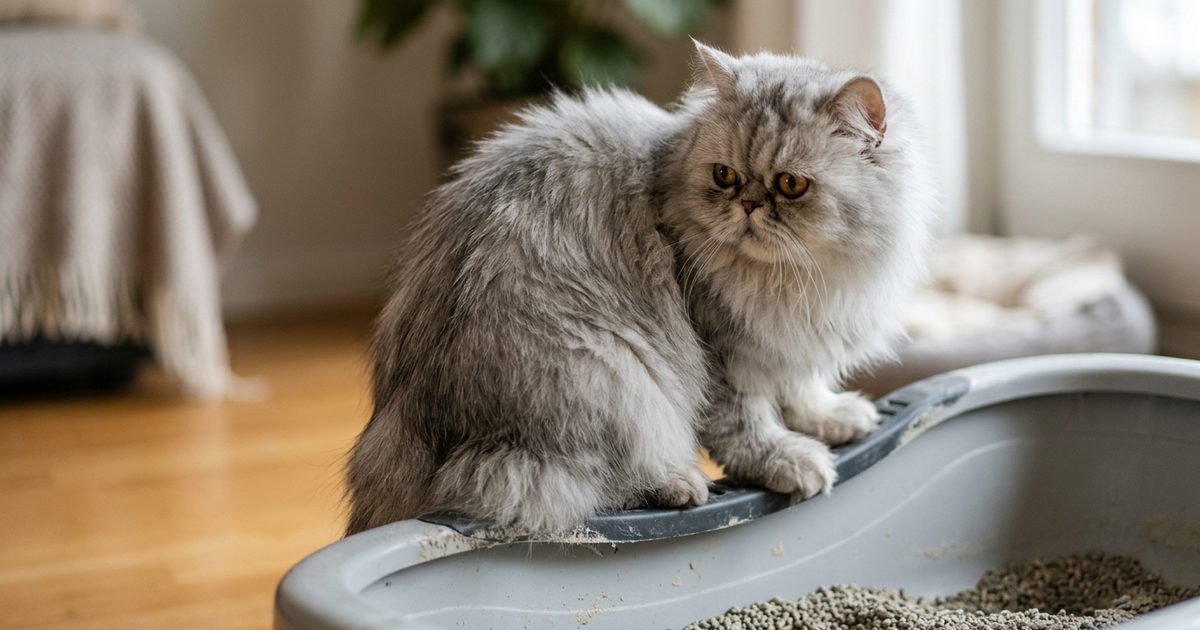
What It Means If Your Cat Stops Burying Their Poop
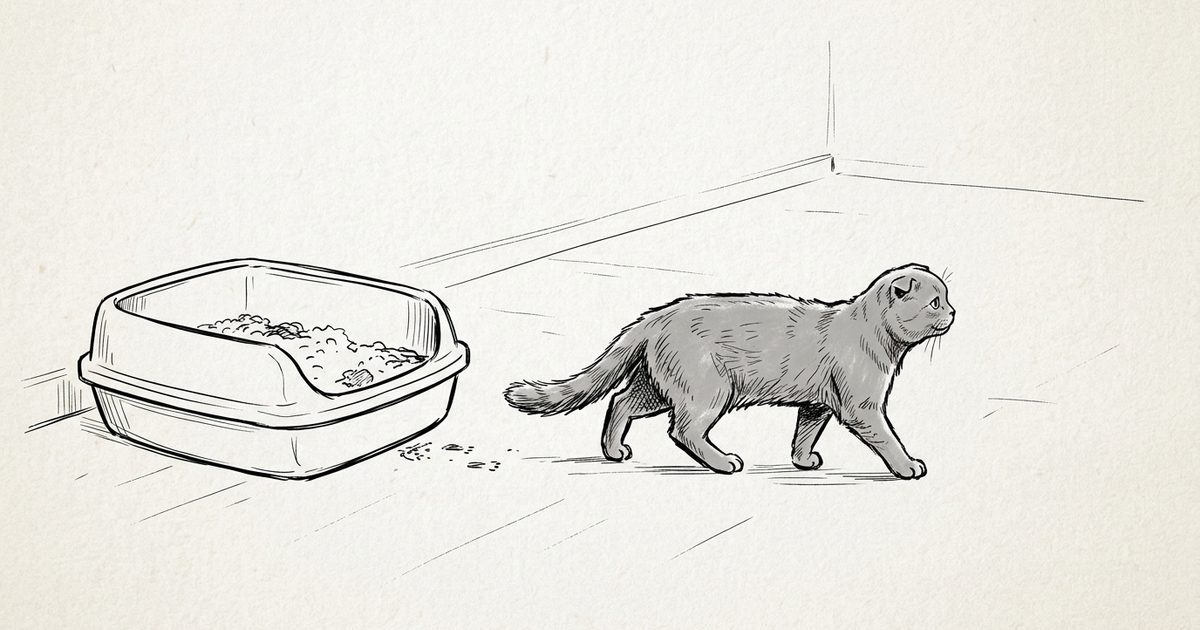
A cat who has always buried and suddenly stops is sending a flag worth checking. The likely reasons are a medical issue, a litter box change, or stress. If it is sudden and lasts more than a day, a vet visit is the right first step — not punishment.
The causes of non-burying are covered in full above (Why Some Cats Don't Bury Their Poop). This section is the triage layer: how to tell a warning sign from a quirk, and when to pick up the phone.
Sudden change vs. lifelong habit
The single most useful word here is suddenly. Plenty of cats are lifelong light-scrappers — they've always done a quick half-hearted swipe and walked off, and their humans have always known that as just how this cat is. That's an individual habit, not a warning sign. The cat to pay attention to is the one whose behavior has changed: buried neatly for three years, and in the last week started leaving it uncovered. Behavior change in a cat is almost never random — it's the cat's main channel for saying something has shifted, either inside its body or in its environment.
Red-flag patterns — when to call the vet
Non-burying on its own is worth noticing. Non-burying paired with other changes is worth acting on. The patterns that should accelerate your response point to pain or illness rather than preference: straining or crying in the box, repeated visits with nothing produced, blood in the stool or urine, suddenly hiding, refusing to eat, or full litter-box avoidance — going right next to the box instead of in it. Any of those alongside a drop in burying points back toward constipation, urinary pain, or another medical cause, and the non-burying is a symptom, not the problem.
The practical triage is straightforward. Call the vet when the non-burying is sudden and lasts more than a day or two; when it shows up alongside any red-flag pattern above; or whenever the cat is a senior, because older cats can slide into arthritis, kidney changes, or constipation quickly and quietly. The Cornell Feline Health Center is blunt: a change in a cat's normal habits — eating, drinking, grooming, or litter-box behavior — is a legitimate reason to call your vet, even before you've figured out the cause. Your job is to observe and report; the vet's job is to diagnose. Whatever you do, don't punish the cat — a cat that's hurting or stressed experiences punishment as more stress, which makes the behavior worse.
Litter Box Best Practices to Support the Instinct
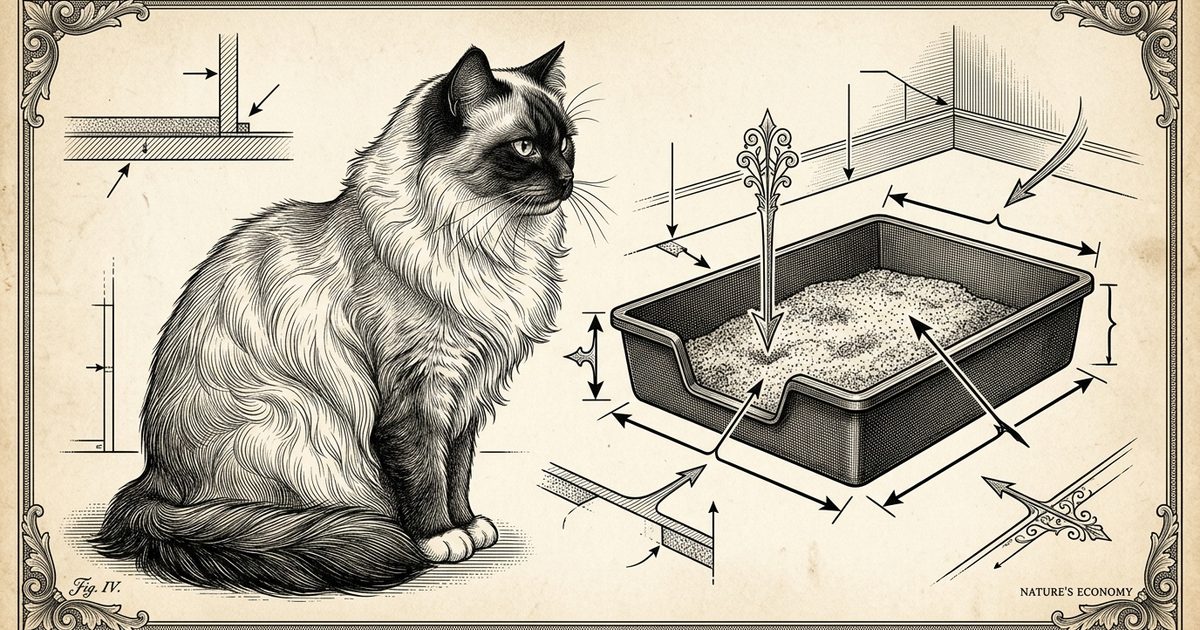
To support the burying instinct, give a box large enough to turn around in (about one and a half times body length), scoop once daily, use unscented clumping litter two to three inches deep, and provide one box per cat plus one extra in quiet, low-traffic spots.
A cat that wants to bury but can't do it comfortably will eventually stop trying. Most litter-box problems trace back to a few fixable details — size, substrate, cleanliness, and placement — rather than the cat's attitude. Get these right and the instinct usually takes care of itself.
Size, litter, and cleanliness
The box should be large enough for the cat to step in, turn around fully, and dig without hitting the walls — a working rule is one and a half times the cat's body length (nose to base of tail). Undyed, unscented clumping litter at two to three inches deep lets the cat scrape and cover with the texture its ancestors evolved on; heavily perfumed litters often repel the very cat they're meant to please. Scoop at least once a day, since cats return to a dirty box reluctantly, and do a full litter change plus wash with mild soap every two to four weeks — never ammonia or citrus cleaners, which mimic the signals feces and territory-marking already send.
Number and location
The long-standing guidance is one box per cat, plus one extra (the N+1 rule): a single-cat home has two boxes, a two-cat home has three. Place them in quiet, accessible spots with at least one clear escape route, because a cat that feels cornered mid-elimination will avoid the box entirely. Avoid putting food and water bowls nearby — cats, like us, prefer not to eat where they eliminate. If your home has multiple floors, offer at least one box per level so a senior or less-mobile cat never has to travel far.
When the box itself is the problem
If the setup is right and the cat still won't bury — or won't use the box at all — look at the hardware. Hooded and covered boxes trap odor inside, which is unpleasant for the cat that has to enter them; removing the lid is often the fastest fix. High-sided or top-entry boxes can defeat arthritic seniors who can no longer jump or balance comfortably — a low-sided pan restores access. Automatic self-cleaning boxes can spook anxious or timid cats with their cycles and motors; for those cats, a simple large open pan is usually the better choice. Most of the time, the box is the variable, not the cat.
Burying Behavior at a Glance — Summary
| Question | Short answer |
|---|---|
| Why do cats bury their poop? | To hide scent from predators and prey — a wildcat survival instinct |
| Is it learned from their mother? | No — even hand-reared kittens bury, so it's hardwired instinct |
| Do dominant cats bury? | Often not; big cats and top cats leave feces uncovered to mark territory |
| Why did my cat stop burying? | Usually pain, a litter box problem, or stress — not spite |
| When should I call the vet? | If burying stops suddenly and persists, or pairs with straining, hiding, or appetite loss |
| How do I support the instinct? | Right-sized box, unscented clumping litter, daily scooping, N+1 boxes in quiet spots |
Curious What Your Cat Would Say?
Upload a photo and get a warm, personalized reading from your cat's perspective.
Start Your Free ReadingFrequently Asked Questions
Why do cats bury their poop in the wild?
Wild cats bury their poop to hide their scent from larger predators and from the prey they hunt. An uncovered pile is an olfactory beacon that could get a small cat killed or scare off its next meal, so burying is pure survival instinct, not hygiene.
Is a cat burying its poop a sign of submission?
It can be read that way. In the wild, dominant cats often leave feces uncovered to mark territory, while smaller cats bury theirs to avoid challenging the local top animal. Your house cat burying may reflect deference to you, but it is instinct first, so read it alongside the rest of her behavior.
Why has my cat stopped burying its poop?
The usual causes are pain or illness (arthritis, constipation, urinary discomfort), a litter box problem that makes scraping difficult, or stress and territorial marking. It is rarely spite, so treat a sudden stop as information worth investigating rather than a personal insult.
Do kittens learn to bury their poop from their mother?
No. Kittens hand-reared by humans, with no mother to demonstrate the motion, still scrape litter over their waste on their own. The behavior appears around three to four weeks of age and is hardwired by evolution, not taught by observation.
Why does my cat pee in the litter box but poop next to it?
This split usually points to a medical issue like constipation or urinary discomfort that the cat has come to associate with the box, or a box problem such as a dirty, too-small, or hooded setup. Pooping outside while still urinating inside is a flag that deserves a vet check before anything else.
Is it normal for a cat to never bury its poop?
A small minority of cats never bury much at all, and if it has been lifelong it is usually just an individual personality trait rather than a warning sign. Some cats are simply sloppy scrapers or treat covering as optional, and that is normal variation, not a problem.
Should I punish my cat for not burying its poop?
Never punish the behavior. If the cat is hurting, constipated, or stressed, punishment adds more stress and makes the problem worse, not better. The right move is to look for the underlying cause, starting with a vet visit when the stop is sudden.
When should I worry about my cat not burying its poop?
Worry when a lifelong buryer suddenly stops, especially if it lasts more than a day or two, or pairs with straining, crying in the box, blood in stool or urine, hiding, or appetite loss. For senior cats, be extra prompt, since they can slide into arthritis or illness quietly.
Do dominant cats really leave their poop uncovered?
Yes, in the wild. Lions, leopards, tigers, and jaguars routinely leave feces in prominent places as deliberate scent marks that broadcast ownership. In multi-cat homes, one confident cat may do the same on a smaller scale, though behaviorists describe it cautiously rather than as a strict hierarchy.
Sources & References
You Might Also Like
Kitten Teething: Timeline, Symptoms & How to Help
Kitten teething runs from 3 to 7 months as baby teeth fall out. Learn the timeline, signs to watch for, and how to soothe a teething kitten safely.
15 min readWhen Do Cats Stop Growing? A Complete Timeline
When do cats stop growing? Most cats reach adult size by 12-18 months, but large breeds like Maine Coons keep growing until 3-4 years. Full timeline inside.
14 min readCan Cats Eat Cherries? Flesh, Pit & Toxicity Facts
Can cats eat cherries? Pitted flesh is safe in tiny amounts — but the pit, stem, and leaves are toxic (cyanide precursors). Learn what's safe and what isn't.
15 min read