Why Do Cats Pant? When It's Normal & When to Worry
Cat panting catches most owners off guard the first time they see it. Unlike dogs, cats rarely pant as part of everyday life — so when your cat suddenly breathes with her mouth open, the question "why do cats pant?" becomes urgent. If you are asking "why is my cat panting?" right now, the short answer is that cats can pant, but unlike in dogs it is usually worth paying attention to rather than dismissing as normal.
The catch is that not every instance of cat panting is an emergency. A brief, breathless moment after a hard chase, on a warm afternoon, or during a stressful car ride can be within the range of normal — as long as it settles within minutes. The trouble begins when panting shows up at rest, lasts too long, or arrives alongside gum changes, lethargy, or labored effort. Those combinations are real warning signs, and some need a vet immediately.
The best thing you can do is learn to read the context. Knowing what benign panting looks like, how cats normally cool themselves, and which red flags demand urgent care turns a scary moment into a clear decision. This guide walks through each of those, with help from trusted sources like the Cornell Feline Health Center and International Cat Care.
Key takeaways
- Cats can pant, but — unlike dogs — it is usually not normal, so any open-mouth breathing deserves attention.
- Brief panting after intense play, on a hot day, or during acute stress can be fine if it resolves within a few minutes once the trigger ends.
- Panting at rest, lasting a long time, or accompanied by gum changes, drooling, or lethargy means a vet visit — and possibly an emergency one.
Cat Panting at a Glance — Quick Reference
| Situation | Usually normal? | What to do |
|---|---|---|
| After intense play (zoomies, feather wand) | Often yes, if brief | Stop play, let your cat rest in a cool spot; should ease within minutes |
| On a hot day or in a warm room | Sometimes, if mild | Move to shade or a cooler room, offer water; watch closely for heatstroke signs |
| During a car ride or vet visit | Often yes (stress) | Keep the carrier calm, cool, and dim; let her settle once the stressor ends |
| While resting or sleeping | No — investigate | Note other signs; call your vet, especially for older or flat-faced cats |
| With blue, pale, or gray gums | No — emergency | Take your cat to a vet or emergency clinic immediately |
Do Cats Pant?
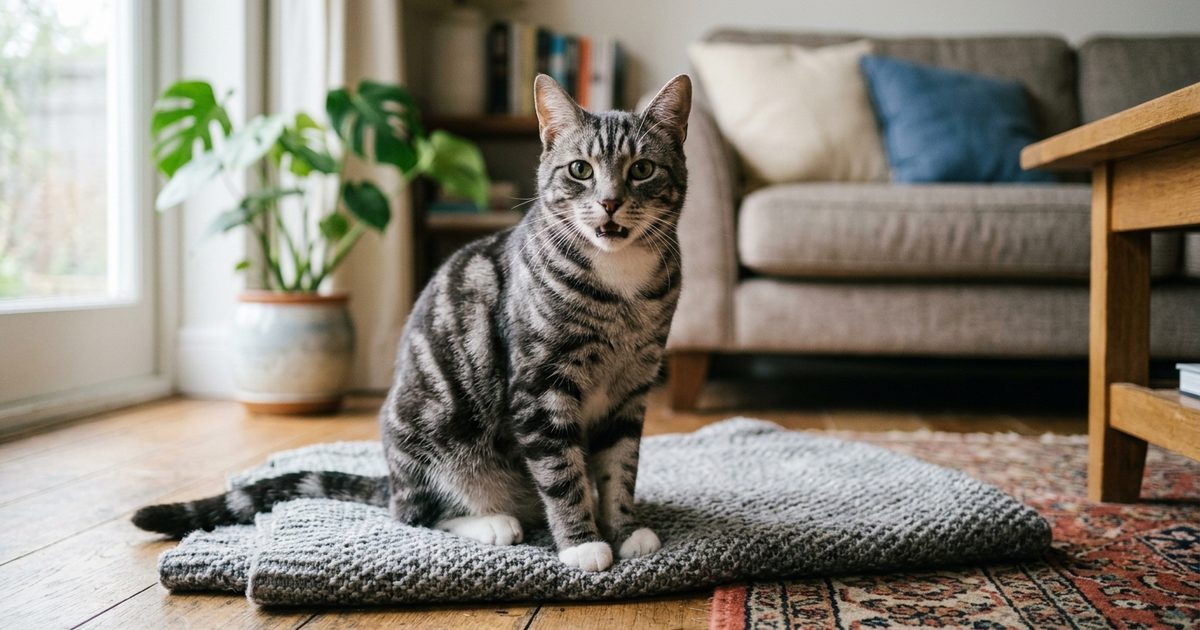
Yes, cats can and do pant — but unlike dogs, panting in a cat is usually not normal. A healthy cat rarely pants, so any open-mouth breathing is worth paying attention to. What is everyday cooling for a dog is often an early warning sign in a cat.
The question sounds almost too basic — of course cats can open their mouths and breathe fast. But the moment you see it, you understand why owners panic-search "why is my cat panting" at 10 p.m. on a Tuesday. A cat with its mouth open is a jarring sight, because most cats go their entire lives without doing it. Where a dog pants on a walk, a cat doing the same thing in your living room is the exception, not the rule.
That single contrast — common in dogs, rare in cats — is the frame for everything that follows in this article. Cat panting is not automatically an emergency, but it is almost always worth your attention, because the reasons cats pant lean more toward "something is wrong" than "business as usual." The honest version is this: some panting is benign, some is serious, and the difference comes down to context, duration, and the rest of the cat's body. The sections below walk you through how to read each one.
What cat panting looks like
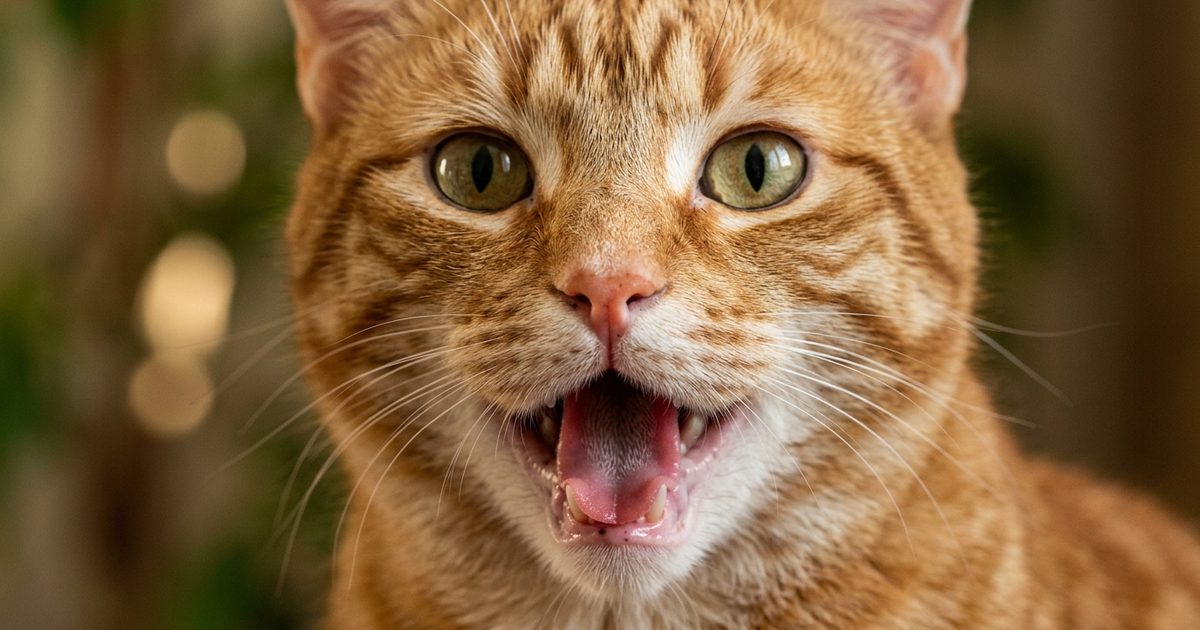
Cat panting looks like rapid, shallow breathing through an open mouth — sometimes with the tongue slightly protruding and the sides of the chest working harder than usual. The breaths come fast, the cat often looks focused or mildly distressed, and the mouth stays open between breaths rather than snapping shut.
One thing worth separating out: not every open mouth is panting. Cats also briefly open their mouths in the Flehmen response — a slow, deliberate grimace used to draw scent onto the vomeronasal organ, usually after sniffing urine or another cat's mark. Flehmen is a single held breath, not rapid repeated breathing, and the cat looks thoughtful, not distressed. If your cat is rapidly breathing through an open mouth for more than a few seconds, that is panting, not Flehmen.
The dog-vs-cat distinction in one line
Dogs pant as their primary way to cool down; cats did not evolve to use panting that way, so when a cat pants, it usually signals exertion, stress, heat beyond the normal range, or illness — not routine thermoregulation.
This is the core reason cat panting is taken more seriously: because cats did not wire panting into their default cooling toolkit, a panting cat is telling you its normal systems are either overwhelmed or something else — exertion, fear, heatstroke, pain, or disease — is driving its breathing. We cover the full mechanics of how cats stay cool in the section below, and in our article on whether cats sweat.
Why Do Cats Pant? Is It Ever Normal?
Yes, cat panting can be normal — after intense play, on a hot day, or during acute stress like a car ride. The test is duration: brief panting that eases within minutes once the trigger ends is fine; panting at rest, lasting long, or with no clear trigger is not.
Yes, there is a "normal" side to cat panting, and it is important to name it clearly so you are not rushing to the emergency clinic every time a kitten sprints herself out of breath. Cats are athletes; a healthy young cat chasing a feather wand across the living room is working hard, and a short burst of open-mouth breathing at the end of that is within the expected range. The same goes for a cat that has been lying in a hot sunbeam too long, or one that is genuinely frightened in a carrier on the way to the vet.
What separates these normal moments from a red flag is not the panting itself but everything around it: what started it, how long it lasts, and whether it stops once the cause goes away. The four triggers below are the ones most likely to produce brief, benign panting — followed by the simple rule for deciding when to stop watching and start moving.
After intense play
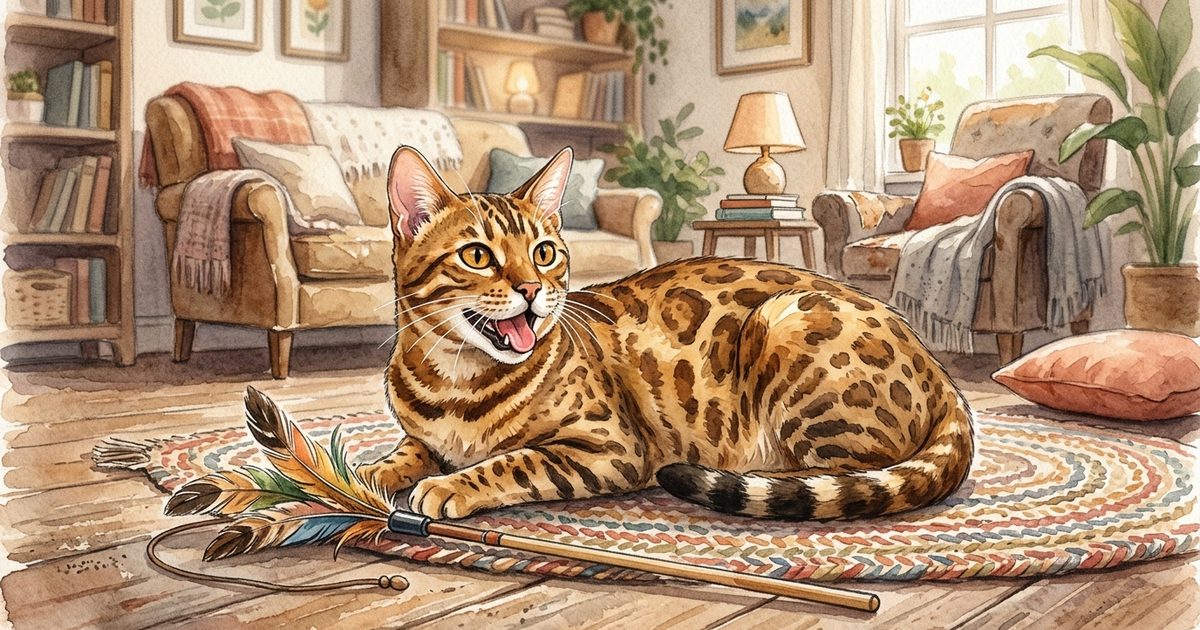
The most common and least worrying trigger is hard play. A kitten mid-zoomies, or an active adult cat after five minutes of full-speed chasing, can end the session breathing fast through an open mouth. This is exertion panting — the cat's body is recovering from a short, intense burst of effort, just as a sprinting dog or a running human would.
The check is duration and recovery. Play panting should ease within a few minutes once the cat stops moving, lies down, and starts grooming or resting. Active cats that play hard also sleep hard to recover, which is why healthy play-and-rest cycles matter — see our guide on why cats sleep so much. If the panting keeps going well after the cat has settled, or the cat seems reluctant to play at all and pants instead, that shifts from "normal exertion" into something to watch.
Heat and a warm environment
A warm room, a sunbathing spot with no escape to shade, or a car on a summer afternoon can push a cat past its comfort zone and trigger mild panting. Cats generally handle warmth by seeking cool surfaces and slowing down, but if they are stuck in a hot environment with no way to cool off — closed in a sunny room, trapped on a warm blanket — light panting can appear as the body tries to offload heat.
There is an important line between general heat discomfort and actual heatstroke. Mild, brief panting in a warm room that eases once the cat moves to a cool floor or the air kicks in is usually fine. Heavy panting with drooling, staggering, vomiting, or bright red gums is heatstroke, which is a medical emergency covered in detail in the red-flag section below. Cats' normal cooling tools are not built for real heat — see How Cats Normally Cool Down below.
Stress, fear, and car rides
Stress panting is real, even though it is behavioral rather than exertion- or heat-based. The classic scene is a cat panting in the carrier on the way to the vet, or at the clinic itself surrounded by unfamiliar smells and dogs. Fear triggers a full adrenaline response, and for some cats that response includes rapid open-mouth breathing.
The reason it matters is that owners sometimes dismiss stress panting as "just drama" and miss the point: even if the cause is emotional, the breathing is still happening, and a stressed cat may be closer to its limit than it looks. International Cat Care, a leading feline welfare charity, lists rapid open-mouth breathing as one of the signs a cat is acutely stressed. The rule of thumb is the same as for exertion — stress panting should ease once the cat is calm, back home, and the trigger is gone.
How long is too long?
The simple, practical test is the few-minutes rule: benign panting — whether from play, warmth, or stress — should noticeably ease within roughly five minutes once the trigger stops, and resolve fully shortly after.
If the panting does not come down once your cat has rested in a cool, quiet spot, or if it starts when the cat is just lying around with no obvious cause, you have crossed out of the "normal" category. At that point the next section applies: when cat panting becomes a red flag, and which specific signs mean you should call the vet or head there immediately.
When Is Panting a Red Flag?
Panting is a red flag when it happens at rest, lasts more than a few minutes, or comes with blue or pale gums, lethargy, or coughing — especially in flat-faced or older cats. Causes include heatstroke, heart or respiratory disease, asthma, pain, and poisoning. These need a vet, some immediately.
Play-related panting may be harmless, but resting panting is a different story. That line — panting without a clear trigger, or panting that lasts too long — is the key moment to pick up the phone to your vet. To give you a map, here are the most common serious causes.
Heatstroke
This is the emergency upgrade of normal heat-related panting. A cat with heatstroke shows heavy panting, drooling, staggering, vomiting, and gums that look bright red or sticky — usually after being trapped in a hot car, an un-air-conditioned room, or direct sun. Body temperature can spike fast. Move your cat to a cool spot, provide moving air, and contact your vet immediately — do not wait. According to the Cornell Feline Health Center, heatstroke is a real risk for cats, especially long-haired, flat-faced, or overweight ones.
Heart and respiratory disease
Congestive heart failure and pleural effusion (fluid building up around the lungs) make breathing laborious, and panting is often the first subtle sign. This is most common in older cats — sometimes a cat that looks "just old" is actually quietly struggling to breathe. Vets diagnose it with X-rays, echocardiograms, and blood work, so this is not a problem you can judge at home. If your senior cat starts panting at rest, treat it as a warning sign and seek care promptly.
Feline asthma and coughing
Asthma attacks often look like a cat crouching, neck extended, and coughing — but sometimes open-mouth breathing appears too. If you hear wheezing, or see your cat repeatedly assuming that posture, asthma is a common culprit. We cover this topic in depth in another article; see our complete guide to cat asthma for triggers, diagnosis, and long-term management.
Pain
Cats are famous for hiding discomfort, and panting can be one of the few outward signs. Post-surgery recovery, injury, or internal pain can all cause panting without other obvious symptoms. If you want the full catalog of pain signals, we have gathered the various ways cats show pain in our cat pain guide — because panting alone is hard to interpret, it's best to read it alongside other signs like posture and appetite.
Brachycephalic (flat-faced) breeds
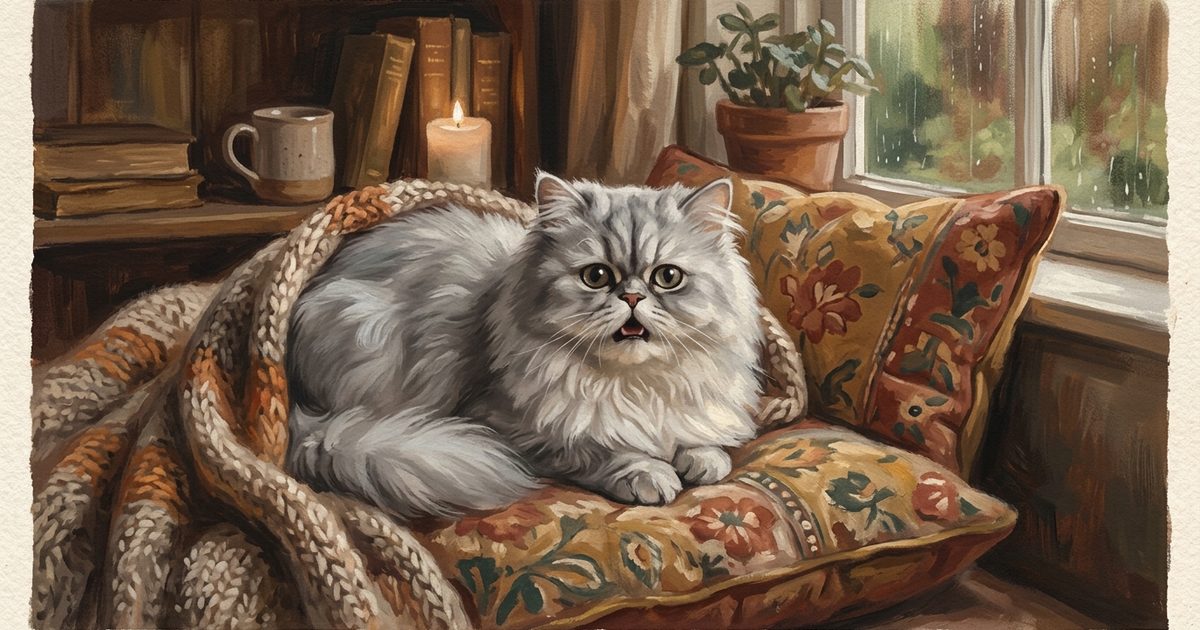
Flat-faced cats like Persians and Himalayans have shorter, structurally narrower airways, which makes them more prone to breathing effort. This does not mean panting is "fine for a Persian" — it means their owners need a lower threshold for concern. International Cat Care notes that brachycephalic breeds can experience varying degrees of respiratory compromise, so even a mild breathing change is worth paying attention to rather than brushing off.
If your vet has already confirmed your cat is fine but you still sense something is a little off, upload a photo and hear what your cat might say about how she feels day to day — a MeowMind reading can help fill in the nuances a clinical check does not cover.
How Do Cats Normally Cool Down (If They Don't Pant)?
Cats cool themselves mainly by grooming — spreading saliva that evaporates — and by seeking shade, cool surfaces, and stillness. They have sweat glands on their paw pads but relatively few across the body, so they did not evolve heavy panting as a cooling tool the way dogs did.
Because a cat's default toolkit doesn't include panting, any open-mouth breathing tends to mean the usual systems are being stretched. The everyday cooling methods below are quiet and easy to miss — which is exactly why cat panting stands out the way it does.
Grooming as cooling
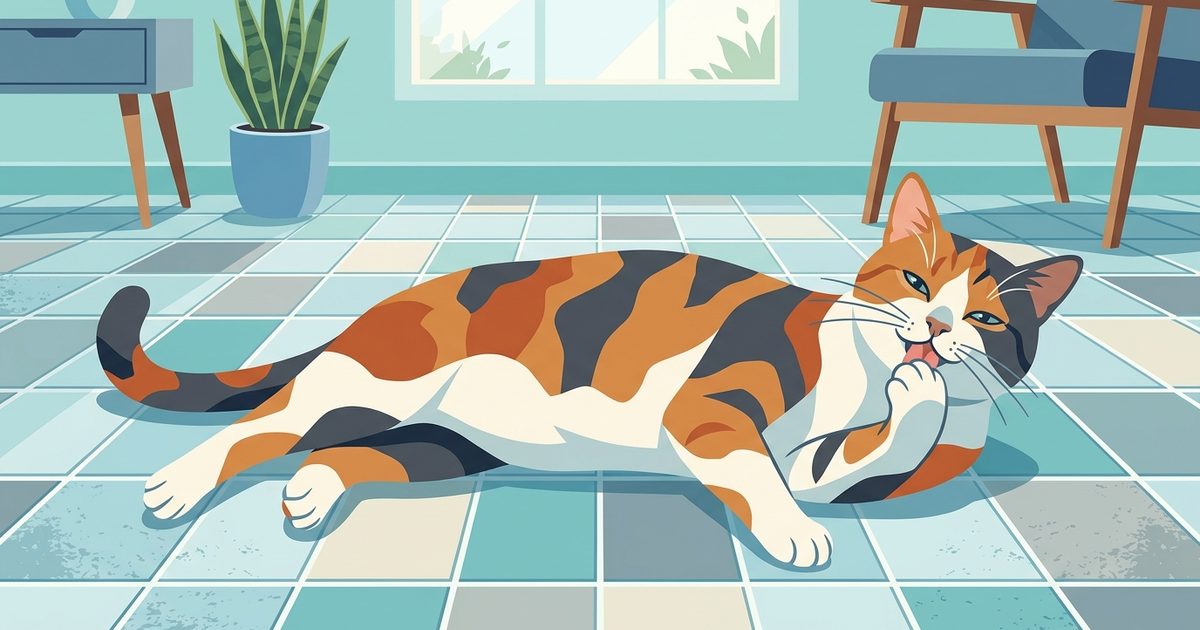
When a cat licks its coat on a warm day, it's not just keeping clean. The saliva it spreads across the fur evaporates and pulls heat away from the skin, much like sweat does for us. You'll often notice a cat grooming more during hot weather, or right after a long sunbath — that extra grooming is thermoregulation as much as tidiness. Long-haired cats in particular rely on this, which is part of why matted or unknoted coats become a real welfare issue in summer. If you want to go deeper on the multiple jobs grooming does, see our guide on why cats groom.
Seeking shade, cool floors, and stillness
Cats also cool down behaviorally: they relocate to the shadiest corner, flatten themselves against tile or hardwood, and go still. The internet-famous "sploot" — a cat or dog stretched out belly-down with back legs trailing behind — is a heat-dumping posture that maximizes contact with a cool surface. Cats will also sleep through the hottest part of the day, which is one reason they seem to disappear around noon in summer. That midday shutdown is strategy, not laziness — read more in our piece on why cats sleep so much.
Paw-pad sweat and the limits
Cats do have sweat glands — on their paw pads. That's why a nervous cat may leave damp paw prints on a hard floor or exam table. Paw-pad sweating helps a little with cooling, but the surface area is tiny compared with a whole body, so it's a modest tool at best. On a genuinely hot day, or during heavy exertion, grooming and paw-sweat simply can't keep up. When those quiet systems are overwhelmed, a cat has no efficient panting fallback like a dog does — which is exactly the gap where heatstroke can develop. We cover the full physiology in our article on whether cats sweat.
What Should I Do If My Cat Is Panting?
Stay calm and remove the trigger: stop play, move your cat to a cool, quiet room, offer water, let them rest. If panting does not ease within a few minutes, or pairs with drooling, blue or pale gums, vomiting, or collapse, go to a vet immediately — these move fast.
Your response falls into two lanes: de-escalate the situation right now, and judge whether it has crossed into emergency territory. Most of the time it's the first lane; you just need to know where the line is.
Immediate first-aid steps
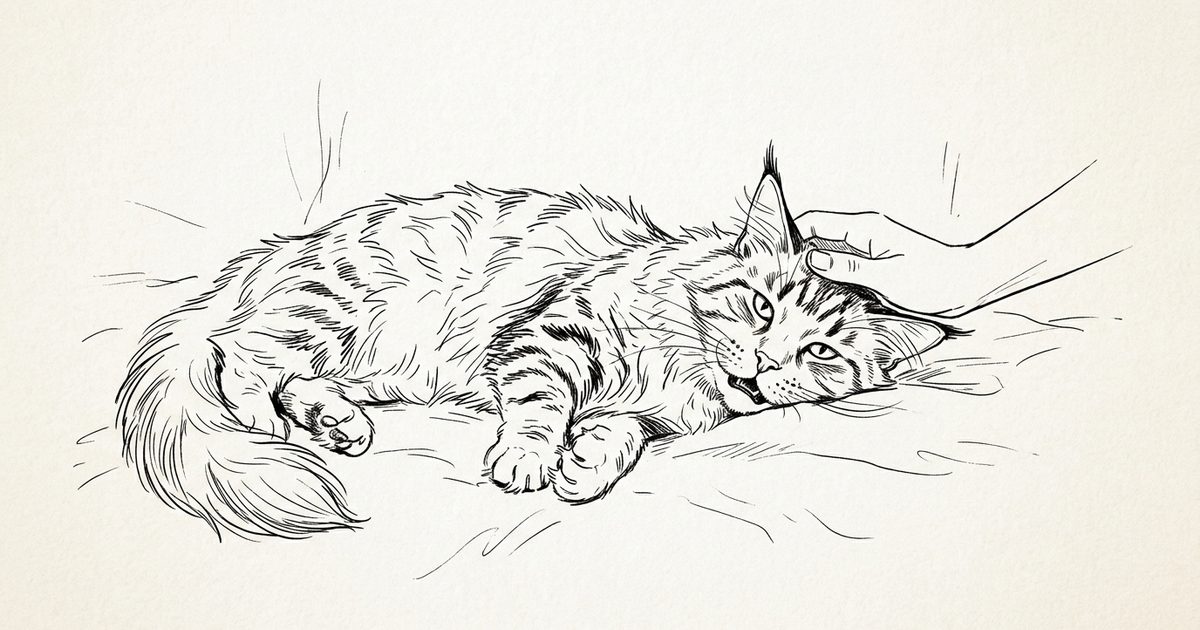
If the panting started during play, in a warm room, or on a car ride, the first move is to remove the trigger. Stop the game. Carry your cat to the coolest, quietest room in the house and set them down somewhere they can choose to stay or move. Offer fresh water in a shallow bowl, but don't force them to drink — a panting cat can't easily swallow, and forcing water can cause choking. A gentle breeze from a fan, or wiping the paws and belly with a cool (not cold) damp cloth, helps a lot. Then sit quietly and watch. Most exercise- or stress-related panting eases noticeably within a few minutes once the cat is cool and still.
One thing not to do: do not ice-bathe, hose down, or dunk a panting cat in cold water. Rapid cooling can drop body temperature too fast and trigger shock, which is more dangerous than the heat itself. Cool — not cold — and gradual is the rule.
Emergency signs — go now
Some signs mean stop watching and move. Go straight to a vet or emergency clinic if your cat shows any of the following alongside the panting: blue, pale, gray, or bright red gums; collapse or inability to stand; heavy drooling; vomiting; labored breathing with obvious effort of the belly or chest; or panting that will not stop after several minutes of cooling and rest. These point to heatstroke, heart or lung disease, or a blocked airway — all of which are time-critical. The Cornell Feline Health Center treats panting as a clinical sign worth taking seriously, and seconds matter in heatstroke. If you're unsure, call ahead so the clinic can prepare.
When to call rather than rush
There's a middle zone where a vet call — not necessarily an emergency dash — is the right move. If your cat's panting resolved within a few minutes after play but you want a sanity check, a quick call to your regular clinic is reasonable and low-cost. The threshold to call (rather than wait and see) should be lower for seniors and for flat-faced breeds like Persians and Himalayans: their airways and hearts are less forgiving, and what looks mild can tip into serious faster than in a younger, structurally normal cat. When in doubt, phone — most clinics would rather answer one unnecessary question than see a cat arrive in crisis.
Why Is Cat Panting Taken More Seriously Than Dog Panting?
Because dogs cool themselves mainly by panting, dog panting is routine. Cats did not evolve to rely on panting that way (see How Cats Cool Down above), so a panting cat is more often signaling that something is wrong — and is rightly taken more seriously.
Why the same behavior means different things
The full mechanics of how each species cools are covered above in How Cats Normally Cool Down — the short version is that dogs are panting-primary, while cats lean on grooming, shade, stillness, and limited paw-pad sweat. Because panting was never wired into a cat's default cooling toolkit, a cat resorting to open-mouth breathing is reaching for a tool its body was not built to lean on. International Cat Care classifies panting in a calm cat as a clinical sign worth investigating rather than a normal background behavior — which is exactly why the threshold for concern is lower than for a dog.
What this means for owners
The practical takeaway is simple: never dismiss cat panting with "she's just like a dog." The default response to a dog panting is to offer water and wait; the default response to a cat panting is to ask why. Look for a clear trigger — hard play, a hot room, a stressful car ride — and watch whether the breathing settles within a few minutes once that trigger is gone. If it does, the episode was likely within normal bounds. If it does not, or if there was no obvious trigger in the first place, the conversation shifts from observation to action.
This is also where stepping back and reading the whole cat pays off. Panting is rarely the only signal; it sits alongside posture, ear set, tail tension, and facial expression that together tell you whether your cat is recovering, stuck in stress, or in real distress. Our guide to cat body language walks through how to read those signals together rather than one at a time.
Panting at a Glance — Summary
| Situation | Usually normal? |
|---|---|
| Brief panting after intense play | Usually yes — if it stops within a few minutes of rest |
| Panting on a hot day | Sometimes — only if brief and the cat cools down quickly |
| Panting during a car ride or vet visit | Often yes — stress panting, but should ease once the trigger ends |
| Panting at rest | No — investigate; this is a common red flag |
| Panting with blue, pale, or gray gums | No — emergency, go to a vet immediately |
| Panting in a Persian or flat-faced cat | No — lower threshold for concern; narrower airways |
| Panting lasting more than a few minutes | No — if it will not settle, call or visit the vet |
Curious What Your Cat Would Say?
Upload a photo and get a warm, personalized reading from your cat's perspective.
Start Your Free ReadingFrequently Asked Questions
Why is my cat panting with her mouth open?
Open-mouth panting in a cat usually means exertion, stress, heat beyond her comfort zone, or an underlying health issue. Unlike in dogs it is rarely routine, so look for a clear trigger and check that the breathing settles within a few minutes once the trigger ends.
Is it normal for a cat to pant after playing?
Yes, brief panting after intense play like a zoomie or feather-wand chase can be normal, provided it eases within a few minutes of rest. If the breathing keeps going after your cat has settled, or she is reluctant to play and pants instead, that is worth a vet call.
What should I do if my cat is panting in the car?
Keep the carrier calm, cool, and dim, and let her settle once the ride is over. Stress panting is real, but it should ease once the trigger is gone. If it persists, comes with drooling or pale gums, or your cat collapses, head to a vet immediately.
When is cat panting an emergency?
It is an emergency when panting comes with blue, pale, gray, or bright red gums, collapse, heavy drooling, vomiting, labored effort, or breathing that will not stop after several minutes of cooling and rest. These point to heatstroke, heart or lung disease, or a blocked airway — all time-critical.
Do cats pant when they are in pain?
They can. Cats hide discomfort well, and panting is sometimes one of the few outward signs of surgery recovery, injury, or internal pain. Because panting alone is not specific, read it alongside posture, appetite, and other pain signals, and contact your vet when unsure.
Why does my cat pant on hot days?
Cats did not evolve heavy panting as a cooling tool, so heat-related panting usually means her normal systems — grooming, shade-seeking, paw-pad sweat — are being stretched. Move her to a cool room and watch closely, because heavy panting with drooling or red gums can signal heatstroke.
Is my Persian cat panting normal?
No — flat-faced breeds like Persians and Himalayans have structurally narrower airways, so any breathing change deserves a lower threshold for concern rather than being dismissed as breed-typical. If your Persian pants at rest or for more than a few minutes, call your vet.
How long should cat panting last before I worry?
Use the few-minutes rule: benign panting from play, warmth, or stress should noticeably ease within about five minutes once the trigger stops. If it does not come down after rest in a cool, quiet spot, or starts with no obvious cause, it has crossed out of the normal range.
Can only dogs get heatstroke, not cats?
No — cats absolutely can get heatstroke, especially flat-faced, long-haired, and obese cats. Heavy panting with drooling, staggering, vomiting, or bright red gums is a medical emergency, so move your cat to a cool spot and contact a vet immediately rather than waiting.
Sources & References
You Might Also Like
Kitten Teething: Timeline, Symptoms & How to Help
Kitten teething runs from 3 to 7 months as baby teeth fall out. Learn the timeline, signs to watch for, and how to soothe a teething kitten safely.
15 min readWhen Do Cats Stop Growing? A Complete Timeline
When do cats stop growing? Most cats reach adult size by 12-18 months, but large breeds like Maine Coons keep growing until 3-4 years. Full timeline inside.
14 min readCan Cats Eat Cherries? Flesh, Pit & Toxicity Facts
Can cats eat cherries? Pitted flesh is safe in tiny amounts — but the pit, stem, and leaves are toxic (cyanide precursors). Learn what's safe and what isn't.
15 min readA message, in your cat's voice
Upload a photo, get a warm note written from your cat's perspective — just for fun. Plus 121 vet-cited articles, offline.