Do Cats Sweat? How Cats Cool Down (And When to Worry)
So if you've ever wondered whether cats sweat, the answer is yes — but nothing like us. Cats do sweat, yet almost entirely through their paw pads, which is why you'll rarely see a damp cat on a hot day the way you'd see a damp human. Instead, how do cats cool down? Through a clever mix of grooming, seeking shade, and spreading out on cool surfaces — strategies that don't rely on soaking their fur. Understanding this matters more than it sounds, because cats are quietly poor at dumping body heat, and a few of their "cooling" behaviors double as early warning signs. Let's walk through how your cat actually keeps its temperature in check — and when to pay closer attention.
Key takeaways
- Cats do sweat, but only a little, almost entirely through their paw pads — they do not sweat across their skin like humans.
- Their real cooling tools are grooming (saliva evaporation), seeking shade and cool surfaces, and slowing down.
- A panting cat is usually an overheated or stressed cat and warrants a vet check, unlike dogs.
How Cats Cool Down — Quick Reference
| Cooling method | How it works | How much it helps |
|---|---|---|
| Paw-pad sweat | Sweat glands in the pads leave faint damp prints; moisture evaporates | Low — small surface area, limited effect |
| Grooming (saliva) | Saliva spread on the fur evaporates like sweat on our skin | High — a cat's main active cooling strategy |
| Seeking shade / cool surfaces | Moving out of sun onto tile, tubs, and into airflow | Medium-High — passive but constant |
| Spreading out / splooting | Splaying the body, especially hind legs, to dump heat into a cool floor | Medium — effective in still heat |
| Panting | Open-mouth breathing to evaporate moisture from the airway | Low and a red flag — only used when other methods fail |
Do Cats Sweat?
Cats do sweat, but not the way humans do. They have very few sweat glands across their skin; almost all of a cat's sweat glands are concentrated in the paw pads, so a hot or nervous cat leaves faint damp prints rather than sweating through its fur.
The short answer to "do cats sweat" surprises most owners: yes, they do — just in a place you rarely think to look. While we humans rely on millions of sweat glands scattered across our entire body, evolution took a different path with cats, and understanding that difference is the key to understanding how cats cool down in the first place.
Why cats don't sweat like us
Humans are practically leaky when we get hot. We have eccrine sweat glands distributed across nearly every square inch of skin, and their entire job is to push moisture onto the surface so it can evaporate and carry heat away. It's an elegant, whole-body cooling system.
Cats don't have that luxury. A cat's skin is covered in fur, and fur that soaked through with sweat would mat, cling, and lose its insulating value — exactly the wrong outcome for an animal trying to regulate its temperature. So evolution placed the majority of a cat's sweat glands where there's no fur at all: in the paw pads. The broad, skin-surface sweating we take for granted is largely absent in cats, which is why you'll almost never see a cat's coat damp from heat.
So where does cat sweat come from?
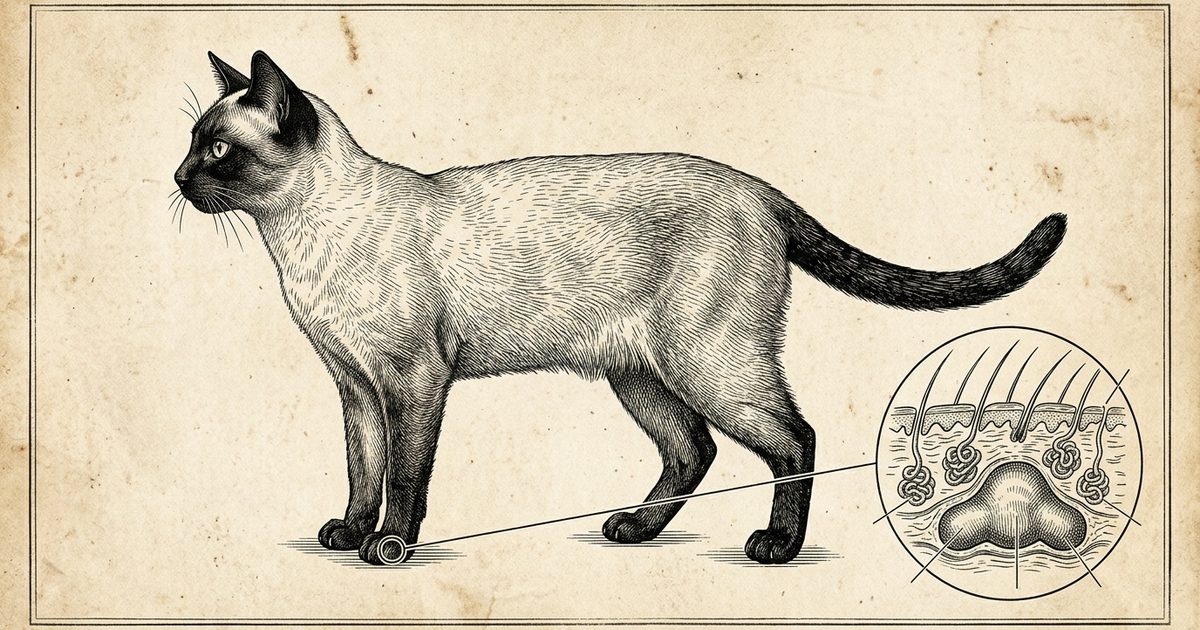
Most of it comes from those paw pads, which contain merocrine (eccrine-type) sweat glands that produce moisture in response to rising body temperature — or, interestingly, to adrenaline. That's why a stressed cat at the vet can leave damp prints just like a hot one at home. A much smaller contribution comes from grooming: when a cat licks its coat, it spreads saliva that then evaporates, which is evaporative cooling by another route. Generalized sweating across the skin itself is minimal. For a reliable overview of feline thermoregulation, the veterinary resource International Cat Care covers how cats manage body heat in detail.
How Do Cats Cool Down?
Because they can't sweat across their bodies, cats cool down mainly by grooming — spreading saliva that evaporates off the fur — by seeking shade and cool surfaces, by spreading out to dump body heat, and by being less active during the hottest part of the day.
With whole-body sweating off the table, cats lean on a toolkit of behavioral strategies that, taken together, do a surprisingly good job of keeping them comfortable. None of them is as dramatic as a human dripping after a run, but they add up.
Grooming as air conditioning
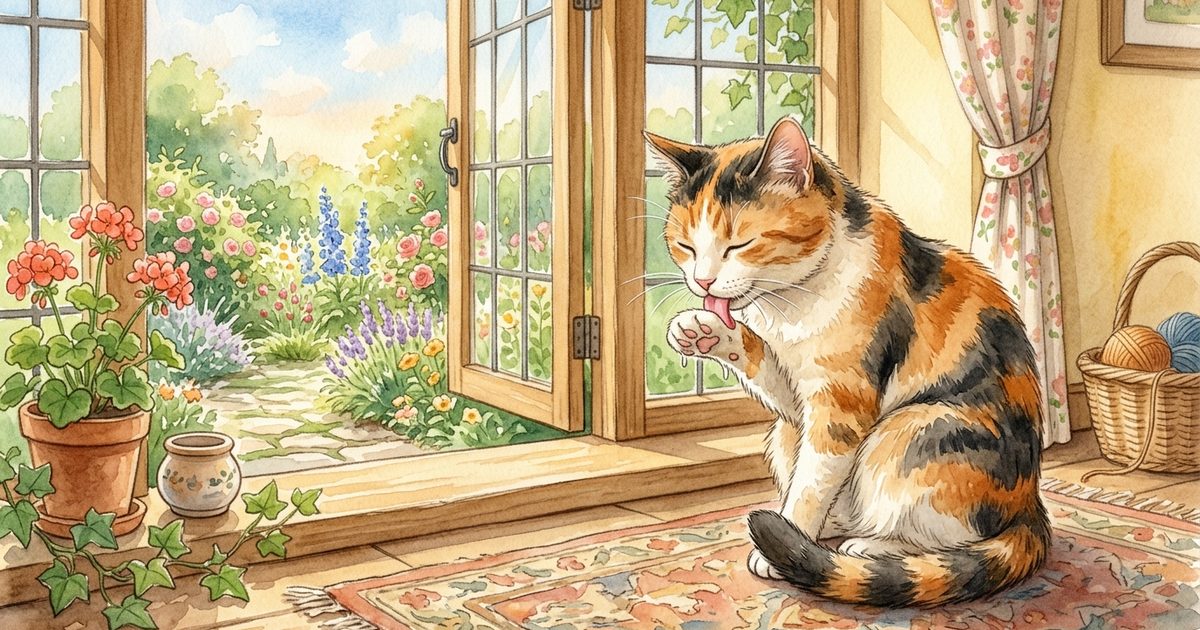
The single most important cooling tool a cat owns is its tongue. When a cat grooms, it coats its fur in a thin layer of saliva, and as that saliva evaporates it pulls heat from the skin beneath — the same physics that makes sweat work on human skin, just delivered by licking instead of secreting. Cats groom noticeably more in warm weather for exactly this reason. We go deeper into the grooming mechanism itself elsewhere, so we won't re-explain the barbed tongue here — the relevant point is that grooming is a cat's primary form of active cooling.
Seeking shade, airflow, and cool surfaces
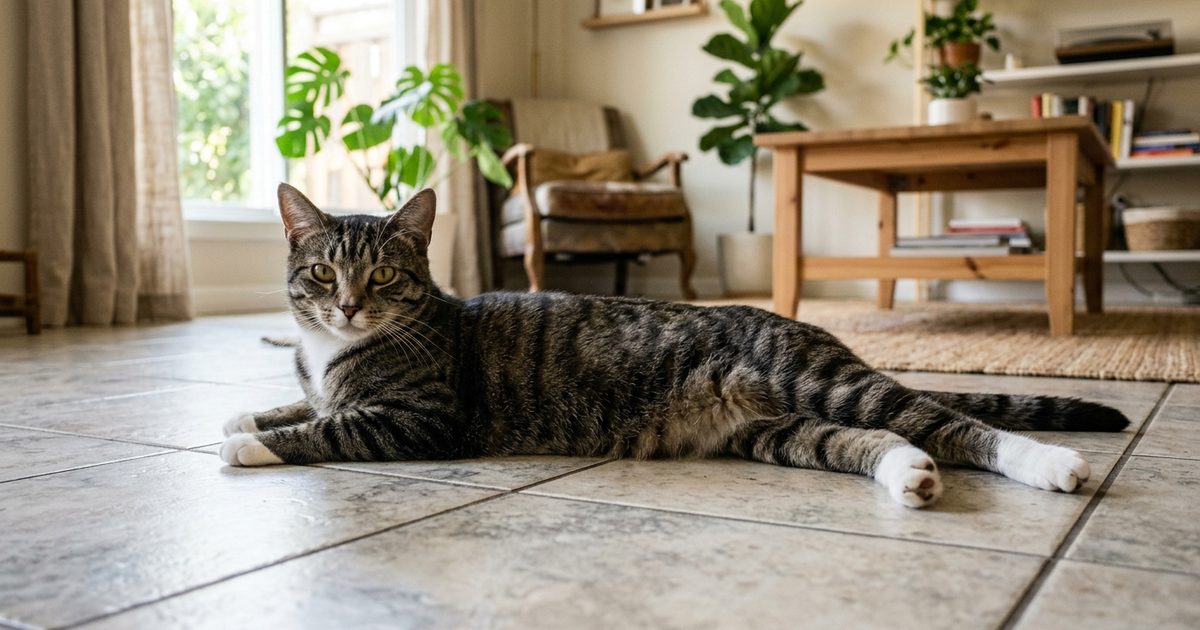
Beyond grooming, a hot cat shops its environment for the coolest available spot. You'll often find a warm-weather cat sprawled on a tiled floor, wedged into a porcelain bathtub, or pressed into the shade under a bed — anywhere that lets body heat conduct away into something cooler than fur and air. The classic move is the sploot: hind legs splayed flat behind the body, belly pressed to the floor, maximizing the surface area in contact with a cool surface. It looks comical, but it's efficient thermal engineering.
Behavioral changes: slowing down
The final lever is the simplest one: do less. Cats nap more and play less when it's hot, conserving the heat they'd otherwise generate by moving. This lines up with their natural crepuscular activity pattern — most active at dawn and dusk, tucked away asleep through the peak heat of midday. Slowing down isn't laziness in summer; it's a cat staying inside its thermal budget.
Do Cats Sweat Through Their Paw Pads?
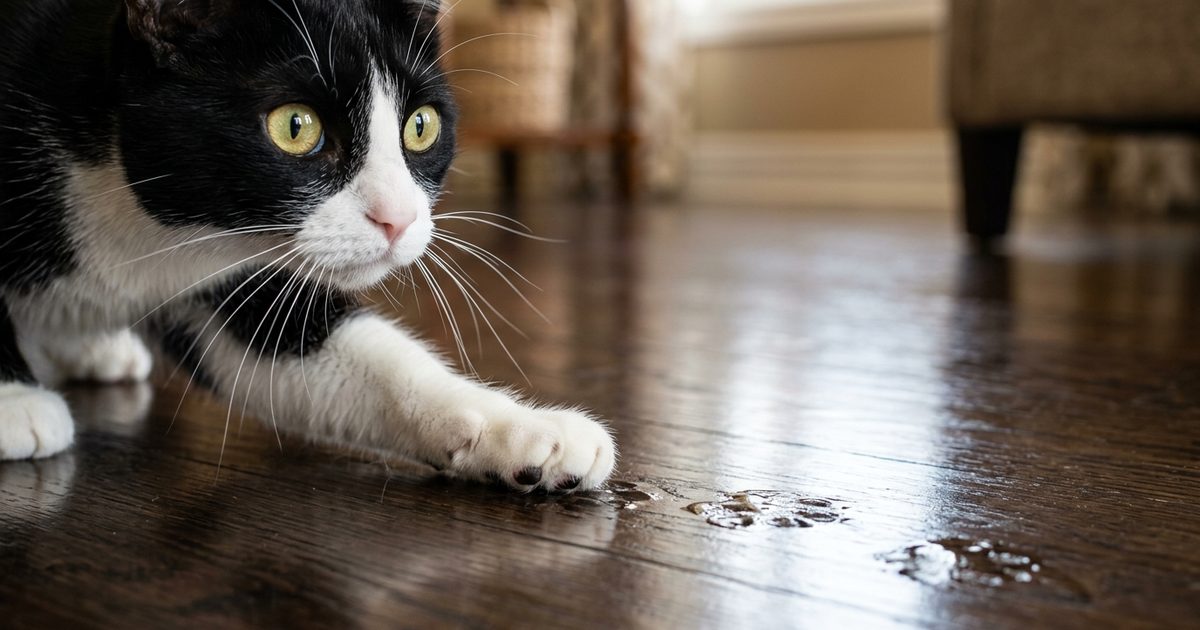
Yes — a cat's paw pads are its main sweat outlet. On a hot day, or when a cat is stressed, you can sometimes see faint damp paw prints on hard floors or inside the carrier. This paw-pad sweating is normal, but persistent wet prints in cool conditions can signal stress.
The visible paw prints
Cats have very few sweat glands spread across their skin, but the paw pads are packed with merocrine-type glands — the same kind humans use all over our bodies. Those little toe beans are doing real work. On a warm afternoon, or when your cat is on high alert, you may spot a faint trail of damp paw prints across the exam table at the vet, on hardwood, or along a glossy hallway floor. They usually dry within seconds, which is why most owners never notice them at all.
The reason is twofold. The glands help with thermoregulation — a little moisture evaporating off warm paw pads does dump some heat. But the same glands also respond to adrenaline, which is exactly why stressed or frightened cats leave the most noticeable prints. The architecture of those pads — the fat, the fur between toes, the scent glands that live alongside the sweat glands — is what makes a cat's foot such a busy little sensory surface. You can read more about the structure in our guide to the cat paw.
Is it sweat or something else?
When owners first spot damp paw prints, a common worry is that something is wrong — a leak, an accident, a medical issue. In most cases the explanation is far simpler. A cat that has just stepped through its water bowl, walked across a damp bathroom floor, or been over-grooming a paw will leave wet prints that look identical to sweat. Drying the paws and watching whether the prints return is usually enough to tell them apart.
It's also worth saying plainly: damp paw prints are not urine in the vast majority of cases. Paw-pad sweat is the default explanation, especially in heat or stress. Rarely, persistent wetness between the toes can point to a skin condition, an infected nail bed, or another medical cause — and if the moisture is constant, smells unusual, or comes with licking or limping, that's the moment to call the vet rather than shrug it off.
Do Cats Sweat When They Are Stressed?
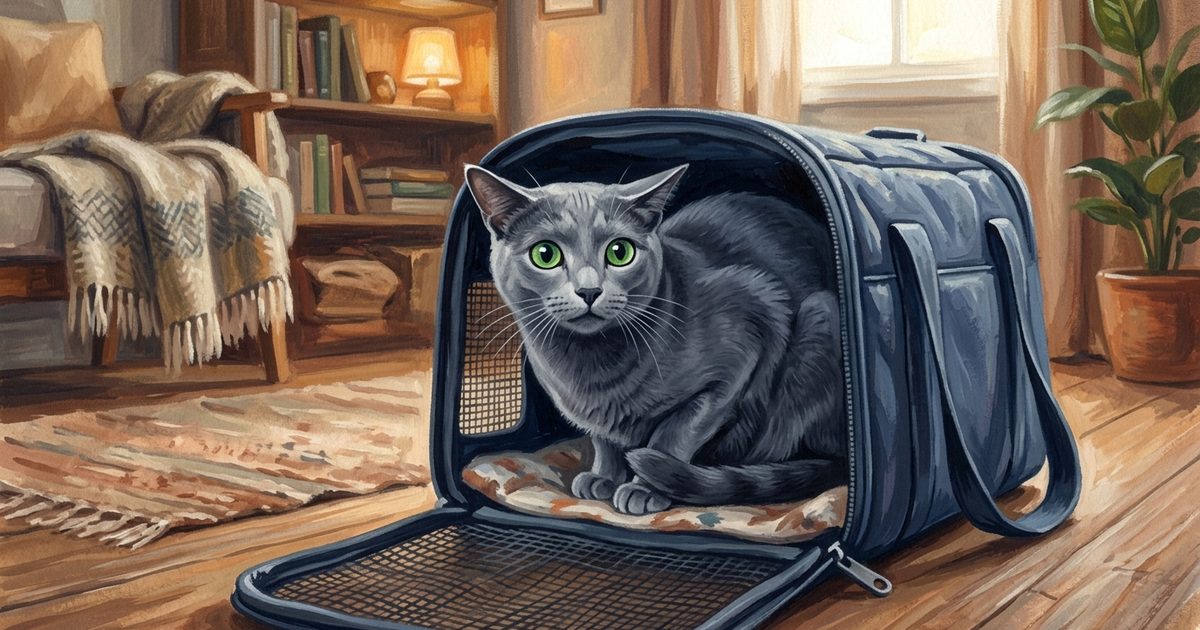
Yes — stress and fear trigger the same paw-pad sweat glands, which is why nervous cats leave damp prints in the carrier or at the vet. Paw-pad sweating is one of the quieter stress signals owners can actually see, alongside hiding, dilated pupils, and a tucked tail.
The nervous-paw-prints pattern
The connection between emotion and those tiny footprints is one of the more useful things a cat owner can learn to notice. Adrenaline activates the paw-pad glands directly, so a cat that is frightened — not necessarily hot — can leave a clear trail of damp prints behind it. The classic settings are the ones you'd expect: the stainless-steel exam table at the vet, the floor of the carrier on the way to the car, the windowsill during fireworks, or a new home on moving day. The Cornell Feline Health Center notes that acute fear and stress produce measurable physiological changes in cats, and paw-pad sweating is one of the visible ones.
Crucially, this isn't an isolated sign. A stressed cat tends to wear its whole body's discomfort at once — crouched low, ears swivelling back, tail wrapped tight, eyes wide with dilated pupils, and often silent or vocalising in an unusual way. The damp prints simply confirm what the rest of the body is already telling you. If you want to dig deeper into managing those moments, our article on cat anxiety walks through the common triggers and how to ease them.
Reading the whole cat
The one trap to avoid is diagnosing stress from paw prints alone. A warm room, a recent drink of water, or a perfectly content cat on a glossy floor can all produce damp prints that have nothing to do with fear. Sweat on the paws is a clue, not a verdict — it only becomes meaningful when you read it alongside posture, ear position, tail tension, and vocalisation. A cat with relaxed ears, a soft slow blink, and a loose tail leaving a few prints on a hot day is almost certainly just warm, not anxious.
This is why learning to read cat body language as a whole matters more than fixating on any single signal. The paw-pad sweat is useful precisely because it's one of the few internal states — fear, adrenaline, stress — that you can actually see from the outside. But it earns its meaning only when it lines up with everything else the cat is showing you.
Can Cats Overheat? (Heatstroke Risk)
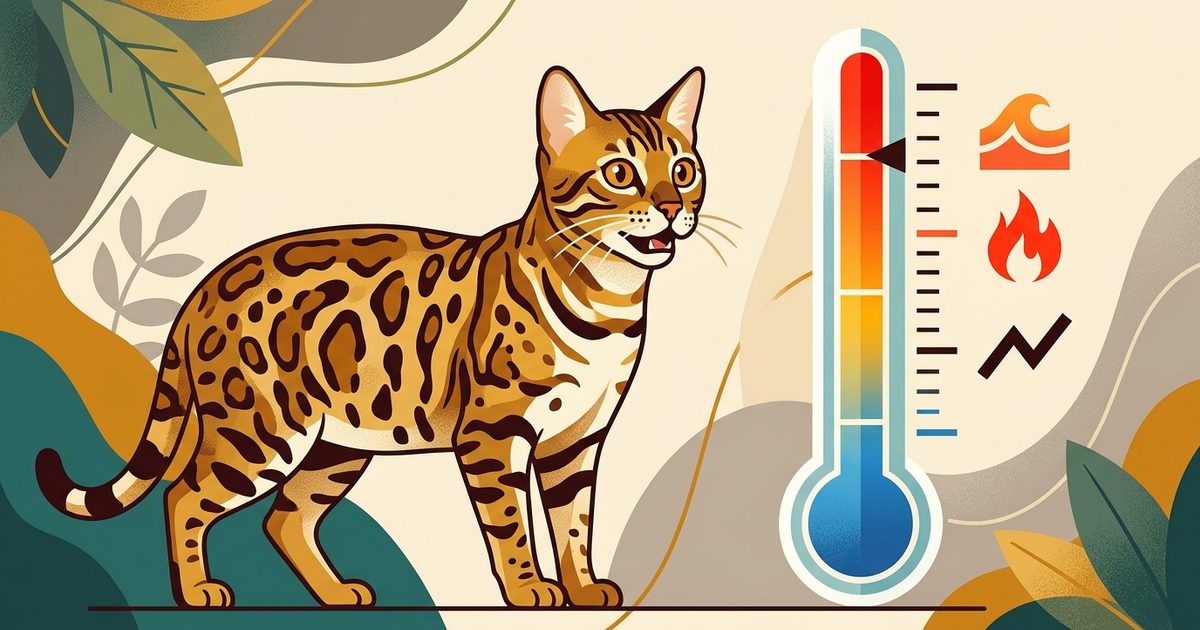
Yes. Because cats can't sweat enough to dump body heat in real heat, they can develop heatstroke. Panting, drooling, bright red gums, lethargy, and vomiting are red flags. Heatstroke is an emergency: move your cat somewhere cool, offer water, and call the vet immediately.
Why cats are vulnerable
A cat's cooling system is, frankly, limited. With almost no sweat glands across the skin, a dense fur coat that traps heat, and only modest panting ability, a cat has poor tools for dumping warmth fast. When the air temperature climbs near or above a cat's body temperature, those tools can be overwhelmed — and body temperature starts to rise. Some cats are at higher risk: brachycephalic (flat-faced) breeds, long-haired cats, seniors, and overweight cats all struggle more in heat. According to the Cornell Feline Health Center, heatstroke in cats is a genuine medical emergency, not a "she'll get used to it" situation.
Panting is a red flag, not normal
This is the one most owners get wrong. Unlike dogs — for whom panting is the everyday cooling method — a panting cat is usually a cat in trouble. Panting in a cat typically signals overheating, stress, pain, or illness, and it warrants attention rather than dismissal.
There's a narrow exception: a brief bout of panting after intense play can be normal in some cats, settling within a couple of minutes once they rest. But panting that continues, appears at rest, or shows up on a hot day is the default concern, not the default normal. We walk through the full decision process — when to act, when to watch — in our guide to why cats pant, so we won't re-derive it here.
When to call the vet
Treat any of the following as a veterinary emergency, not a "wait and see":
- Panting while at rest, or panting that won't stop
- Bright red, dark red, or pale gums
- Drooling, especially thick or stringy
- Collapse, staggering, or extreme lethargy
- Vomiting or diarrhea during hot weather
If you see these signs, move your cat to the coolest room available, offer water (don't force it), wet her fur with cool — not ice-cold — water, and call your vet or the nearest emergency clinic immediately. Speed matters; the longer a cat's temperature stays high, the worse the outcome.
How Can I Help My Cat Stay Cool?
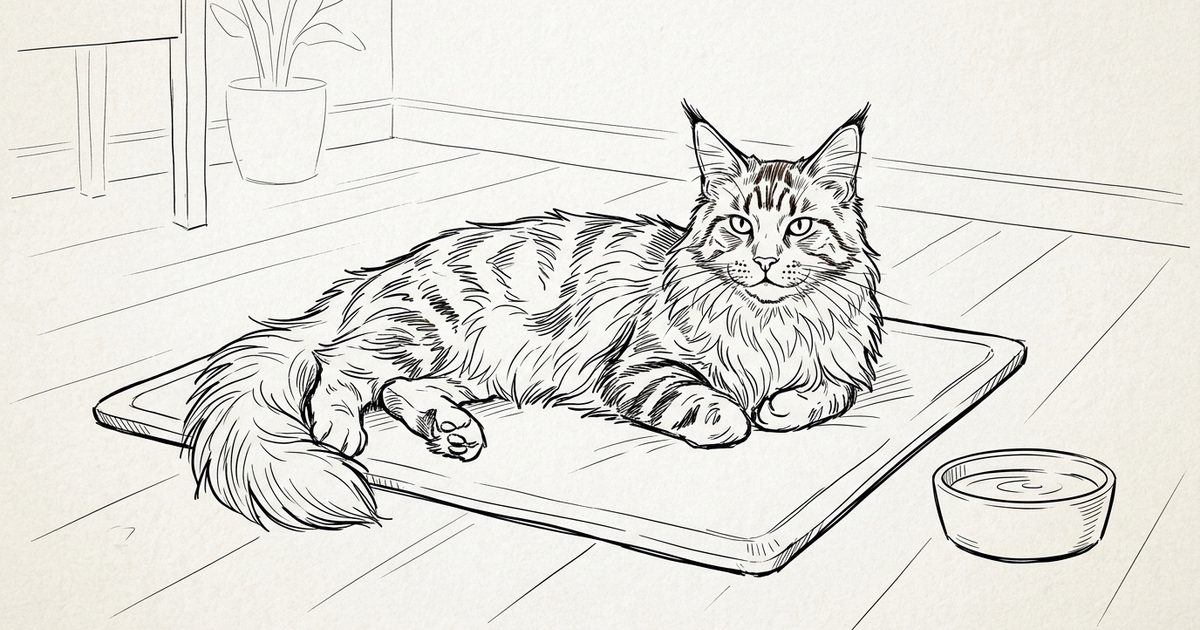
Give your cat constant access to fresh water, shade, and airflow; keep indoor rooms cool with AC or fans; offer cool surfaces and cooling mats; brush out the undercoat in summer; and never leave a cat in a parked car, even briefly.
Water, shade, and airflow
The foundations of hot-weather cat care are the unglamorous ones. Provide multiple water sources around your home — cats drink more when water is easy to reach, and good hydration supports the saliva-based cooling they rely on through grooming. Many cats prefer a fountain; moving water stays fresher and encourages drinking. On hot days, pull curtains or blinds to create shaded retreats, and run a fan or air conditioning to keep indoor rooms comfortable. Even a modest drop in room temperature takes real pressure off a cat's limited cooling system. International Cat Care emphasizes that environmental management — shade, airflow, and stable cool temperatures — does more for a hot cat than any single gadget.
Cool surfaces, cooling mats, and grooming
Cats already know what helps: they seek out tile floors, the bottom of the bathtub, and shaded stone to conduct heat away from their bodies. Make sure those cool spots stay accessible — don't block the bathroom tile with laundry on a 35°C afternoon. Pet-safe cooling mats can help, but avoid anything ice-cold against bare skin or paw pads; a mat that's pleasantly cool is the goal, not a freezing surface. Brushing matters too: a dense undercoat traps warm air against the skin, and regular brushing in summer helps remove it, making grooming-based cooling more effective. You can read more about how grooming itself works as a cooling tool in our guide to why cats groom.
Never the car
A parked car can become lethally hot within minutes, even with the windows cracked and even on a day that doesn't feel that warm to you. The temperature inside a closed vehicle climbs far faster than the outside air, and a cat's limited ability to cool herself means she cannot wait it out. The rule is simple and applies everywhere: if you wouldn't leave a child in the car, don't leave your cat there either — not for a quick errand, not for a minute.
Curious What Your Cat Would Say?
Upload a photo and get a warm, personalized reading from your cat's perspective.
Start Your Free ReadingCat Sweating & Cooling at a Glance — Summary
| Question | Short answer |
|---|---|
| Do cats sweat through their skin? | Barely — cats have very few sweat glands across their fur-covered skin, so whole-body sweating is minimal. |
| Do cats sweat through their paws? | Yes — the paw pads hold almost all of a cat's sweat glands, the main place sweating happens. |
| How do cats cool down? | Mostly by grooming (saliva evaporation), seeking shade and cool surfaces, splooting, and slowing down. |
| Do cats pant when hot? | Sometimes, but unlike dogs, a panting cat usually signals overheating, stress, or illness — not normal cooling. |
| Can cats get heatstroke? | Yes — cats can't dump heat fast enough in real heat and can develop heatstroke; panting and red gums are emergencies. |
| How do I help my cat stay cool? | Provide fresh water, shade, and airflow, keep rooms cool, offer cooling mats, brush the coat, and never use a parked car. |
Frequently Asked Questions
Do cats sweat through their skin?
Barely. Cats have very few sweat glands across their fur-covered skin, so whole-body sweating is minimal. Unlike humans, who sweat across nearly their entire body, cats rely on other ways to cool down.
Do cats sweat through their paws?
Yes. The paw pads hold almost all of a cat's sweat glands, so this is where sweating actually happens. On a warm day or when stressed, you may notice faint damp paw prints on hard floors.
Why does my cat leave damp paw prints?
Most often it's normal paw-pad sweat, triggered by heat or adrenaline. A nervous cat at the vet will leave the same prints as a hot cat at home. Only worry if the moisture is constant, smells odd, or comes with limping.
How do cats cool down in hot weather?
Mainly by grooming, which spreads saliva that evaporates off the coat. Cats also seek shade and cool surfaces like tile or porcelain, sploot to press their belly to the floor, and simply slow down during the hottest hours.
Is it normal for a cat to pant?
Not usually. Unlike dogs, a panting cat is typically overheated, stressed, in pain, or unwell. A brief bout after intense play can be normal, but panting at rest or on a hot day warrants a vet check.
Can cats get heatstroke?
Yes. Because cats can't sweat enough to dump body heat quickly, they can develop heatstroke in real heat. Panting, bright red gums, drooling, and collapse are emergencies — move your cat somewhere cool and call the vet at once.
How can I keep my cat cool without AC?
Provide several fresh water sources, pull blinds to create shaded spots, and run a fan. Keep cool surfaces like tiled floors or the bathtub accessible, offer a pet-safe cooling mat, and brush out the undercoat in summer.
Do cats sweat when they are scared?
Yes. Stress and fear release adrenaline, which activates the same paw-pad sweat glands as heat. That's why a frightened cat can leave damp prints in the carrier or on the vet's exam table.
Sources & References
You Might Also Like
Kitten Teething: Timeline, Symptoms & How to Help
Kitten teething runs from 3 to 7 months as baby teeth fall out. Learn the timeline, signs to watch for, and how to soothe a teething kitten safely.
15 min readWhen Do Cats Stop Growing? A Complete Timeline
When do cats stop growing? Most cats reach adult size by 12-18 months, but large breeds like Maine Coons keep growing until 3-4 years. Full timeline inside.
14 min readCan Cats Eat Cherries? Flesh, Pit & Toxicity Facts
Can cats eat cherries? Pitted flesh is safe in tiny amounts — but the pit, stem, and leaves are toxic (cyanide precursors). Learn what's safe and what isn't.
15 min readA message, in your cat's voice
Upload a photo, get a warm note written from your cat's perspective — just for fun. Plus 121 vet-cited articles, offline.