
Are Hydrangeas Poisonous to Cats? Symptoms & What to Do
Yes — if you're wondering are hydrangeas poisonous to cats, the answer is unambiguous. All parts of the hydrangea plant are toxic to cats, and the question of hydrangeas and cats is one every plant-loving owner should settle before bringing a bloom indoors. Hydrangea toxicity in cats is real, clinically documented, and worth understanding clearly — not because hydrangeas are the deadliest plant in your home, but because the harm is preventable once you know how the toxin works, where it concentrates, and how cats respond. This guide walks through the verdict, the science behind it, the symptoms to watch for, how hydrangeas compare to genuinely lethal plants like lilies, and exactly what to do if your cat chews one.
Key takeaways
- Yes, hydrangeas are toxic to cats — all parts of the plant are harmful, with the flowers and leaves holding the highest concentration of the toxin.
- Symptoms are usually gastrointestinal — vomiting, diarrhea, drooling, and a quiet, subdued demeanor — generally mild-to-moderate and rarely fatal, unlike lily poisoning.
- Call your vet if your cat eats any part, and bring a plant sample or clear photo so the toxin can be identified quickly.
Hydrangeas and Cats — Quick Reference
| Question | Short answer |
|---|---|
| Are hydrangeas poisonous to cats? | Yes — all parts are toxic |
| Which parts are most toxic? | Flowers and leaves (buds and stems also harmful) |
| What is the toxin? | Cyanogenic glycosides, which release cyanide when chewed |
| What are the common symptoms? | Vomiting, diarrhea, drooling, lethargy, depression |
| How dangerous vs. lilies? | Far less deadly — GI upset, not kidney failure |
| What should I do if eaten? | Call your vet; bring a plant sample |
Are Hydrangeas Poisonous to Cats?
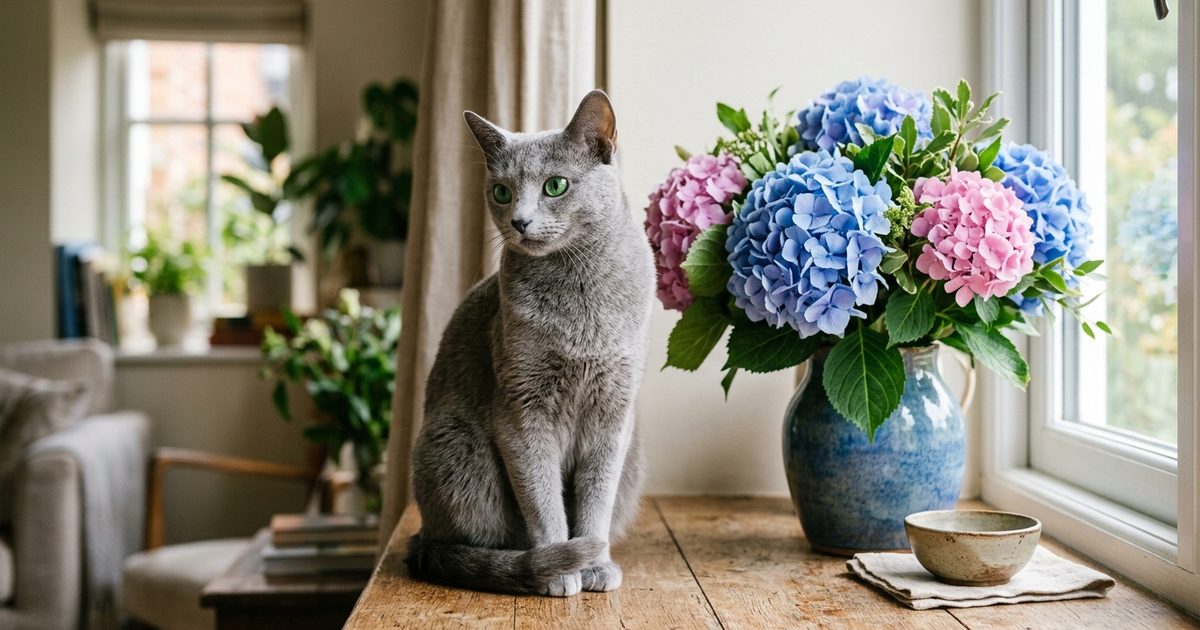
Yes — hydrangeas are poisonous to cats. All parts of the plant are toxic, with the flowers and leaves holding the highest concentration of the harmful compounds. Chewing even a small amount can cause vomiting, diarrhea, and lethargy, so any hydrangea a cat can reach is a plant worth removing or fencing off.
A popular garden and cut flower, a real risk
Hydrangeas are everywhere a cat might be. They fill garden beds and hedges through spring and summer, appear in grocery-store bouquets and florist arrangements year-round, and resurface indoors as dried blooms in autumn and winter wreaths and vases. That means exposure isn't seasonal — it shifts form rather than disappearing. A fresh cluster of mophead hydrangeas in July becomes a brittle dried flower head in November, and both pose a chewing hazard.
Cats notice hydrangeas for the same reasons we do: the blooms are large, showy, and visually unlike most foliage in the home, the leaves have a slightly coarse texture that invites investigation, and novelty itself draws curious or young cats in. A kitten exploring a new plant, or an indoor cat meeting an unfamiliar bouquet, is exactly the scenario where a few bites get taken.
All parts are toxic — flowers and leaves most concentrated
The toxin isn't confined to one part of the plant. The flowers and leaves carry the highest concentration of the harmful compounds, but the buds and stems contain them too — so a cat chewing any part of a hydrangea is ingesting toxin, not just a bitter mouthful. This is why the common belief that "only the flowers matter" is a myth worth correcting: a leaf nibbled off the floor can be enough to cause symptoms in a small or sensitive cat.
If you're looking for what you can safely grow around a curious cat, our cat-safe plants guide covers genuinely non-toxic alternatives in detail — the inverse of the risk profile here.
Why Are Hydrangeas Toxic to Cats?
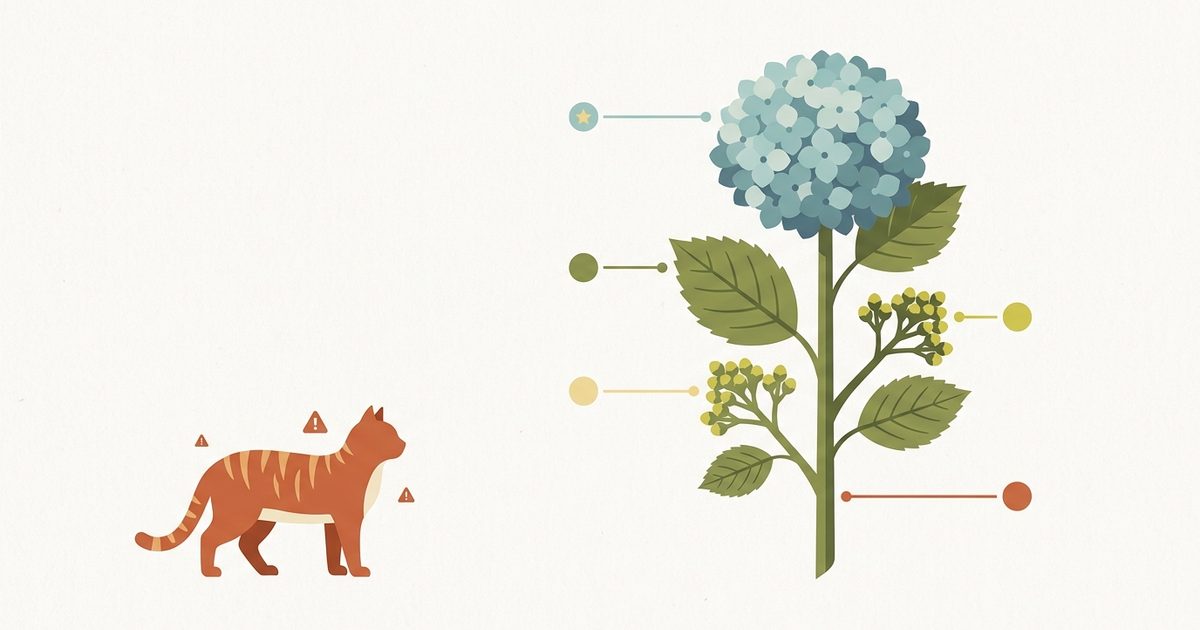
Hydrangeas contain cyanogenic glycosides — compounds that release hydrogen cyanide when the plant tissue is chewed or crushed. Cats are particularly sensitive because their livers are less efficient at detoxifying these substances, so a dose that barely affects a human or dog can cause real illness in a cat.
Cyanogenic glycosides — the cyanide-releasing compounds
The harm in hydrangeas doesn't come from a toxin sitting freely inside an intact leaf. It comes from a two-part system the plant uses to defend itself. Hydrangea tissue stores compounds called cyanogenic glycosides, kept physically separate from the enzymes that activate them. When the plant cells are damaged — by an insect bite, a tearing claw, or a cat's chewing — the compartments break open and the two components mix. That reaction releases hydrogen cyanide, the same substance that gives cyanide its name.
In plain terms: an untouched hydrangea leaf is largely inert. A chewed one is not. This is also why the risk is driven by ingestion rather than mere contact — brushing against the plant or sniffing a bloom doesn't trigger the chemistry, but biting into it does. The plant's defense mechanism is, in effect, armed by the very act of eating it.
Why cats are extra vulnerable
What makes this particularly relevant for cat owners is that cats process many toxins differently from humans and dogs. Their livers lack several of the glucuronidation pathways that other species use to clear harmful compounds efficiently — the same enzyme-gap family that explains why paracetamol (acetaminophen) and many essential oils are so dangerous to cats. A dose of cyanogenic glycosides that a larger animal might shrug off can, in a cat, produce genuine illness.
Body size magnifies the effect. Because the toxin dose matters per kilogram of body weight, a small cat or kitten eating the same mouthful as a large dog receives a far higher relative dose. The ASPCA lists hydrangeas as toxic to cats, and the Cornell Feline Health Center is a reliable reference for feline liver-detoxification differences and what to do after plant ingestion.
What Are the Symptoms of Hydrangea Poisoning in Cats?
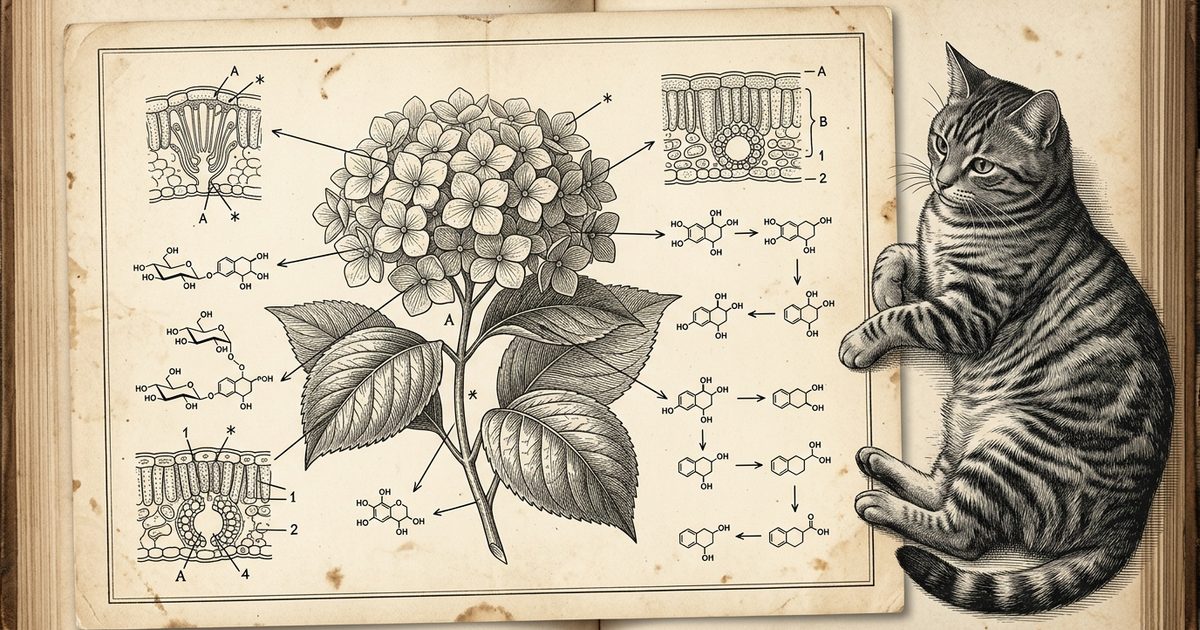
Most cases cause gastrointestinal upset within a few hours: vomiting, diarrhea, drooling, loss of appetite, lethargy, and a depressed, quiet demeanor. Severe poisoning is uncommon but can include breathing difficulty, a fast heartbeat, tremors, or collapse — any of these signs means an immediate trip to the vet.
When a cat chews hydrangea tissue, the cyanogenic glycosides inside release hydrogen cyanide as the cells are crushed — and the symptoms that follow track that internal chemistry. The signs usually arrive within a few hours of chewing, and for most cats they stay in the mild-to-moderate band: genuinely miserable, but not usually life-threatening. The tricky part is that a sick cat tends to go quiet and hide, which can look deceptively like ordinary sleepiness rather than poisoning. Knowing the full symptom picture — including the rare severe end — is what lets you tell the difference.
Mild-to-moderate signs (most cases)
The typical picture is gastrointestinal and shows up within a few hours of the chewing. You may see vomiting, diarrhea, drooling (hypersalivation), and signs of abdominal discomfort — a cat that crouches, refuses food, or flinches when touched along the belly. Alongside the stomach signs comes a characteristic "depression": a subdued, unusually quiet cat that retreats to a corner and stays still. This isn't the dramatic collapse owners fear; it's a flat, low-energy flatness that's easy to mistake for a lazy afternoon. Vomiting has many causes in cats — if you want the broader picture of when it's a passing upset versus something more, our guide to cat vomiting walks through it — but with a known hydrangea in reach, plant ingestion moves right to the top of the list.
Severe signs — when to rush to the vet
A smaller number of cases tip into severe territory, and these reflect a larger cyanide exposure rather than simple stomach upset. Watch for labored or rapid breathing, a fast or irregular heartbeat, tremors, wobbliness, dilated pupils, or collapse. Severity scales roughly with how much plant material was chewed and how quickly it was swallowed, so a cat that ate a whole flower head is at higher risk than one that nibbled a single leaf. At this tier there is no sensible "wait and see" — breathing trouble or collapse means a call to the vet or an emergency clinic right now, not in an hour.
How much is too much?
There's no clean line, because individual sensitivity varies and a smaller cat gets a bigger dose per kilogram from the same mouthful. As a rough guide, a single nibble of a leaf most often lands in the mild band, while a mouthful of blooms or buds pushes toward moderate-to-severe. The safe framing is neither panic nor assumption: any confirmed ingestion warrants a vet call to talk through the dose, the cat's size, and whether monitoring at home is reasonable — the decision is the vet's, guided by what you saw the cat eat.
How Dangerous Are Hydrangeas Compared to Lilies?
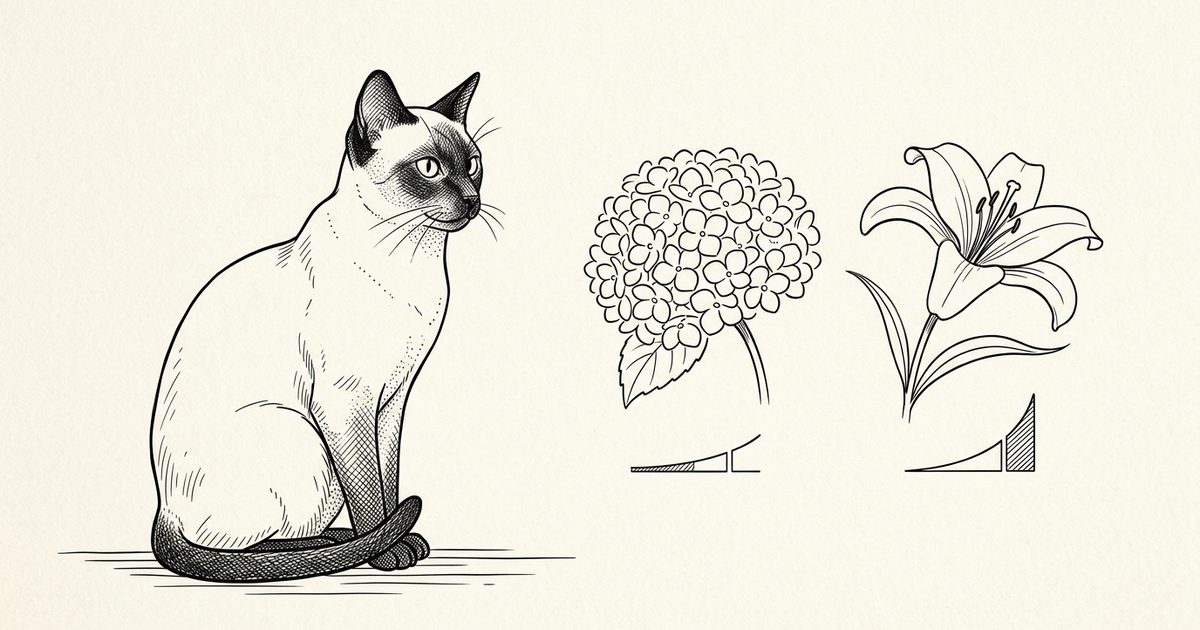
Hydrangeas are genuinely toxic but far less deadly than lilies. Hydrangea poisoning usually means several days of gastrointestinal upset and a quiet, miserable cat; lily poisoning means acute kidney failure that can kill within a day. Both warrant a vet, but only the lily is a race-against-the-clock emergency.
It's easy to lump "toxic flowers" into one fearful category, but hydrangeas and lilies sit at completely different points on the danger scale. Calibrating between them matters because it changes both the urgency and the fear: a cat that chews a hydrangea deserves a vet call and supportive care, while a cat that even brushes pollen from a true lily onto its fur and licks it clean is in a genuine emergency. Understanding why the two are so different comes down to the toxin and the organ it attacks.
Different toxin, different harm
Hydrangeas carry cyanogenic glycosides, which produce mainly gastrointestinal upset — vomiting, diarrhea, and that quiet, depressed demeanor — usually mild-to-moderate and self-limiting with care. True lilies (Lilium and Hemerocallis species) contain a toxin, still not fully characterized, that attacks the kidney tubules directly and causes acute kidney failure, often within 12–24 hours and frequently fatally even with aggressive treatment. The mechanism and the urgency are entirely different: one irritates the gut, the other destroys the kidneys. For the full emergency picture on lily toxicity — including why even the pollen and vase water are dangerous — see our guide to lilies and cats.
Why hydrangeas are serious but usually survivable
Most hydrangea cases resolve with supportive care — fluids to prevent dehydration, antiemetics to settle the vomiting, and time for the gut to recover — and fatalities are rare. But "rarely fatal" is not "harmless." A sick cat still feels awful for days, still needs a vet to confirm the dose and rule out other causes, and a large ingestion or a small cat can tip toward the severe end with breathing or heart signs. International Cat Care's guidance on poisonous plants frames it well: take any plant ingestion seriously, remove the source, and let the vet judge severity rather than waiting it out at home.
What Should I Do If My Cat Ate a Hydrangea?
Call your vet or a pet poison helpline right away, even before symptoms appear. Remove any plant material from your cat's mouth and fur, keep a hydrangea sample or clear photo, and note roughly how much was eaten. Do not induce vomiting unless a professional tells you to.
Immediate first steps
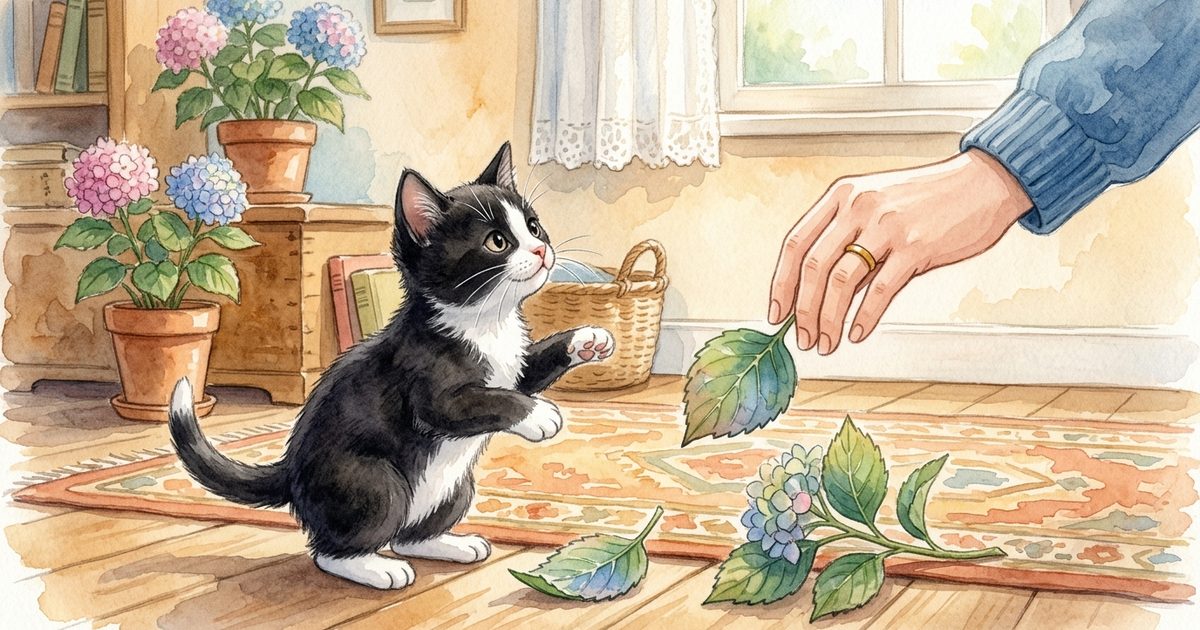
Stay calm and move quickly. First, gently clear any remaining hydrangea leaves, petals, or stems from your cat's mouth and wipe the fur around the face and paws, since cats groom themselves and can re-ingest residue. Move your cat away from the plant and shut the door on the room so there's no second attempt. Then gather evidence: snip a sample of the plant (flower, leaf, and a bit of stem) into a bag, or take a clear photo, and jot down roughly how much you think was eaten and when. Finally, pick up the phone. Call your regular vet first; if they're closed or you want a second opinion, the ASPCA Animal Poison Control Center is staffed 24/7 by veterinary toxicologists (a consultation fee applies). For a genuinely cat-focused read on what warrants an urgent call, the Cornell Feline Health Center is a reliable reference.
What the vet may do
Treatment depends on how much was eaten and how your cat looks when examined. If you arrive quickly, the vet may rinse your cat's mouth to clear residual plant material and, in some cases, induce vomiting under clinical direction — never something to attempt at home, as doing it wrong can cause more harm than the plant. More commonly, because hydrangea poisoning is usually gastrointestinal, supportive care is the core of treatment: intravenous fluids to prevent dehydration from vomiting and diarrhea, anti-nausea medication to settle the stomach, and quiet monitoring until your cat is eating again and back to its normal self. Handing over that plant sample genuinely speeds things up — with the exact plant confirmed, the vet wastes no time on guesswork and can choose the right supportive path straight away.
When home monitoring might be enough
In a small number of cases — a single tiny nibble of a leaf with no symptoms developing over the first several hours — your vet may judge that watchful home monitoring is enough, with clear instructions on what to look for and when to come straight back. The keyword here is your vet may. This is never a call for the owner to make alone. The decision to monitor at home is the vet's, made on the specifics of your cat's size, health, and the likely dose — not an assumption that a small taste was harmless. As a rule of thumb, the International Cat Care guidance on poisonous plants is plain: when in doubt, call.
Are Dried Hydrangeas Dangerous — and What Are Safer Alternatives?
Yes — dried hydrangeas are still toxic, and some evidence suggests the harmful compounds can become more concentrated as the plant dries, so dried blooms in an autumn arrangement are not a safe substitute. For genuinely cat-safe flowers, choose roses, orchids, sunflowers, snapdragons, or freesia instead.
Why dried does not mean safe
It's tempting to assume that once a hydrangea has dried, it has lost its bite — many owners move dried blooms into autumn wreaths and winter arrangements believing the risk has gone with the moisture. It hasn't. The cyanogenic glycosides are bound into the plant's tissue and persist through drying; because water weight is lost while the toxin compounds largely stay behind, the concentration in dried leaves and flower heads can actually be higher, gram for gram, than in fresh ones. Cats will still chew dried stems and brittle flower heads, sometimes more readily — the papery texture seems to invite it. So that rustic dried bouquet on the hall table in November is an overlooked hazard, not a safe stand-in for the fresh summer plant.
Cat-safe flowers and houseplants to grow instead
If you love the look of hydrangeas but want zero worry, the good news is that plenty of genuinely cat-safe flowers deliver similar fullness and color. Roses are non-toxic and come in nearly every shade a hydrangea does; orchids add elegant structure and are completely safe. Sunflowers, snapdragons, freesia, and zinnias round out a cat-friendly cutting garden, and for leafy indoor greenery that a curious cat can sniff without consequence, spider plants, parlor palms, and calatheas are all excellent, worry-free choices. For the full catalog of what's safe to grow and bring indoors, our cat-safe plants guide walks through the whole list.

Hydrangeas and Cats at a Glance — Summary
If you have read this far, you already know the essential shape of the risk: hydrangeas are genuinely toxic to cats, the harm is usually gastrointestinal rather than life-threatening, and the right response is a calm phone call to your vet rather than panic. The table below pulls the whole picture into one place, so you can scan it the next time a bouquet arrives in the house or you spot a bloom in the garden your cat can reach.
| Question | Short answer |
|---|---|
| Are hydrangeas poisonous to cats? | Yes — every part of the plant is toxic to cats |
| Which parts are most toxic? | The flowers and leaves hold the highest concentration of the harmful compounds |
| What is the toxin? | Cyanogenic glycosides, which release hydrogen cyanide when the plant is chewed |
| What are the common symptoms? | Vomiting, diarrhea, drooling, loss of appetite, and a quiet, subdued demeanor |
| How dangerous are they compared to lilies? | Far less deadly — hydrangeas cause GI upset, while lilies cause acute kidney failure |
| What should I do if my cat ate some? | Call your vet or a poison helpline right away, and bring a plant sample |
| What is a safe alternative? | Roses, orchids, sunflowers, snapdragons, and freesia are genuinely cat-safe flowers |
Keep the number for your vet and the ASPCA Animal Poison Control saved somewhere obvious, move any hydrangeas — fresh or dried — out of reach, and if you want blooms your cat can safely sniff, our cat-safe plants guide walks through the full list.
Curious What Your Cat Would Say?
Upload a photo and get a warm, personalized reading from your cat's perspective.
Start Your Free ReadingFrequently Asked Questions
Are hydrangeas poisonous to cats if they only brush against them?
No. The toxin only activates when hydrangea tissue is chewed or crushed, so brushing against the plant or sniffing a bloom won't cause poisoning. The real risk is ingestion — a cat has to bite into leaves, flowers, or stems to release the harmful compounds.
Which part of the hydrangea is most toxic to cats?
The flowers and leaves hold the highest concentration of the toxic compounds, but the buds and stems are harmful too. The idea that only the flowers matter is a myth — a cat chewing any part of the plant is ingesting the toxin, not just a bitter mouthful.
How much hydrangea does a cat need to eat to get sick?
There's no clean line, because severity scales with how much was eaten and the cat's size. A single nibble of a leaf often lands in the mild band, while a mouthful of blooms or buds pushes toward moderate-to-severe. Any confirmed ingestion is worth a vet call.
What are the first symptoms of hydrangea poisoning in cats?
The earliest signs are usually gastrointestinal and arrive within a few hours: vomiting, diarrhea, drooling, loss of appetite, and a quiet, subdued demeanor. A sick cat tends to go still and hide, which can look deceptively like ordinary sleepiness rather than poisoning.
Can a cat die from eating hydrangeas?
Rarely, but it's possible. Most cases cause mild-to-moderate gastrointestinal upset that resolves with supportive care, and fatalities are uncommon. A large ingestion or a very small cat can tip toward severe breathing or heart signs, which is why any confirmed chewing warrants a vet call.
Are dried hydrangeas still toxic to cats?
Yes. The cyanogenic glycosides persist through drying, and because water weight is lost while the toxin compounds largely stay behind, dried leaves and flower heads can actually be more concentrated gram for gram. Autumn and winter dried arrangements are a real, often overlooked hazard.
How dangerous are hydrangeas compared to lilies?
Far less deadly. Hydrangeas usually cause gastrointestinal upset that's miserable but rarely fatal, while true lilies cause acute kidney failure that can kill within a day. Both warrant a vet, but only the lily is a race-against-the-clock emergency.
What should I do right away if my cat chews a hydrangea?
Call your vet or a pet poison helpline immediately, even before symptoms appear. Gently clear any plant material from the mouth and fur, keep a sample or clear photo of the plant, and note how much was eaten. Never induce vomiting unless a professional tells you to.
Sources & References
You Might Also Like
Kitten Teething: Timeline, Symptoms & How to Help
Kitten teething runs from 3 to 7 months as baby teeth fall out. Learn the timeline, signs to watch for, and how to soothe a teething kitten safely.
15 min readWhen Do Cats Stop Growing? A Complete Timeline
When do cats stop growing? Most cats reach adult size by 12-18 months, but large breeds like Maine Coons keep growing until 3-4 years. Full timeline inside.
14 min readCan Cats Eat Cherries? Flesh, Pit & Toxicity Facts
Can cats eat cherries? Pitted flesh is safe in tiny amounts — but the pit, stem, and leaves are toxic (cyanide precursors). Learn what's safe and what isn't.
15 min read