Can Cats Eat Ice Cream? Why a Lick Isn't Worth It
Wondering whether cat ice cream is a harmless summer indulgence or a quiet hazard? It is one of the most common questions owners ask, and the honest answer sits in an awkward middle ground: can cats eat ice cream without harm, and is ice cream bad for cats by default? The short version is that a tiny lick of plain vanilla is unlikely to poison a healthy adult cat, yet ice cream is not a treat built for a cat's body. The lactose, the sugar, the fat, and the flavors that often come with it stack into real risk. Here is what every cat owner should understand before sharing a spoonful.
Key takeaways
- A tiny lick of plain vanilla ice cream won't poison a healthy adult cat, but ice cream is NOT recommended for cats.
- The problems stack — lactose most cats can't digest, high sugar they can't taste, high fat that risks pancreatitis, and common flavors like chocolate and xylitol that are genuinely toxic.
- For a cool summer treat, give cat-safe frozen alternatives instead.
Ice Cream Types — Quick Risk Reference
| Ice cream type | Lactose & sugar | Risk to cats |
|---|---|---|
| Plain vanilla | High lactose, high sugar | Low acute risk in a tiny lick; GI upset likely with more |
| Chocolate | High, plus theobromine/caffeine | Toxic — vet emergency even in small amounts |
| Sugar-free (xylitol) | Low sugar, but xylitol | Deadly — rapid hypoglycemia, liver damage |
| Fruit / nut flavors | Varies; may include macadamia, raisin | High — several of these ingredients are outright toxic |
| Kitten-formula "cat ice cream" | Formulated lower, check label | Lowest — still a treat, not a food; count toward daily intake |
Can Cats Eat Ice Cream? The Short Answer
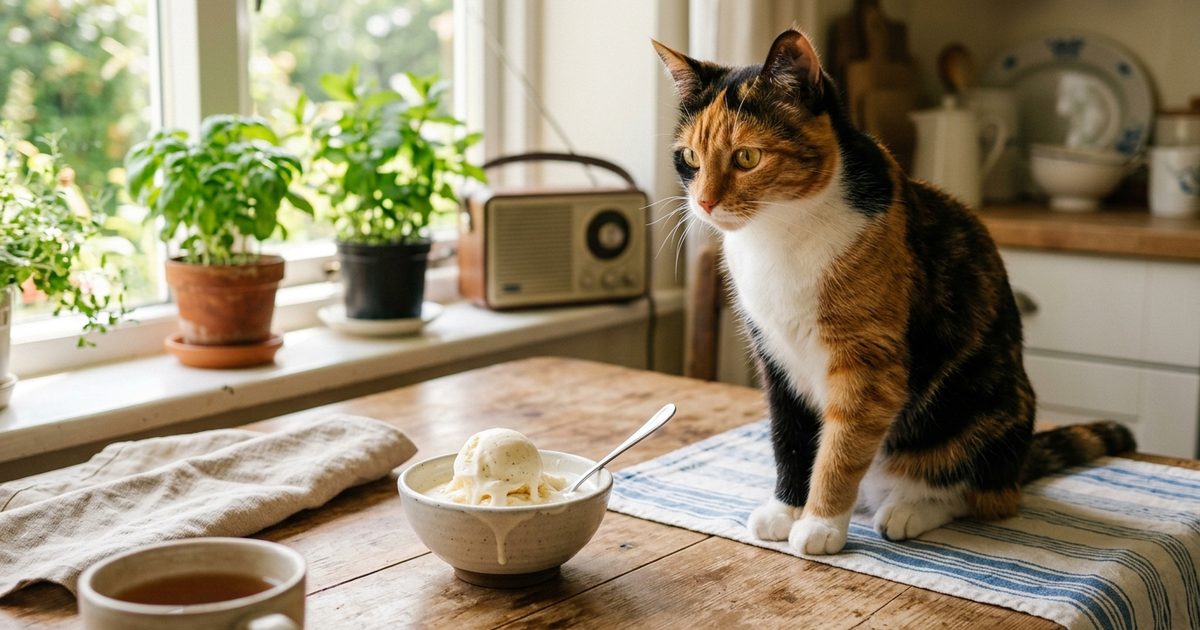
A tiny lick of plain vanilla won't poison a healthy adult cat, but ice cream is not recommended. The risk scales with dose and habit: a single one-off lick is usually harmless, while regular or larger amounts do real work on a cat's gut. The safest routine amount is none.
Habit versus a one-off lick
If your cat stole a single lick of plain vanilla off your spoon once, you do not need to panic. What changes the calculation is dose and frequency — offered regularly or in larger amounts, the same dessert begins to stress the gut and pancreas, and the chance of GI upset climbs sharply. The line that matters is the one between a rare accident and a habit, because the second is where weight gain, recurring diarrhea, and pancreatitis risk actually accumulate.
Why this is different from foods cats simply dislike
A disliked food is merely unpalatable; ice cream is unpalatable and unhealthy and potentially toxic, all at once. That combination is why the danger scales so sharply with what is actually in the bowl: a lick of plain vanilla might mean mild diarrhea, while a few licks of a sugar-free variety can mean an emergency clinic visit. Even plain milk is something most adult cats handle poorly — we break down the biology in can cats drink milk. Ice cream takes that same dairy problem and compounds it.
Are any ice creams safe?
No commercial human ice cream is formulated with a cat's digestion in mind. Some "pet ice cream" products exist and a few are genuinely better, but they still warrant a careful label check for added sugar, xylitol, or flavorings before you offer even a spoonful. Rather than endorse a brand, the safer principle is this: if you want to give your cat something cool and special, skip the frozen dessert aisle entirely and use cat-safe frozen alternatives — plain ice cubes, frozen low-sodium broth, or a tiny spoon of plain yogurt. We cover those in detail further down.
Why Is Ice Cream Bad for Cats? The Stack of Problems
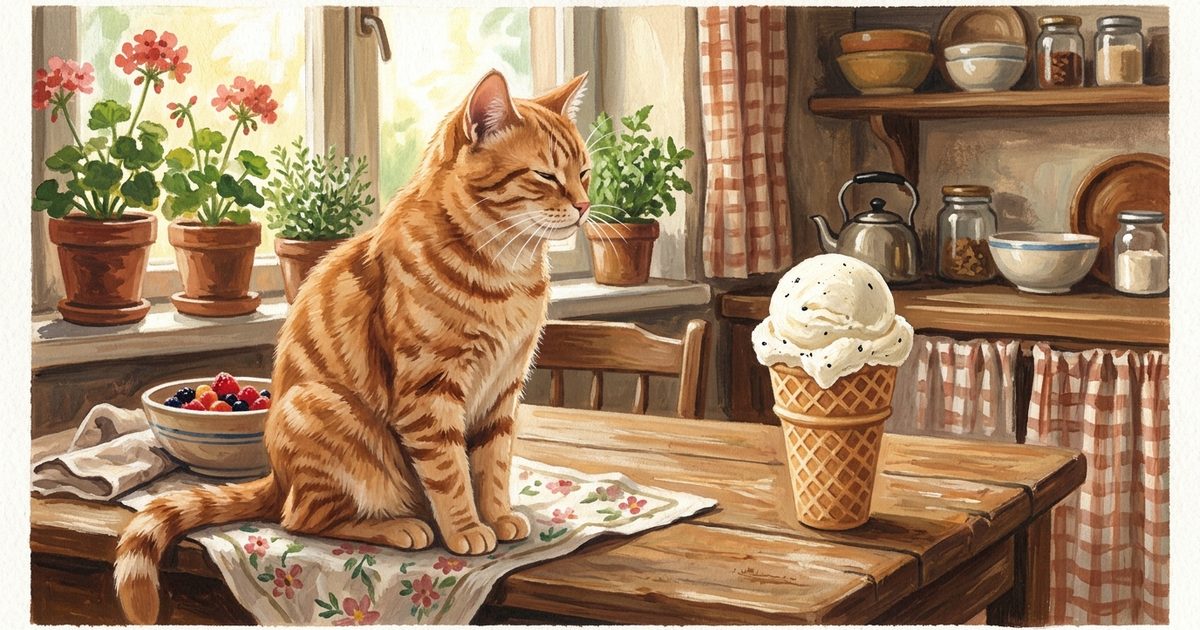
Ice cream stacks four problems onto a cat's gut at once: lactose most adults can't break down, high sugar they can't taste, high fat that can inflame the pancreas, and a cold temperature that causes real discomfort. Together they explain why even plain vanilla is not a good idea.
The mistake people make is treating cat ice cream as a single risk — "it's just a little dairy." It isn't. A bowl of ice cream hits a cat with four distinct issues in one cold, sweet mouthful. Let's take them apart, because each one explains part of why vets consistently say to skip it.
Lactose — most cats can't digest it
Kittens produce plenty of lactase, the enzyme that breaks down milk sugar. But once a kitten weans onto solid food, lactase production drops sharply — so by adulthood, most cats are effectively lactose intolerant. The undigested lactose travels into the colon, where bacteria ferment it. That fermentation produces gas and draws water into the gut, which is exactly what causes the bloating and diarrhea you'll see a few hours after a dairy treat. We go deeper on the full lactose biology in our can cats drink milk guide. The Cornell Feline Health Center notes that adult cats generally don't need dairy in their diet, and most handle it poorly.
High sugar — and cats can't even taste it
Ice cream is dense with sugar, and that sugar does nothing pleasant for your cat. Cats lack a functional sweet-taste receptor, so the sugar registers no reward in their mouth at all — it just delivers empty calories and a blood-sugar spike with zero sensory payoff. Over time, those extra calories contribute to weight gain and obesity, which in turn raise the risk of diabetes and joint stress. If you're curious why a cat would even beg for something sweet they can't taste, the answer is in our can cats taste sugar piece — and it isn't the sugar.
High fat — pancreatitis risk
The cream that makes ice cream smooth is also what makes it risky for the pancreas. A high-fat meal can trigger pancreatitis, a painful inflammation of the pancreas that ranges from mild to genuinely serious. Fatty human foods are a recognized trigger in cats, and there's no reliable "safe" threshold — a small amount has caused flare-ups in sensitive cats, while others tolerate more. Rather than guess where your cat's line is, the safer move is to keep high-fat human desserts off the menu entirely.
Cold sensitivity and "brain freeze"
That sudden head-shake or wide-eyed stare after a lick isn't necessarily delight. Very cold food can cause a brief, startling discomfort, and some cats vomit right after eating something ice-cold. Owners sometimes read a dramatic reaction as proof the cat is enjoying the treat, but it's safer to assume the cold is uncomfortable than to anthropomorphize a "brain freeze" meme into enthusiasm.
Which Ice Cream Flavors Are Toxic to Cats?
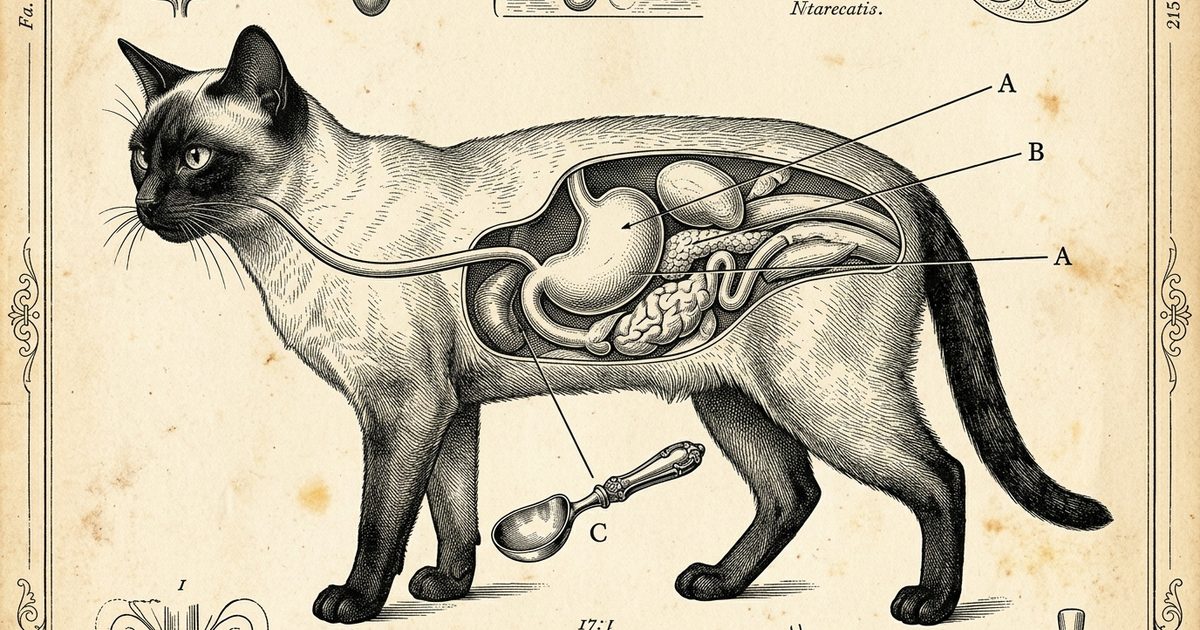
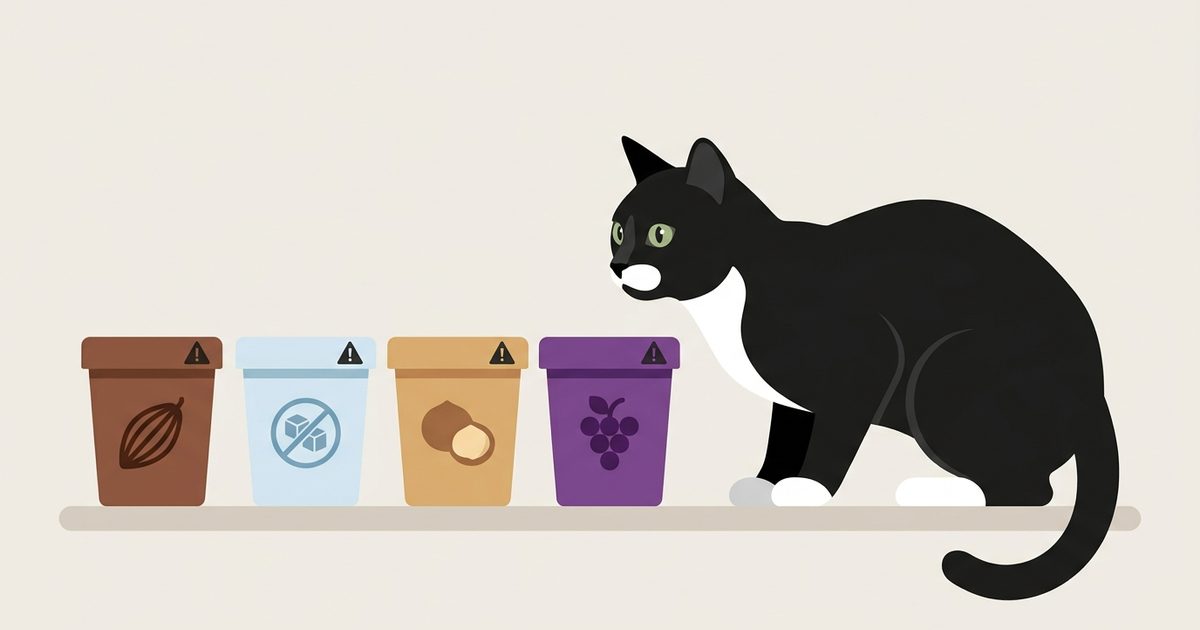
Several common flavors are outright toxic. Chocolate and coffee contain theobromine and caffeine. Sugar-free flavors often contain xylitol, causing blood-sugar crashes and liver damage. Macadamia nut and raisin flavors harm the nervous system and kidneys. These are emergencies, not risks.
Up to this point we've been talking about plain vanilla — the dairy, the sugar, the fat. That's the "not recommended" tier. This section is a different category entirely. The flavors below are not unhealthy; they're poisonous, and a small taste is enough to send a cat to the vet. If there's any chance your ice cream contains one of these, treat it like a hazard, not a treat.
Chocolate flavor — double danger
Chocolate ice cream is the single most dangerous flavor because it stacks every problem at once. The chocolate itself brings theobromine and caffeine, both of which cats metabolize poorly and which can cause tremors, racing heart, seizures, and worse. On top of that toxin you still have the sugar, the fat, and the lactose from the base — so even a modest lick is a bigger deal for a small cat than it looks. For the full theobromine mechanism and dose thresholds, read our can cats eat chocolate guide. If your cat ate any chocolate ice cream, don't wait for symptoms — call your vet.
Xylitol in sugar-free ice cream — deadly
Here is the trap people fall into: reaching for sugar-free ice cream thinking it's the "healthier" choice. Sugar-free and "no sugar added" ice creams often use xylitol, an artificial sweetener that causes a rapid insulin release in pets, leading to severe hypoglycemia — a dangerous crash in blood sugar — and in serious cases, liver failure. Xylitol poisoning is a veterinary emergency, not a wait-and-see situation. The Pet Poison Helpline documents xylitol as one of the most dangerous common toxins for dogs, and cats should be treated with the same caution. Never assume a sugar-free product is safer for a cat — it can be far worse.
Macadamia nut, raisin, and coffee flavors
These belong to toxic-ingredient families, not one-off risks. Macadamia nuts can cause weakness, vomiting, and tremors. Raisins, currants, and grape flavors are linked to acute kidney failure in pets, and the toxic dose is unpredictable. Coffee and mocha flavors layer caffeine on top of any chocolate theobromine, compounding the stimulant load on the heart and nervous system. If the flavor name contains any of these words, the answer is the same: keep it away from your cat.
Read the label, then don't share
The practical rule is simple. If you can't read the ingredient list, or the label lists anything you've just read about — chocolate, xylitol, macadamia, raisins, coffee — the only safe choice is to keep the bowl out of reach. Don't "taste test" by giving your cat a lick to see what happens. With toxic flavors, the test and the poisoning are the same event.
Why Do Cats Seem to Like Ice Cream?
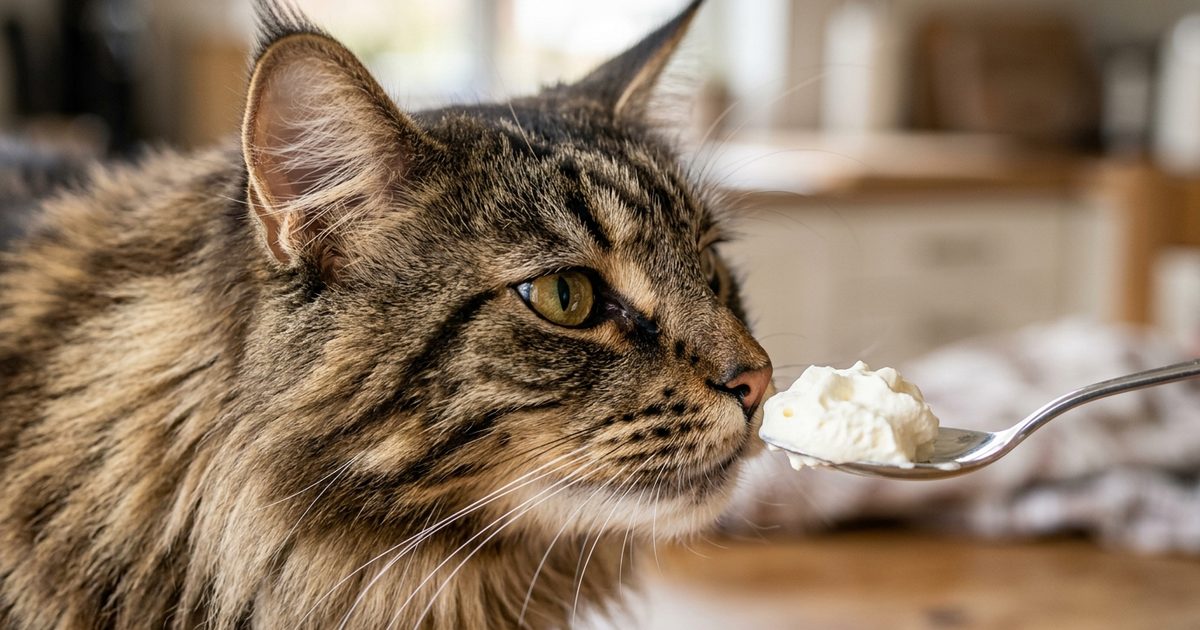
Cats that beg for ice cream are not after sweetness — they cannot taste sugar at all. What attracts them is the high fat content, the dairy aroma, and the cold texture. A cat drawn to your cone is responding to cream and smell, not sweetness.
It's the fat and cream, not the sugar
There's a persistent idea that cats love ice cream because it's sweet. It isn't quite that. Because cats can't taste sugar — the receptor science is covered above — what actually pulls them in is the rich fat, the buttery, creamy aroma, and the cool mouthfeel. The dairy smell in particular travels well, which is why a cat may appear from the next room the moment you open the tub. A lick of cat ice cream, to her nose, smells like the high-value animal fats her biology is built to seek out. (You can read the full receptor science in our piece on whether cats can taste sugar.)
The cold can trigger a dramatic reaction
Some cats react strongly to the cold — widened eyes, a head shake, a startled step back. Owners sometimes read this wide-eyed moment as delight, and the "brain freeze" meme was born from exactly that interpretation. Be cautious about anthropomorphizing it. The reaction can just as easily be brief discomfort or startle from an unfamiliar cold sensation, and treating it as proof of enjoyment is reading human emotion onto a reflex.
Why "she loves it" isn't a reason to give it
Here's the honest separating line: a food appealing to your cat's senses is not the same as that food being good for her. Cats eagerly eat all kinds of things that harm them — string, lilies, and plenty of toxic plants — so eagerness is not a safety signal. Preference tells you what a cat finds interesting, not what nourishes her. International Cat Care is clear that treats and extras should stay a small, considered part of a cat's diet, never a measure of what she "wants."
What Can Cats Eat Instead of Ice Cream? Safe Frozen Treats
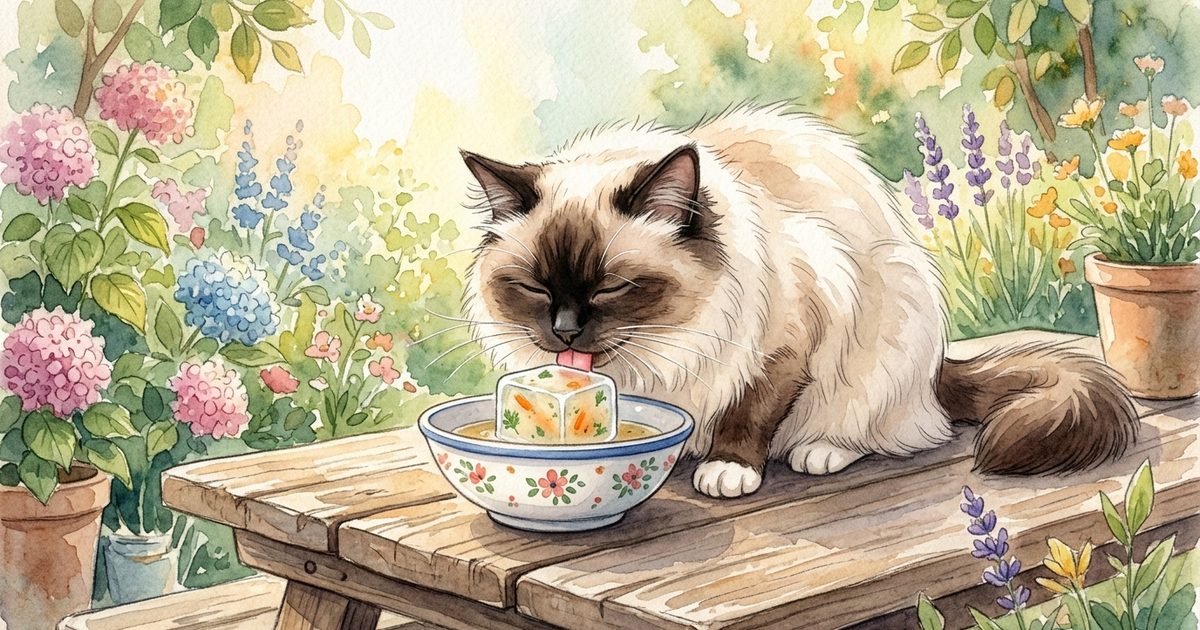
For a cool summer treat, skip human ice cream and offer cat-safe frozen alternatives: plain ice cubes to bat and lick, frozen low-sodium broth, or a tiny spoon of plain unsweetened yogurt whose live cultures reduce lactose. These give the cool texture cats enjoy.
Ice cubes and frozen broth
The simplest cat ice cream substitute is already in your freezer. A few plain ice cubes in a shallow bowl give a cat something cool to lick and something fun to bat around the floor — many cats love the sliding and the melt. For more flavor, freeze low-sodium chicken or fish broth in small portions or an ice cube tray. It's hydrating, appealingly savory, and safe as long as the broth contains no onion or garlic, both of which are toxic to cats. A broth cube on a warm afternoon is a genuinely good summer treat.
A tiny bit of plain yogurt
Plain, unsweetened yogurt is the closest thing to a dairy treat that most adult cats handle reasonably well. The live cultures pre-digest much of the lactose, so yogurt carries far less lactose than ice cream or milk. A half-teaspoon is fine for most cats as an occasional treat — frozen into a dab, it even mimics the cool, creamy texture they find interesting. Keep it tiny and keep it plain: never flavored, never sweetened, and never the sugar-free kind (those often swap in xylitol). We go deeper on the pros and cons in our guide to whether cats can eat yogurt.
Commercial cat-safe frozen treats
There are products marketed specifically as frozen treats for cats, formulated with low sugar and no toxic ingredients. The right instinct here is to read the label rather than trust the marketing — check for sugar content, artificial sweeteners, and any flavor (chocolate, macadamia, raisin) that shouldn't be there. Even a genuinely cat-safe product is still a treat, not food, and it counts toward your cat's daily intake. The Cornell Feline Health Center reminds owners that treats should never displace a complete, balanced diet.
What Happens If a Cat Eats Too Much Ice Cream?
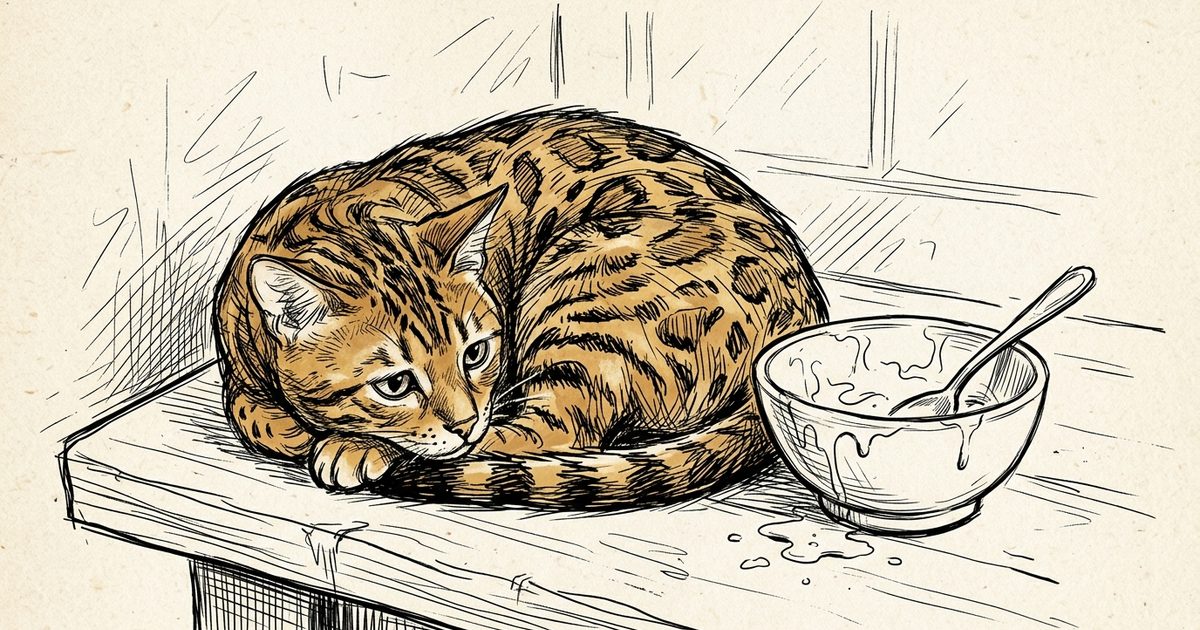
Eating too much ice cream usually causes diarrhea and gas within hours, driven by lactose the cat can't break down, and sometimes vomiting from the rich fat or cold. With toxic flavors — chocolate, xylitol, macadamia, raisin, or coffee — symptoms can climb to tremors or collapse. That is a veterinary emergency.
Lactose-driven diarrhea and gas
The most common outcome is also the mildest: within 6–12 hours of eating cat ice cream, most adult cats develop soft stool or outright diarrhea, often with visible bloating and gas. The reason is the same lactose intolerance covered in our guide to whether cats can drink milk — undigested lactose ferments in the colon and pulls water in with it. For a one-off small amount in a healthy adult cat, this usually passes on its own within a day. It warrants a vet call, though, if the diarrhea persists beyond 24 hours, turns bloody, or the cat is a kitten, senior, or already unwell — those groups dehydrate quickly. Our cat diarrhea guide walks through the full triage.
Vomiting from fat or cold
A rich, cold, fatty bolus hitting an empty stomach can trigger vomiting right after eating — sometimes a single episode that clears on its own. Repeated vomiting, vomiting combined with lethargy, or a cat that can't keep water down needs a vet rather than home care. For broader GI triage, see our guide on cat vomiting.
Pancreatitis and toxic-flavor emergencies
The two outcomes you can't wait out are pancreatitis and toxin ingestion. After a fatty meal, persistent vomiting, abdominal pain (a hunched, guarded posture), lethargy, or refusal to eat can signal pancreatitis — inflammation of the pancreas that is painful and can become serious. After a toxic flavor like chocolate, xylitol, macadamia, raisin, or coffee, watch for tremors, seizures, collapse, or jaundice (a yellow tint to the gums or skin). Any of these means calling your vet or a poison helpline immediately, not observing at home. The Cornell Feline Health Center outlines the signs that count as a feline emergency, and it's worth having that number saved before you need it.
Ice Cream and Cats at a Glance — Summary
| Question | Short answer |
|---|---|
| Can cats eat ice cream? | A tiny lick of plain vanilla may not harm a healthy adult cat, but it's not recommended |
| Is chocolate ice cream worse? | Yes — theobromine makes it toxic, not just unhealthy; call the vet immediately |
| Is sugar-free ice cream safer? | No — xylitol causes dangerous blood-sugar crashes and liver damage; never assume it's safer |
| Why do cats like ice cream? | It's the fat and dairy aroma, not sweetness — cats can't taste sugar at all |
| How much is too much? | Any regular feeding is unwise; even small amounts can cause GI upset, and more raises the risk |
| What are the symptoms? | Diarrhea, gas, and sometimes vomiting within hours; toxic symptoms include tremors, weakness, collapse |
| What if a cat eats too much? | Observe if it's plain; call your vet or a pet poison helpline immediately if it has chocolate or xylitol |
| What are the alternatives? | Cat-safe frozen alternatives: ice cubes, frozen broth, or a tiny bit of plain yogurt |
Curious What Your Cat Would Say?
Upload a photo and get a warm, personalized reading from your cat's perspective.
Start Your Free ReadingFrequently Asked Questions
Can cats eat a little bit of ice cream?
A tiny lick of plain vanilla won't poison a healthy adult cat, but ice cream isn't recommended for cats. The lactose, sugar, fat, and common flavors stack into real risk, so the safest routine amount is none — offer cat-safe frozen alternatives instead.
Is chocolate ice cream dangerous for cats?
Yes — chocolate ice cream is outright toxic to cats because chocolate contains theobromine and caffeine, which cats metabolize poorly. Even a modest lick can cause tremors, racing heart, or seizures. Don't wait for symptoms; call your vet immediately.
Why does my cat love ice cream if they can't taste sugar?
Cats lack a functional sweet-taste receptor, so they can't taste the sugar at all. What draws them in is the rich fat, the creamy dairy aroma, and the cool mouthfeel — the same cues that make cream and meat appealing to a carnivore's senses.
Is sugar-free ice cream safer for cats?
No — sugar-free and 'no sugar added' ice creams often contain xylitol, which causes a rapid insulin release, dangerous blood-sugar crashes, and liver damage in pets. Never assume sugar-free means cat-safe; it can be far more dangerous than regular ice cream.
What happens if a cat eats too much ice cream?
Most cats develop diarrhea, gas, and bloating within 6–12 hours from the lactose, sometimes vomiting from the fat or cold. With toxic flavors like chocolate or xylitol, symptoms can escalate to tremors, collapse, or seizures — a veterinary emergency, not a wait-and-see moment.
Can kittens eat ice cream?
No. Kittens have more lactase as nursing animals, but their digestive systems are fragile and dehydrate quickly when diarrhea hits. Ice cream offers no nutritional value and the sugar, fat, and cold stress a developing gut — keep kittens on kitten-formula food only.
What is a safe frozen treat I can give my cat instead?
Skip human ice cream and offer cat-safe alternatives: plain ice cubes to bat and lick, frozen low-sodium broth (no onion or garlic) in small portions, or a half-teaspoon of plain unsweetened yogurt. These give the cool texture cats enjoy without the sugar, fat, or toxic flavors.
What should I do if my cat ate ice cream with xylitol?
Treat it as an emergency — call your vet or a pet poison helpline immediately, do not wait for symptoms. Xylitol can cause rapid hypoglycemia and liver failure in pets, and early intervention is critical. Bring the packaging or ingredient list if you can.
My cat ate plain vanilla ice cream and was fine — is it okay to share sometimes?
A lucky outcome with plain vanilla once doesn't establish safety for other flavors or regular feeding. Individual results vary with the amount, the cat's size, and what else is in the dessert. Regular dairy treats still contribute to weight gain and GI stress, so keep it rare or skip it.
Sources & References
You Might Also Like
Kitten Teething: Timeline, Symptoms & How to Help
Kitten teething runs from 3 to 7 months as baby teeth fall out. Learn the timeline, signs to watch for, and how to soothe a teething kitten safely.
15 min readWhen Do Cats Stop Growing? A Complete Timeline
When do cats stop growing? Most cats reach adult size by 12-18 months, but large breeds like Maine Coons keep growing until 3-4 years. Full timeline inside.
14 min readCan Cats Eat Cherries? Flesh, Pit & Toxicity Facts
Can cats eat cherries? Pitted flesh is safe in tiny amounts — but the pit, stem, and leaves are toxic (cyanide precursors). Learn what's safe and what isn't.
15 min read