Can Cats Eat Popcorn? Plain Yes, But the Rest Is Danger
If you're settling in for a movie and a kernel jumps off the couch, you may wonder: can cats eat popcorn? The short answer is yes for one specific kind and no for almost everything else — which is exactly why so many owners end up asking is popcorn bad for cats after a piece goes missing. Whether can cats have popcorn safely comes down almost entirely to how the popcorn was prepared.
The safest version is plain, air-popped popcorn with nothing added — a piece or two as an occasional novelty. The buttered, salted, caramel, and microwave-flavored kinds most of us actually eat are not safe; their fat, sodium, sugar, and chemical coatings can upset a cat's stomach or worse. And because cats can't taste sweet or salty flavors, what attracts them isn't the popcorn at all — it's the buttery smell and the crunchy texture.
Key takeaways
- Plain, air-popped popcorn is safe for cats in tiny amounts — just 1–2 pieces as a rare novelty, not a regular snack.
- Buttered, salted, caramel, and microwave-flavored popcorn is not safe — the fat, sodium, sugar, and chemical coatings can cause GI upset or worse.
- Cats cannot taste sweet or salty flavors, so what draws them is the butter smell and the crunch, not the popcorn itself.
Popcorn for Cats — Quick Reference
| Popcorn type | Safe? | Notes |
|---|---|---|
| Plain air-popped | Yes, in tiny amounts | 1–2 pieces only, nothing added |
| Buttered | No | High fat load — vomiting, diarrhea, pancreatitis risk |
| Salted | No | Sodium far exceeds what a small cat should have |
| Caramel | No | Concentrated sugar plus often butter; cats can't taste the sweetness |
| Microwave-flavored | No | Added fats, flavoring agents, bag coatings |
| Unpopped kernels | No | Choking risk and can fracture a tooth |
Can Cats Eat Popcorn?
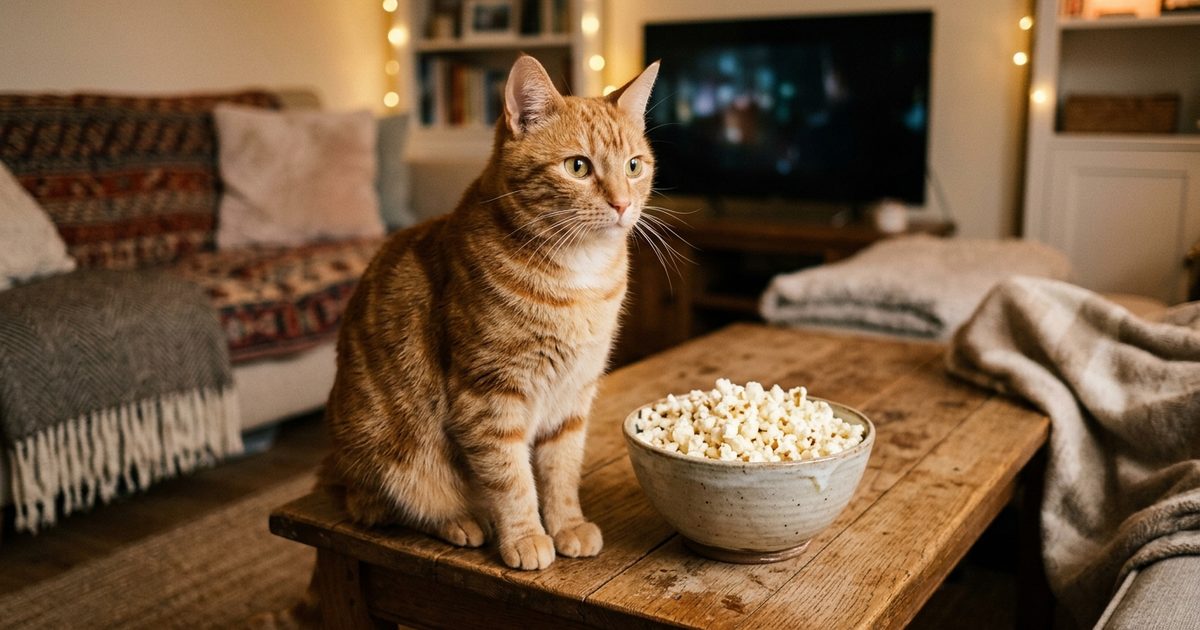
Yes — but only plain, air-popped popcorn, and only 1–2 pieces as a rare treat. The puffed corn itself is non-toxic to cats, while buttered, salted, caramel, and microwave-flavored popcorn are all unsafe and not worth the risk.
The short verdict
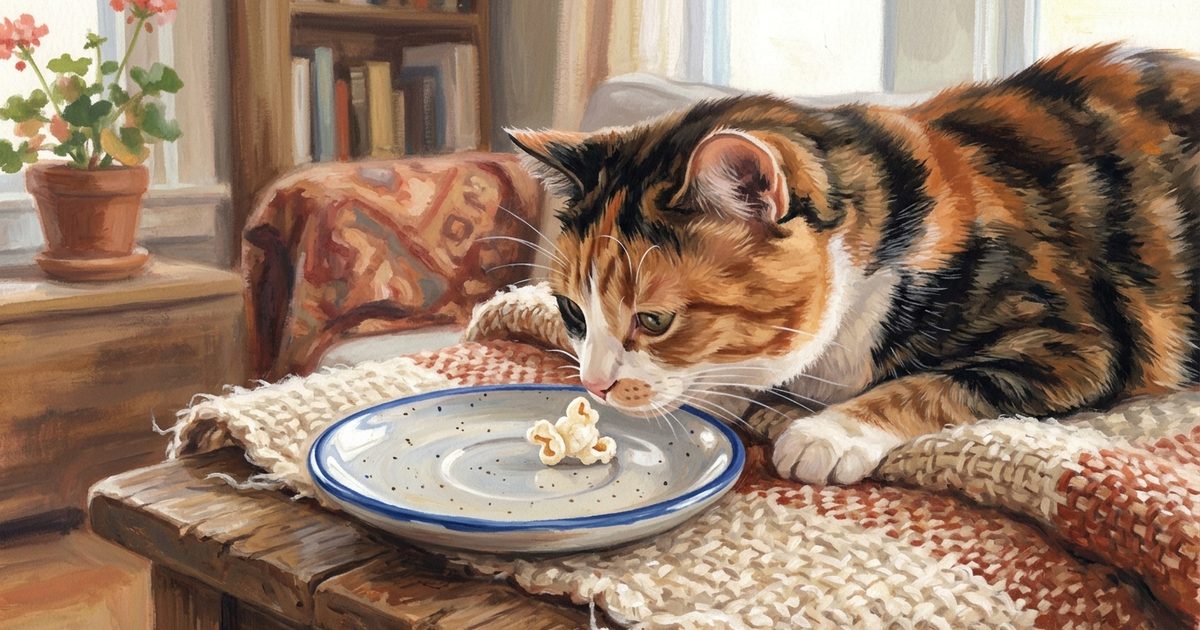
Plain air-popped popcorn is just puffed corn kernels — and corn is non-toxic to cats. A piece or two offered to a healthy adult cat won't cause harm, which is why the answer to "can cats eat popcorn" is a qualified yes rather than a flat no. Think of it as the safe-but-boring version: no butter, no salt, no coatings, nothing that makes movie popcorn smell irresistible to humans.
The qualification matters, because the popped corn is only one part of what ends up in the bowl. The flavored coatings that make popcorn tasty to us — butter, salt, caramel, microwave flavorings — are exactly what makes it unsafe for a cat, and we cover those hazards next. The hard unpopped kernels hiding at the bottom are a separate physical danger all their own. The verdict is really three verdicts in one: the plain popped corn is fine, the coatings are not, and the kernels are not.
Same corn, just puffed
Popcorn isn't a different plant from the corn you may already be wondering about — it's the same corn we cover in can cats eat corn, just a variety with a hard enough shell that it explodes into a puff when heated. Because the base ingredient is identical, the non-toxic verdict carries straight over: corn, popped or not, isn't poisonous to cats.
What changes when corn becomes popcorn isn't the nutrition — it's the texture and the hazards we introduce by how we prepare and flavor it. Puffing the kernel doesn't add anything a cat needs; it only creates a crunchy new shape that can carry butter, salt, and hidden hard kernels. The corn is fine. Everything we do to it afterward is where the trouble starts.
Plain vs Flavored Popcorn — What's the Difference for Cats?
Only plain, air-popped popcorn is safe for cats. Butter, salt, caramel, and microwave flavor coatings turn a harmless snack into a dangerous one — fat can trigger GI upset or pancreatitis, sodium is excessive, and sugar and artificial flavorings add nothing good.
The difference between safe and unsafe popcorn has nothing to do with the corn itself. The popped kernel is the same whether it came out of an air popper or a movie-theater bag. What changes everything is what we put on it. Fat, salt, sugar, and chemical coatings are added for human palates, and a cat's body is not built to handle them.
Buttered and salted popcorn
Butter is a heavy fat load, and cats tolerate fat far more poorly than humans do. Even a modest amount of buttered popcorn can cause vomiting and diarrhea in a sensitive cat, and repeated high-fat exposure is a recognized trigger for pancreatitis — a painful inflammation of the pancreas that lands cats in the vet's office. Salt is the second problem. A few pieces of heavily salted popcorn push sodium well past what a small cat should have in a day, and cats have a low thirst drive that makes excess sodium harder to flush. International Cat Care is blunt about feeding cats from our plates: most seasoned, fatty, and salty human foods are a poor fit for feline digestion, and the fat and salt we find tasty are exactly what makes them risky.
Caramel, cheese and sweet coatings
Caramel popcorn is concentrated sugar, usually bound with butter — a double load of carbohydrate and fat. Here's the strange part: cats cannot taste sweetness at all. They lack the receptor, so the sugar in caramel or kettle corn gives them calories they don't want and zero enjoyment. Cheese and seasoning coatings are no better. They pile on sodium, dairy many adult cats struggle to digest, and artificial flavors designed for human tongues. The neon "movie theater" coatings are the worst offender — they combine sugar, salt, fat, and a list of flavoring agents into a single piece. For a cat, every one of those additions is a liability.
The single rule
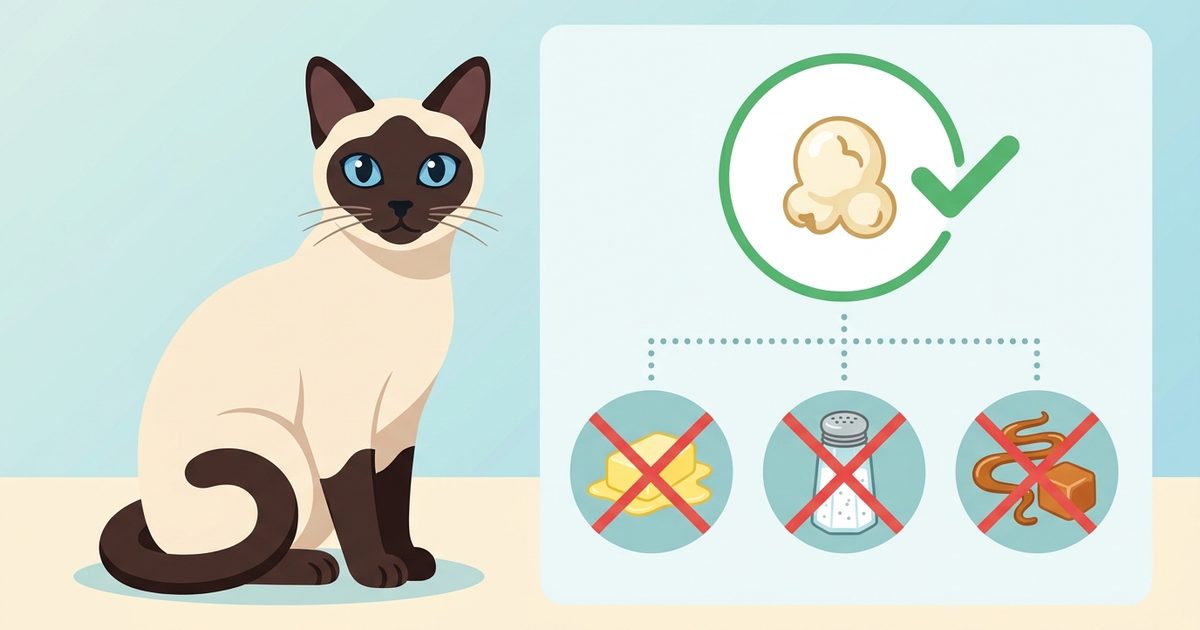
Strip everything back and one principle holds across almost every human snack: the plain, unseasoned, single-ingredient form of a food is often tolerable, and anything coated, salted, sweetened, or processed is not. It applies to popcorn exactly as it applies to corn kernels, plain cooked chicken, or fish. If a food needs a label with a flavor-list to taste good, that flavor-list is built for you, not your cat. When in doubt, ask whether the version in front of you is one ingredient. If the answer is yes, it's worth considering. If it's a long list, leave it for the humans.
Are Unpopped Popcorn Kernels Dangerous?
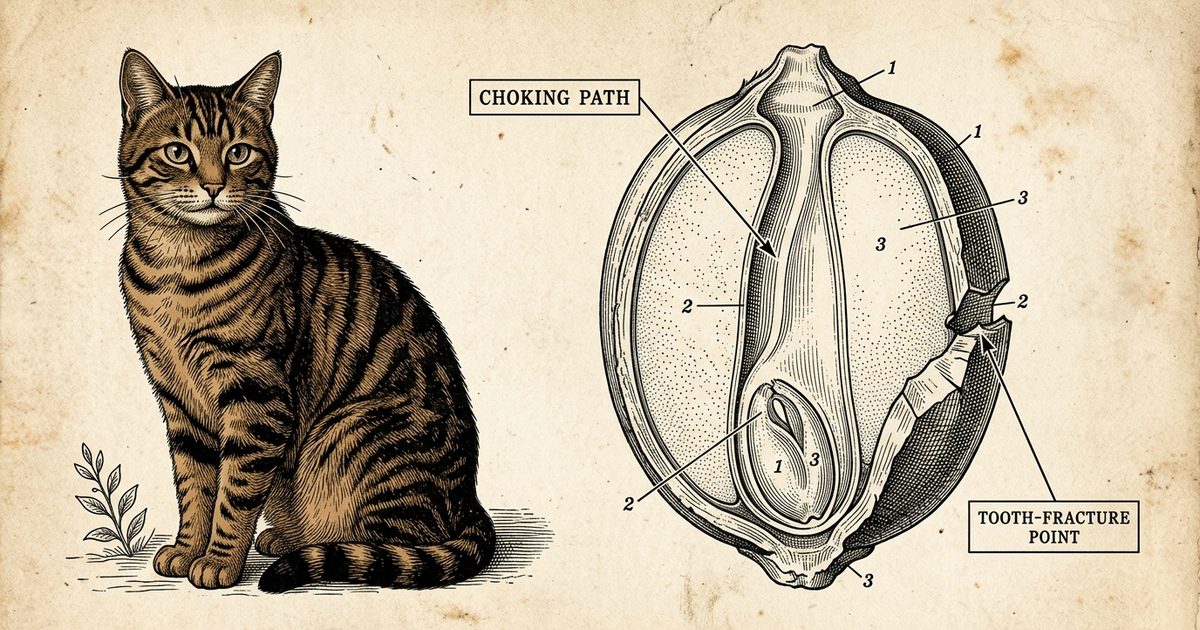
Yes — the hard unpopped kernels hiding at the bottom of a bowl are a real hazard. They are a choking risk and can crack or fracture a tooth on the first bite. If you share popcorn, pick out every unpopped kernel first, and never let a cat root through a bowl unsupervised.
The fluffy popped piece is soft and harmless. The unpopped kernel at the bottom of the bowl is a different object entirely — dense, rock-hard, and exactly the size to cause real trouble in a cat's mouth and throat.
The choking risk
An unpopped kernel is the wrong shape and size for a cat to handle safely. It's small enough that a cat can swallow it whole, yet large and hard enough to lodge in the airway or obstruct the esophagus. Cats don't chew kernels into pieces the way we might; they tend to swallow small, hard items after a single crunch, or sometimes whole if they're batting one around and it flips to the back of the throat. The mechanism is simple: a dense, slick, marble-hard object in a small animal's mouth. Kittens and small cats are at higher risk simply because their airways and throats are narrower, and their coordination is still developing.
The dental-crack risk
A cat's teeth are built for one job: tearing meat. They are not designed to crush hard, dense objects. When a cat bites down hard on a popcorn kernel, the force can concentrate on a single point and fracture a carnassial or premolar — the shearing teeth along the side of the mouth. A cracked tooth means pain, infection risk, and usually a veterinary dental procedure to extract or repair it. For the broader picture of feline dental health and what those teeth are really built for, see our guide on cat dental care. The Cornell Feline Health Center is a trusted reference on dental disease in cats and why hard, inappropriate objects are a common cause of tooth fractures.
Pick them out, every time
The fix takes a few seconds and removes almost the entire risk. Before sharing any popcorn, tilt the bowl and sift out every hard kernel you can see — then check again. Supervise your cat while it eats, and never leave a bowl of popcorn where a cat can forage unsupervised. That handful of seconds sorting kernels is cheap insurance against a choking emergency or a fractured-tooth vet bill that runs into hundreds of dollars.
Does Popcorn Have Any Nutritional Value for Cats?
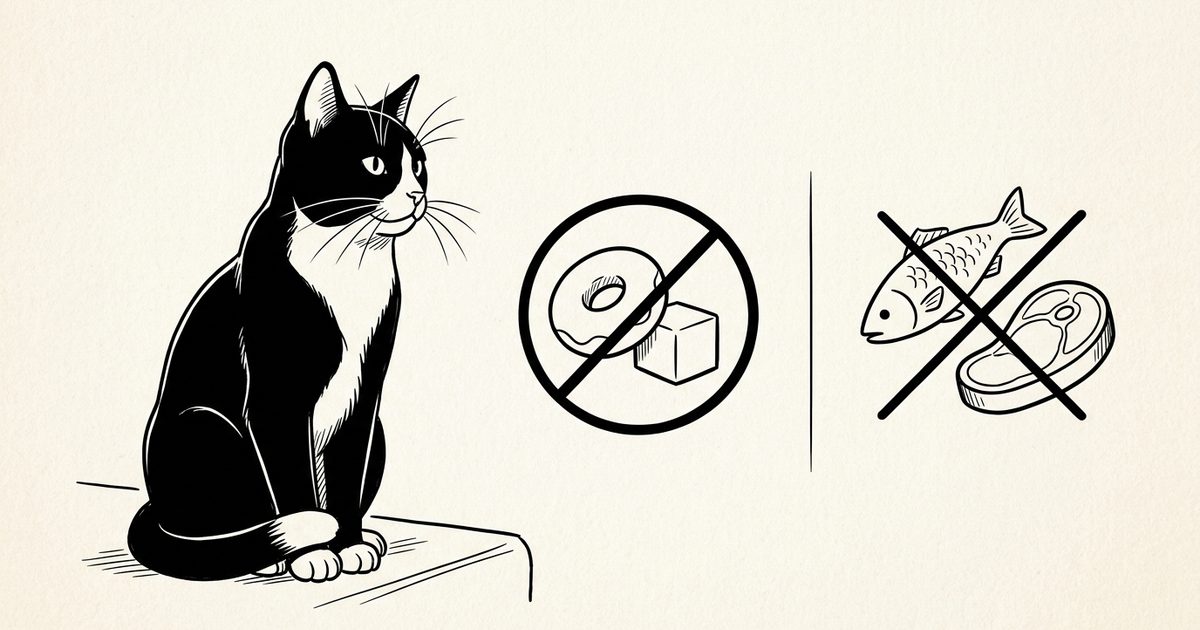
No. Popcorn is mostly carbohydrates with a little fiber, and cats are obligate carnivores that have no dietary need for carbs — they run on animal protein and fat. Popcorn is empty calories for a cat, which is why it's a novelty, not nutrition.
Cats are obligate carnivores
An obligate carnivore is an animal whose body is built, cell by cell, to derive its nutrition from prey — meat, organs, and bone. Cats have lost many of the metabolic pathways that let omnivores turn plants into energy; their liver enzymes are tuned to handle protein and fat, not starch. So while a cat can digest a small amount of cooked starch without immediate harm, it has only a limited ability to convert plant carbohydrates into useful energy. Cats also require nutrients that plants barely contain — most notably taurine, an amino acid found in animal tissue that is essential for their heart, eyes, and reproduction. Popcorn offers none of this. It carries no meaningful protein, no fat worth mentioning, and no taurine at all. A cat's energy should come from animal protein and fat, not a puffed grain. You can read the Cornell Feline Health Center's overview of feline nutrition for the full picture of what cats actually need.
Mostly carbs, a little fiber
Strip popcorn down to its plain, air-popped form and what's left is essentially puffed starch — a carbohydrate with a modest amount of dietary fiber. That fiber is the only mildly defensible element; a trace of roughness in the diet is not harmful, and it is partly why plain popcorn gets described as "tolerable" rather than dangerous. But fiber is not a nutrient a cat is short on, and the vitamins present in a popped kernel are incidental — small amounts that a cat's body converts poorly compared with the bioavailable nutrients in meat. Calling popcorn "low-calorie" is not the same as calling it useful. For what a proper feline diet looks like in practice, our what do cats eat guide lays out the obligate-carnivore framework.
Why cats seem to like it anyway
Here is the part that surprises most owners: a cat begging for popcorn is not enjoying its flavor. Cats cannot taste sweet, and their ability to register saltiness is limited — the biology behind this is covered in our can cats taste sugar article. So when your cat comes running at the sound of a popping bag, it is not the corn it wants. What attracts them is the warm, fatty aroma of butter or oil clinging to human popcorn, the satisfying crunch of a popped piece between their teeth, and — sometimes — the simple drama of watching you eat something. The attraction is the coating and the experience, not the grain. A cat sniffing your bowl is usually sniffing the butter.
How Much Popcorn Can a Cat Eat?
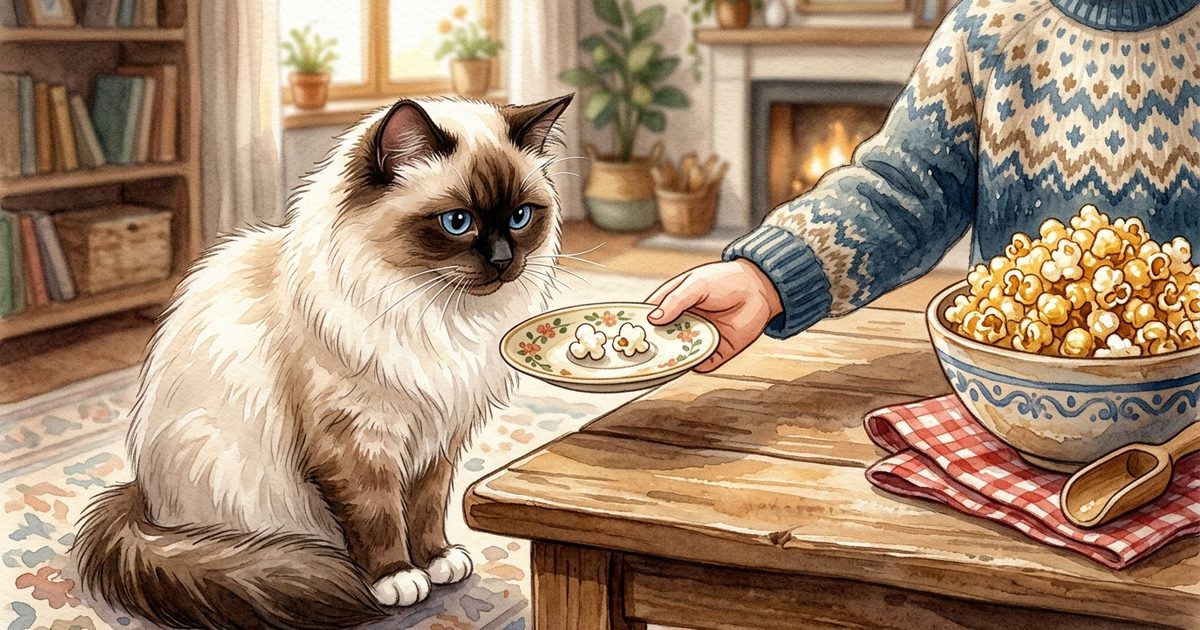
One to two pieces, occasionally. Popcorn is a novelty, not nutrition, so there's no reason to give more. Treats of all kinds should stay under 10% of a cat's daily calories, and popcorn is a poor treat choice compared to a shred of plain cooked chicken or fish.
The 1-2 piece rule
A piece or two of plain, air-popped popcorn is the sensible ceiling, and the reason is simple: it is empty carbohydrate a cat has no biological use for, and offering more just trades nutrition for volume without giving anything back. Anything flavored — buttered, salted, caramel, microwave-seasoned — is already off the table entirely. So when a cat begs for "just one more," remember it is reacting to the butter smell and the crunch, not to any need the popcorn is fulfilling. Two pieces delivered the entire experience the snack was ever going to offer.
The 10% treat rule
The standard veterinary guideline, drawn from AAFCO and widely echoed by feline nutrition authorities, is that all treats and extras combined should stay under about 10% of a cat's daily calories. The remaining 90% should come from a complete and balanced diet. A single piece of plain popcorn is low in calories, so it barely moves the needle on its own — but the rule is about displacement, not arithmetic. Every treat that fills a cat up a little is a little less room for the protein and taurine it actually needs. Generalize the principle: keep treats rare and small, whatever they are.
Better treat alternatives
If the goal is to share something with your cat, there are far better choices than popcorn that match what a cat's body is built for: a shred of plain cooked chicken, a flake of cooked salmon, or a commercial cat treat formulated to deliver actual nutrition. Any of these gives your cat something it can use, with a smell and texture it genuinely enjoys. Popcorn can be the fun exception on a movie night — one or two plain pieces, nothing added — but it is not the regular treat. Save the bowl for yourself, and reach for the chicken.
Is Microwave Popcorn Safe for Cats?
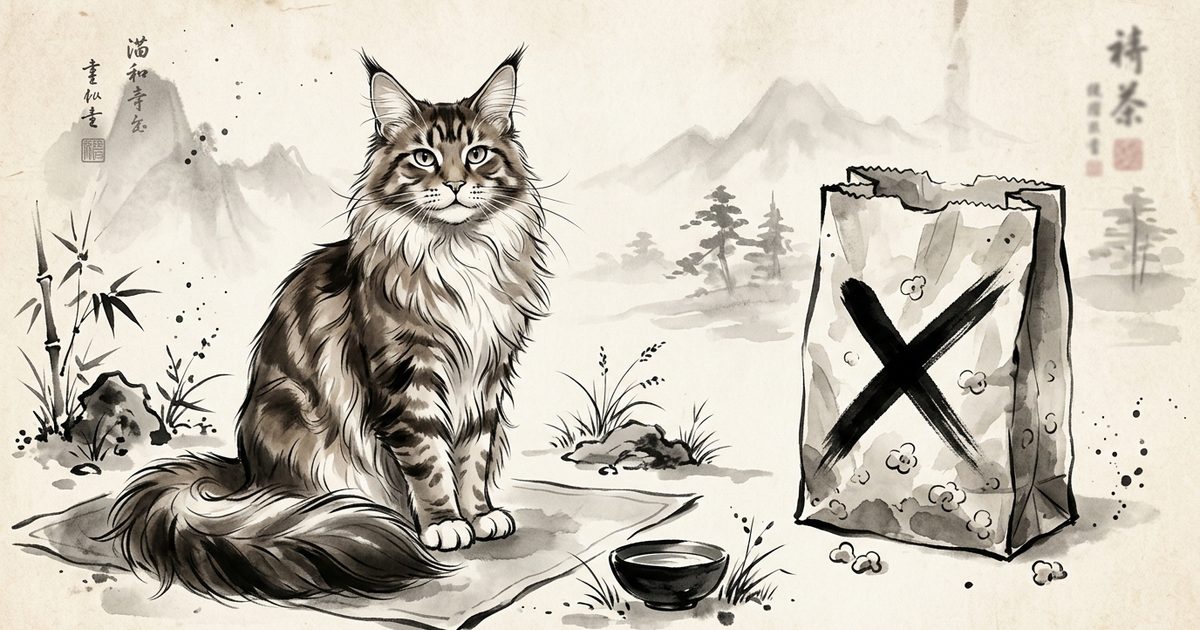
No — microwave popcorn, even the "plain" kind, is not the same as air-popped. The bags are coated with chemicals, the contents carry flavoring agents and added fats, and the industrial flavoring diacetyl is a known inhalation concern. If you want to share popcorn with a cat, air-pop it yourself with nothing added.
The bag and the chemicals
Microwave popcorn bags have historically been lined with per- and polyfluoroalkyl substances (PFCs) to stop grease soaking through. These coatings and their breakdown products are a reason to avoid microwave popcorn for humans and cats alike. Recent regulations have restricted some PFCs, but this is a history of gradual phase-out rather than a clean record, and replacement coatings have not been proven fully harmless either. The core issue is that microwave popcorn is an industrial packaged product, not just heated kernels. For a food that's only a novelty treat, this extra layer of chemical complexity conflicts with a cat's sensitive digestive system. It's exactly the line that separates "safe" from "unsafe" popcorn: the processing itself is a deciding factor, just as the safety of corn kernels differs from the snack form.
Diacetyl and flavoring agents
Diacetyl is the chemical that gives microwave and movie-theater popcorn its buttery smell, and it once drove "popcorn lung" concerns among factory workers exposed to high industrial dust levels. A cat eating a single piece will not develop popcorn lung — that is a heavy inhalation hazard. But the cumulative effect of artificial flavorings, added fats, and salt is the real problem: microwave popcorn, even when labeled "plain," rarely passes the single-ingredient test. According to International Cat Care, the additives, artificial flavorings, and modifiers in processed human foods are what rule them out as safe foods for cats — complex chemical mixtures a cat neither needs nor metabolizes well.
Air-pop, nothing added
The only genuinely cat-safe preparation is hot-air popping — only hot air, with no oil, butter, salt, or bag chemicals. Sort out the unpopped kernels, let the popcorn cool, then offer a piece or two. If you're wondering why a cat craves it so much when it can't taste the flavors at all, it's the butter and fat aroma, not the popcorn itself. If air-popping for the sake of a novelty treat feels like too much effort, the honest answer is to skip sharing popcorn altogether — a shred of plain cooked chicken is a fairer, safer way to show affection.
Popcorn for Cats at a Glance — Summary
| Question | Short answer |
|---|---|
| Can cats eat plain air-popped popcorn? | Yes — 1-2 pieces, rare novelty only; non-toxic puffed corn |
| Can cats eat buttered popcorn? | No — the fat load can cause GI upset or pancreatitis |
| Can cats eat salted popcorn? | No — sodium is excessive for a small cat |
| Can cats eat caramel popcorn? | No — concentrated sugar plus butter; cats can't taste sweetness anyway |
| Can cats eat microwave popcorn? | No — bag coatings, flavorings, and diacetyl make it unsafe even "plain" |
| Are unpopped kernels dangerous? | Yes — choking risk and a real chance of cracking a tooth |
| How much popcorn can a cat eat? | 1-2 pieces occasionally, never a regular treat |
| Does popcorn have any nutritional value? | None — empty carbs an obligate carnivore has no use for |
Curious What Your Cat Would Say?
Upload a photo and get a warm, personalized reading from your cat's perspective.
Start Your Free ReadingFrequently Asked Questions
Can cats eat popcorn safely?
Yes, but only plain, air-popped popcorn, and only one or two pieces as a rare treat. The puffed corn itself is non-toxic to cats. Anything buttered, salted, caramel, or microwave-flavored is not safe.
Can cats eat buttered popcorn?
No. Butter is a heavy fat load that cats tolerate poorly, and even a small amount can cause vomiting or diarrhea. Repeated high-fat exposure is also a recognized trigger for pancreatitis, a painful inflammation of the pancreas.
Can cats eat microwave popcorn?
No. Microwave popcorn bags are coated with chemicals, the contents carry flavoring agents and added fats, and the industrial butter flavoring diacetyl is a known concern. Even the 'plain' kind fails the single-ingredient test.
Can cats eat caramel popcorn?
No. Caramel is concentrated sugar usually bound with butter, and cats cannot taste sweetness at all, so the sugar gives them calories they don't want with zero enjoyment. The fat load only adds to the problem.
Are unpopped popcorn kernels dangerous for cats?
Yes. Unpopped kernels are dense and rock-hard, making them a real choking risk and able to crack or fracture a tooth on the first bite. Always pick out every kernel before sharing, and never let a cat forage unsupervised.
Why does my cat love popcorn if they can't taste it?
Cats cannot taste sweet or salty flavors, so they aren't enjoying the popcorn's taste at all. What attracts them is the warm, buttery aroma clinging to human popcorn, the satisfying crunch, and the simple drama of watching you eat.
How much popcorn can I give my cat?
One to two pieces of plain, air-popped popcorn, only occasionally. Treats of all kinds should stay under 10 percent of daily calories, and popcorn is a poor treat choice compared to a shred of plain cooked chicken or fish.
Is plain air-popped popcorn healthy for cats?
No. Plain air-popped popcorn is non-toxic and tolerated in tiny amounts, but it's essentially empty carbohydrates a cat has no dietary need for. Low-calorie does not mean nutritionally useful, so treat it as a novelty, not a health food.
Sources & References
You Might Also Like
Can Cats Eat Corn? The Honest Truth About Cobs & Cat Food
Can cats eat corn? Plain cooked kernels are safe in small amounts but offer no nutrition. Why the cob is an emergency, and the cheap-filler debate explained.
17 min readKitten Teething: Timeline, Symptoms & How to Help
Kitten teething runs from 3 to 7 months as baby teeth fall out. Learn the timeline, signs to watch for, and how to soothe a teething kitten safely.
15 min readWhen Do Cats Stop Growing? A Complete Timeline
When do cats stop growing? Most cats reach adult size by 12-18 months, but large breeds like Maine Coons keep growing until 3-4 years. Full timeline inside.
14 min read