Can Cats Eat Potatoes? Raw vs Cooked, Skin & Toxic Risks
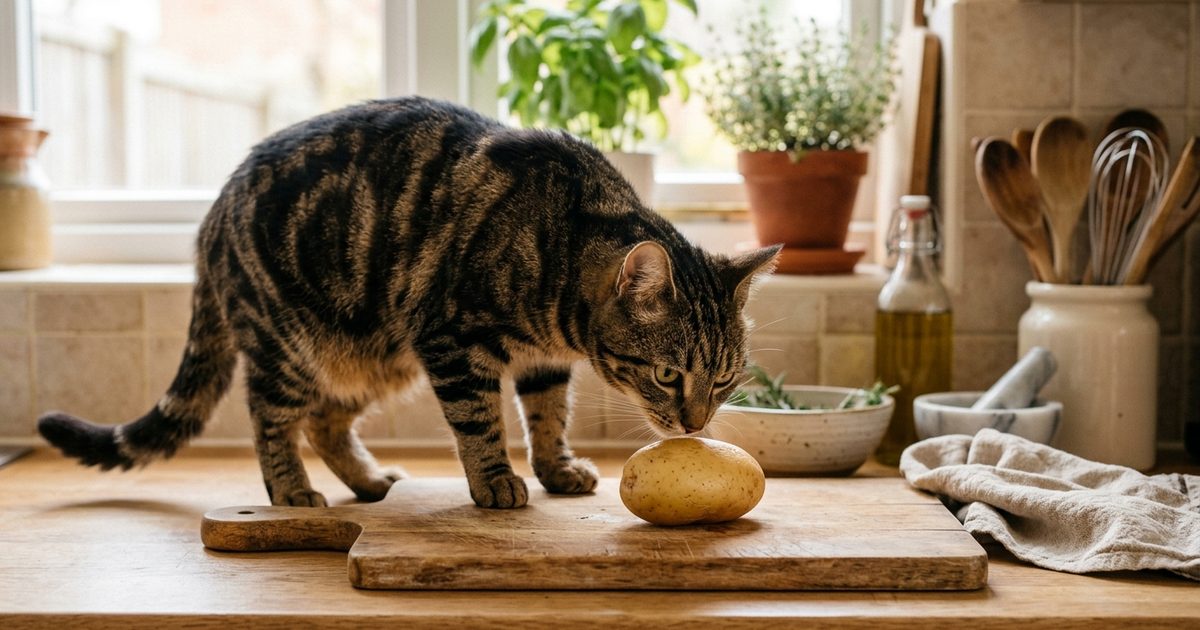
So, can cats eat potatoes? The answer is yes, but it depends entirely on the form. Fully cooked, plain, peeled potato is safe in tiny amounts, while raw, green, or sprouted potato is genuinely toxic. Knowing the difference matters because the same tuber can range from a harmless treat to a real danger, and whether cats can eat raw potatoes is one of the more important kitchen questions to get right.
Key takeaways
- Plain cooked potato (peeled and unsalted) is safe in tiny amounts as an occasional treat.
- Raw, green, or sprouted potatoes are toxic because of solanine, a glycoalkaloid the plant produces as a defense.
- Potatoes are mostly starch that cats do not need, so treat them as a snack, never a staple.
Potatoes for Cats — Quick Reference
| Form | Safe for cats? | Why |
|---|---|---|
| Fully cooked, peeled potato | ✅ Safe (tiny amount) | Cooking lowers solanine; a pea-sized plain piece is tolerable. |
| Raw potato | ⚠️ Toxic | High solanine and chaconine cause gastrointestinal and nervous-system symptoms. |
| Green or sprouted potato | ⚠️ Dangerous | Highest solanine concentration; never feed or leave within reach. |
| Potato with butter, salt, or seasoning | ❌ Not safe | Added fat, sodium, dairy, onion, or garlic upset or harm a cat. |
| Sweet potato (cooked, plain) | ✅ Safe (tiny amount) | Different plant family, no solanine; still mostly starch. |
Can Cats Eat Potatoes?
Cats can eat plain cooked potatoes in small amounts, but raw and green potatoes are toxic. Potato belongs to the nightshade family and contains solanine, a glycoalkaloid that cooking reduces but never fully removes — so serve only peeled, cooked, unseasoned pieces as an occasional treat.
The short verdict
The honest answer to can cats eat potatoes is that it depends entirely on the form. A piece of plain, fully cooked, peeled potato — boiled or baked, with nothing on it — is safe for a healthy cat in tiny amounts. The same potato raw, green-skinned, or sprouted is genuinely toxic. That sharp split comes from the plant itself: white potatoes are nightshades (Solanaceae, the same family as tomatoes and deadly nightshade), and they carry a natural defense chemical called solanine. Cooking reduces it, peeling removes the layer where it concentrates most, and those two steps are what flip the tuber from risky to tolerable. This is a general guideline, not a diagnosis — if your cat has a health condition or you are unsure, check with your vet before offering any new food.
Why form matters more than the food itself
Most "is X safe for cats" questions have a single answer. Potato does not. The very same tuber can range from harmless to dangerous depending on four variables: raw versus cooked, peeled versus skin-on, white versus green-tinged, and whole versus sprouted. Flip any one of those and the risk profile shifts. That is why this article keeps coming back to form rather than treating potato as one thing. A plain cooked peeled piece is a cautious yes; a raw peel or a green patch is a hard no. Hold that distinction and the rest of the science below falls into place — it all explains why the form changes everything.
Raw vs Cooked Potatoes: The Toxic Difference
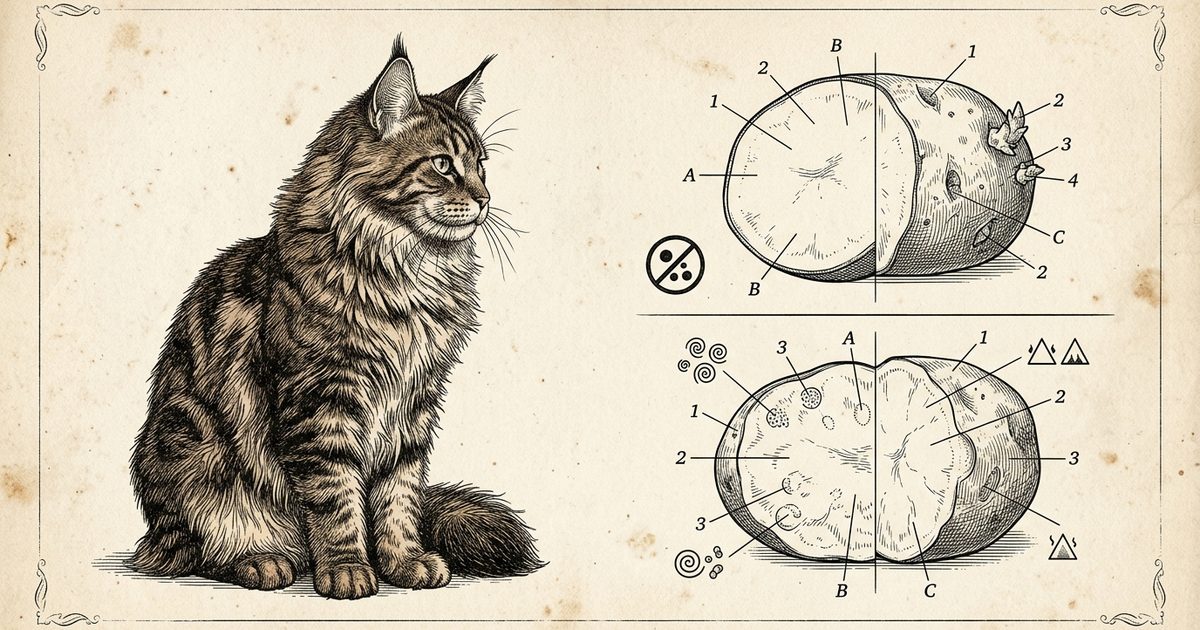
Raw potatoes are toxic to cats because they contain solanine and chaconine, glycoalkaloids that cause vomiting, diarrhea, drooling, and in serious cases neurological symptoms. Cooking lowers solanine but does not eliminate it, so cooked potato is less risky — not truly safe in bulk.
What solanine does to a cat
Solanine and its close relative chaconine are glycoalkaloids — bitter-tasting compounds the potato plant produces to poison the insects and animals that try to eat it. They work the same way on a cat's body. The first tissues hit are the lining of the stomach and intestines, which is why early signs are gastrointestinal: drooling, vomiting, abdominal pain, and diarrhea. From there the toxins disrupt cell membranes and, in larger exposures, begin to affect the nervous system — lethargy, disorientation, weakness, and in serious cases tremors or an abnormal heart rhythm. What makes this treacherous for cats is scale: a toxic dose is measured per unit of body weight, and an eight-pound cat reaches it on a fraction of what a human would shrug off. A bite that looks small to you is a large dose to them. The Cornell Feline Health Center is a reliable reference for how cats metabolize toxins differently from people and dogs.
Why cooking reduces but does not remove the risk
Heat does help. Boiling, baking, and microwaving break down a portion of the solanine and chaconine in potato flesh, which is why cooked potato is genuinely less risky than raw — but "less risky" is not the same as "safe in quantity." Solanine is fairly heat-stable; it survives normal cooking temperatures better than most people assume, and it does not leach out fully even when boiled. Peeling matters here too, because the highest concentrations sit in and just under the skin, so a peeled cooked potato carries far less than one cooked in its jacket. This is exactly why the safe serving stays tiny — a pea-sized piece, not a slice. Cooking brings the tuber down into tolerable range; it does not make it a free food. International Cat Care treats cooked white potato as an occasional treat, not a regular part of a cat's diet.
Signs a cat may have eaten raw potato
If you suspect your cat chewed a raw potato, a raw peel, or a green or sprouted piece, watch for: excessive drooling, vomiting, diarrhea, sudden lethargy or hiding, disorientation, weakness in the hind legs, or — at the severe end — tremors and an irregular heartbeat. These can come on within a few hours of ingestion. Do not wait it out at home to see if symptoms pass. Call your vet or, outside hours, the ASPCA Animal Poison Control Center (their toxicology team advises specifically on solanine and nightshade exposures in pets). Tell them what your cat ate, roughly how much, and when — the faster they have that picture, the better the outcome. For everyday treats, a plain cooked starch like rice or corn carries none of this glycoalkaloid risk, and pumpkin is the fiber option most vets actually recommend.
Green Potatoes and Sprouts: The Highest Risk
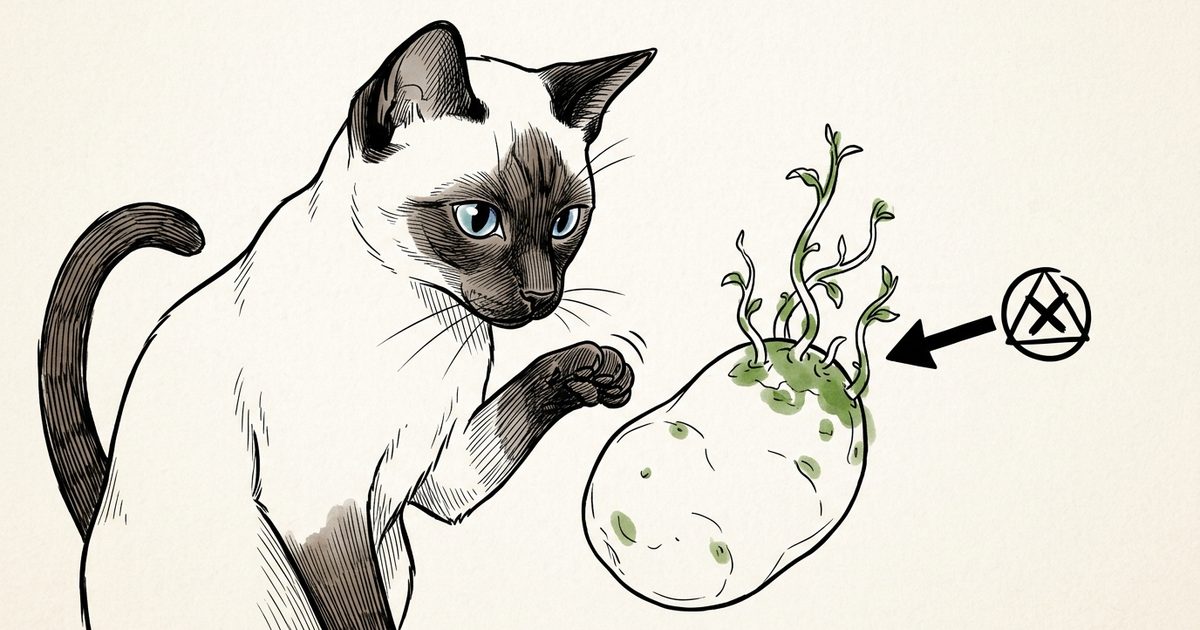
Green-skinned potatoes and any sprouts or eyes contain the highest concentration of solanine and are genuinely toxic. Never feed green or sprouted potatoes to a cat — or keep them within reach where a cat could chew raw peels or a discarded sprout.
Why green = danger
When a potato is exposed to light, two things happen at once: the skin produces chlorophyll (which turns it green) and the tuber ramps up its production of solanine and chaconine as a defense. The green is not itself the toxin, but it is a reliable visible signal that the toxin has risen alongside it. For a cat, this matters because solanine concentrates most heavily just beneath the skin and in the eyes, sprouts, and any new shoots — exactly the parts a curious cat might nibble. A small green patch or a single sprout can carry a meaningful dose for an animal that weighs only a few kilograms. The safest rule is simple: if a potato has gone green or started to sprout, it leaves the kitchen, not the cat's bowl.
Discarded peels and pantry safety
Of all the household scraps a cat could get into, raw potato peels are among the riskiest — the skin and the layer just under it hold the most solanine, and a peel sitting on a cutting board or in an open bin is exactly the kind of thing an inquisitive cat will bat at and taste. A cat that chews a discarded green potato, a pile of peels, or a sprout pulled from an old tuber can ingest a real dose in a few bites, and because cats are small, that dose lands harder than it would on us. Store potatoes somewhere dark, cool, and out of reach, and clear peels straight into a closed bin. If you keep toxic foods for cats in mind, most kitchen risks are easy to eliminate before they ever reach your cat.
How to Safely Serve Potato to a Cat
If you feed potato, serve only a small piece of plain boiled or baked potato, fully peeled, with no butter, salt, oil, garlic, onion, or seasoning — cooled and cut into pea-sized bits, as a rare treat, never a meal replacement.
Peel, boil or bake, nothing else
Preparation is where a safe food quietly becomes a risky one, so keep it minimal. Peel the potato first — the skin is where solanine concentrates, and peeling removes the riskiest part before you ever cook it. Boiling or baking are the only methods worth using: both apply enough heat to bring the remaining solanine down to a negligible level, and neither adds anything harmful. Frying is out — chips and fries are fat-dense and salted, both bad for a cat — and so is mashing with butter, milk, or salt, which turns a bland starch into something that can upset a cat's stomach or worse. The same "plain only, nothing added" principle applies to other starchy treats like bread, where the rule is identical: unseasoned, unsalted, and tiny. Garlic and onion in particular are genuinely toxic to cats, so any potato cooked alongside them is off the table entirely. You can read more about feline dietary safety from the Cornell Feline Health Center.
Portion and frequency
Even when prepared correctly, potato is a treat, not a food group. A piece about the size of a pea, offered occasionally rather than daily, is the whole portion — enough for novelty and nothing more. Cats are obligate carnivores, which means their metabolism runs on protein and fat, and starch is not something they need or process efficiently; potato offers calories without the nutrition a cat actually requires. Regular or large portions only displace better foods and risk slow weight gain. If you are looking for other plain-starch treats that follow the same small-portion logic, see our guides on rice and corn — the principle is the same across all of them.
Sweet Potatoes vs White Potatoes
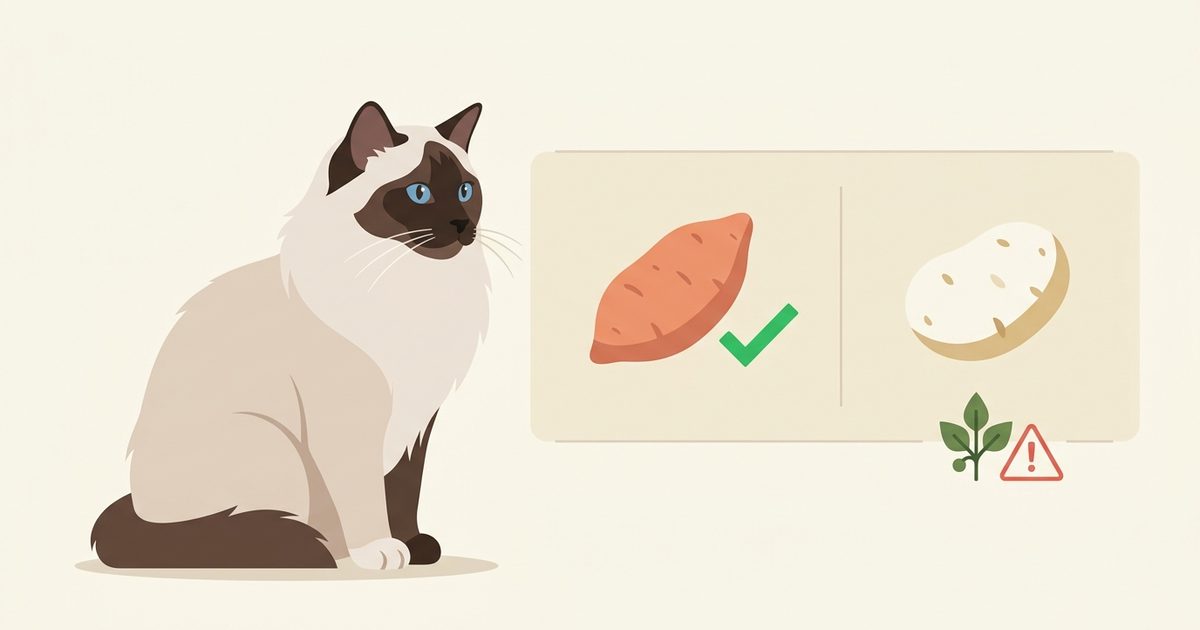
Sweet potatoes are a different plant family from white potatoes — they are not nightshades and do not produce solanine, so they are safer. They also offer some fiber, but they are still mostly carbohydrate and should be an occasional treat, not a regular food.
Different family, different risk
The single biggest reason sweet potatoes sit in a different risk category from white potatoes is botanical, not culinary. The white potato you bake or boil belongs to Solanaceae — the nightshade family, the same group as tomatoes, eggplants, and peppers — and it manufactures solanine and chaconine, the glycoalkaloids that make raw and green white potatoes dangerous. The sweet potato belongs to Convolvulaceae, the morning glory family, an entirely separate lineage that does not produce solanine at all. So the toxin that drives the sharpest warnings elsewhere in this article simply is not present in a sweet potato.
That difference is why cooked, plain sweet potato appears as a cat-treat ingredient in some commercial foods and limited-ingredient diets — it is a tolerable starch without the nightshade baggage. It is still not something a cat needs, and it must be cooked plain, but the acute poisoning risk attached to raw white potato does not carry over.
The safer starch alternative
If your cat is one of the many who seem to enjoy a starchy nibble and tolerates it well, cooked plain sweet potato is the better pick over white potato — no solanine, slightly more fiber, and the same low-key treat role. Even then, keep it occasional and tiny. For a starch that actually does something useful for a cat, cooked pumpkin is the stronger functional-fiber choice — it is the option most often recommended for digestive support, and we cover it in detail in can cats eat pumpkin. If you want the wider view of where starchy extras fit in a cat's day, our guide on what cats eat lays out the obligate-carnivore frame that treats like these sit inside.
Do Potatoes Have Any Nutritional Value for Cats?
Almost none that cats need. Potatoes are mostly starch and water; cats are obligate carnivores that get energy from protein and fat, not carbohydrates. A piece of potato is empty filler — it will not harm a healthy cat in tiny amounts, but it offers no real benefit.
Cats are obligate carnivores
A cat's metabolism is built around animal protein and fat — that is where its energy, its muscle maintenance, and its essential nutrients come from. Carbohydrates are not a dietary requirement for cats the way they are for humans or dogs; a cat has no biological need for starch, and its body is not optimized to extract value from it. A piece of potato, however plain and well-cooked, does not fill any gap in a nutritionally complete cat diet — it simply displaces nothing useful. The Cornell Feline Health Center is a reliable reference for the specifics of feline nutrition and why cats are classified as obligate carnivores in the first place.
When filler is fine and when it isn't
A pea-sized piece of plain cooked potato once in a while is genuinely harmless — it gives a curious cat a little novelty without doing any damage, and many owners share tiny tastes this way without issue. The line gets crossed when potato becomes regular or the portions grow: repeated starchy treats add calories a cat does not burn off, contributing to weight gain, and they can nudge more nutritious food off the plate. For the practical picture of what a balanced cat diet actually looks like — and where occasional extras belong within it — see what cats eat. International Cat Care also offers sensible guidance on safe treat portions and how to keep extras from crowding out complete nutrition.
Potatoes for Cats at a Glance — Summary
If you are still wondering can cats eat potatoes, here is the quick verdict for every common form. The rule stays constant: cooked peeled potato is a tiny-treat-only food, raw or green potato should be kept well away from your cat, and fried or seasoned potato is never safe.
| Form | Verdict for cats |
|---|---|
| Plain cooked potato (peeled) | Safe as a tiny treat — pea-sized, unseasoned only |
| Raw potato | Toxic — contains solanine/chaconine, causes gastrointestinal and neurological symptoms |
| Green or sprouted potato | Toxic — highest solanine in the skin, eyes, and sprouts |
| Fried, salted, or seasoned potato | Not safe — added fat, sodium, oil, or onion/garlic harms cats |
| Sweet potato (cooked, plain) | Safer — different family, no solanine; still an occasional treat |
| As a regular food | Not suitable — cats are obligate carnivores; potato is empty starch they do not need |
Curious What Your Cat Would Say?
Upload a photo and get a warm, personalized reading from your cat's perspective.
Start Your Free ReadingFrequently Asked Questions
Can cats eat raw potatoes?
No. Raw potatoes are toxic to cats because they contain solanine and chaconine, glycoalkaloids that irritate the gut and, in larger doses, affect the nervous system. Even a small raw piece or peel can cause drooling, vomiting, or diarrhea in an eight-pound cat.
Can cats eat cooked potatoes?
Yes, but only plain, fully cooked, peeled potato in tiny amounts. Boiling or baking lowers solanine enough to make a pea-sized piece tolerable as an occasional treat. Never serve it with butter, salt, oil, garlic, onion, or any seasoning.
Are green potatoes toxic to cats?
Yes, and they are the most dangerous form. Green skin signals that solanine has risen to its highest concentration, especially just under the skin and in the eyes and sprouts. A green or sprouted potato should be discarded, never fed to a cat or left within reach.
Can cats eat potato skins or peels?
No. Solanine concentrates in the skin and the layer just beneath it, so a raw peel is one of the riskiest kitchen scraps a cat could chew. Always peel potatoes before cooking any piece you plan to share, and bin peels immediately in a closed container.
Can cats eat sweet potatoes?
Cooked plain sweet potato is safer than white potato because sweet potatoes belong to the morning glory family, not the nightshade family, and do not produce solanine. It is still mostly carbohydrate, so keep it to a pea-sized occasional treat rather than a regular food.
Can cats eat mashed potatoes?
No. Mash is usually made with butter, milk, cream, or salt, all of which upset a cat's stomach or add harmful sodium and fat. Even plain mash is more starch than a cat needs, so it offers no benefit and is best skipped in favor of a single piece of plain boiled potato.
What happens if a cat eats a raw potato?
Watch for drooling, vomiting, diarrhea, sudden lethargy, disorientation, weakness, and in serious cases tremors or an irregular heartbeat, often within a few hours. Do not wait for symptoms to pass; call your vet or the ASPCA Animal Poison Control Center right away with what and how much was eaten.
How much potato can a cat eat safely?
Roughly a pea-sized piece of plain, peeled, cooked potato, offered occasionally rather than daily. Cats are obligate carnivores that run on protein and fat, so starch is not a dietary need. Anything larger or more frequent just adds empty calories and crowds out complete nutrition.
Sources & References
You Might Also Like
Kitten Teething: Timeline, Symptoms & How to Help
Kitten teething runs from 3 to 7 months as baby teeth fall out. Learn the timeline, signs to watch for, and how to soothe a teething kitten safely.
15 min readWhen Do Cats Stop Growing? A Complete Timeline
When do cats stop growing? Most cats reach adult size by 12-18 months, but large breeds like Maine Coons keep growing until 3-4 years. Full timeline inside.
14 min readCan Cats Eat Cherries? Flesh, Pit & Toxicity Facts
Can cats eat cherries? Pitted flesh is safe in tiny amounts — but the pit, stem, and leaves are toxic (cyanide precursors). Learn what's safe and what isn't.
15 min read