
Can Cats Eat Tomatoes? Ripe Yes, Green and the Plant Toxic
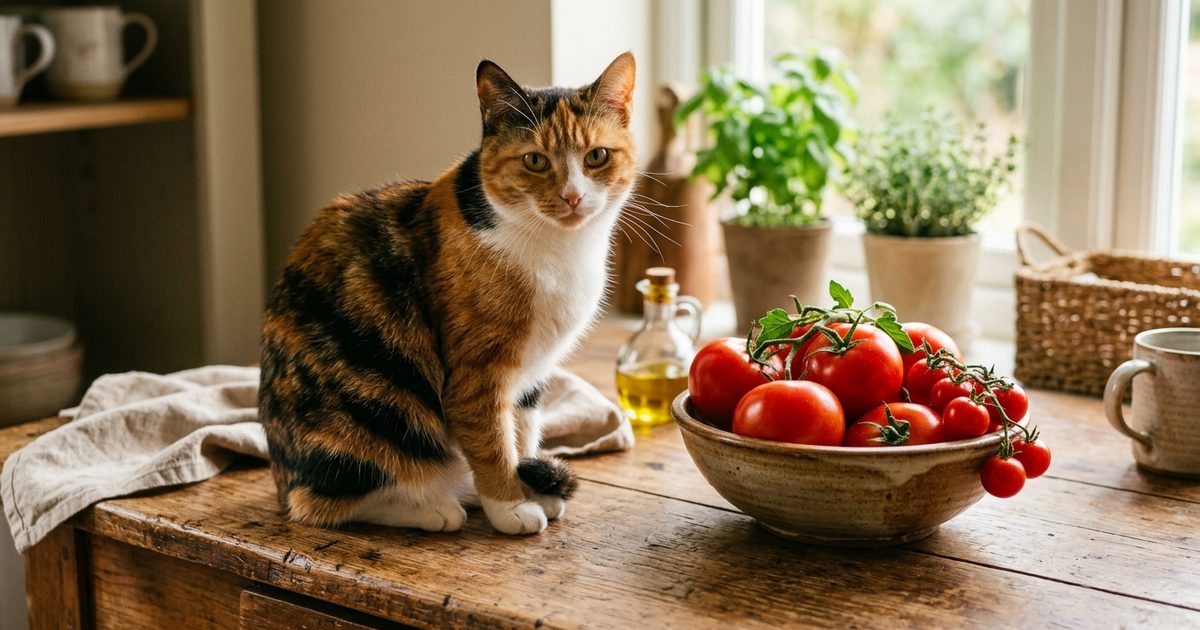
So, can cats eat tomatoes — and are tomatoes bad for cats, or is that one of those rumors that got stretched too far? The honest answer is split down the middle, and the dividing line is the single most important thing to understand about this food. A small piece of fully ripe red tomato is non-toxic for cats and won't harm them. But green, unripe tomatoes and the leaves, stems, and vines of the tomato plant are genuinely toxic, because they carry two compounds called solanine and tomatine. So can cats have tomatoes? Yes, the ripe red fruit in small amounts — never the green parts or the plant itself. And store-bought tomato sauce is its own separate problem, because it so often hides garlic and onion, which are toxic to cats regardless of the tomato. Here's how to tell the safe from the dangerous.
Key takeaways
- A small piece of fully ripe red tomato flesh is non-toxic for cats in small amounts — the only safe part of the plant.
- Green, unripe tomatoes and the leaves, stems, and vines of the tomato plant are toxic because they contain solanine and tomatine.
- Tomato sauce, ketchup, and pasta or pizza sauce are off-limits — not because of the tomato, but because they usually contain garlic and onion, which are toxic to cats.
Tomatoes and Cats — Quick Reference
| Tomato part | Safe for cats? | Why |
|---|---|---|
| Ripe red flesh | Yes, in small amounts | Low in solanine and tomatine once fully ripe; non-toxic as an occasional tiny treat |
| Green / unripe tomato | No | Concentrated solanine and tomatine in the unripe fruit — toxic to cats |
| Leaves and stems | No | The most concentrated source of tomatine and solanine on the plant |
| Tomato sauce | No | Almost always contains garlic and/or onion (often as powder), plus salt and sugar unsuitable for cats |
| Tomato plant / vines | No | All green parts of the plant carry the same glycoalkaloid toxins |
Can Cats Eat Tomatoes?
Cats can eat a small piece of ripe red tomato — it is non-toxic in small amounts. But green, unripe tomatoes and the leaves, stems, and vines of the tomato plant are toxic to cats because they contain solanine and tomatine. The ripeness is the whole story.
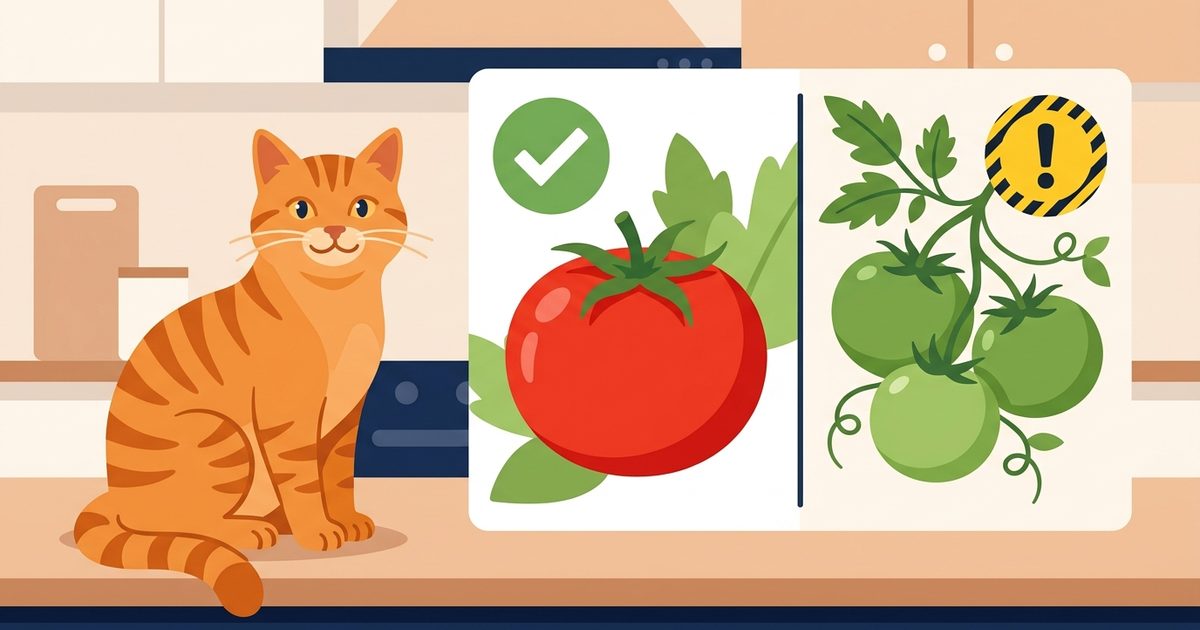
The clearest way to hold this in your head is that "tomato" is really two different things: the ripe red fruit, and the green plant that grows it. They don't share a safety profile. Treat them as separate foods and the confusion disappears.
The split verdict
Ripe red tomato flesh is the one safe part, and only in small amounts — think a piece the size of a pea or a marble as an occasional taste, never a regular snack. Everything else green on the plant carries the toxins: the unripe fruit, the leaves, the stems, and the vines. This is why the question "are tomatoes safe for cats" can't be answered with a clean yes or no — it depends entirely on which part you mean. A ripe red slice and a chewed leaf from the same plant sit on opposite sides of the safety line, and the line is ripeness.
Why people get confused
If you've googled this and come away more uncertain, you're in good company. Online sources split into two camps that sound contradictory but are each half-right. One says "tomatoes are toxic to cats" — which is true for the green fruit and the plant. The other says "tomatoes are fine for cats" — which is true for a small piece of ripe red tomato. The contradiction only exists because the two sides aren't talking about the same part. The moment you separate the ripe fruit from the green plant, both statements become compatible. The same green-toxic, ripe-safe pattern shows up across the whole nightshade family, where green potatoes and sprouts are the dangerous part and the cooked tuber is a different conversation.
Ripe vs Green Tomatoes — What Is the Difference?
Ripe red tomatoes are low in solanine and tomatine, so a small piece is safe. Green, unripe tomatoes and the leaves and stems hold concentrated amounts of both toxins, which is why they are dangerous. Ripening is what makes the fruit safe.
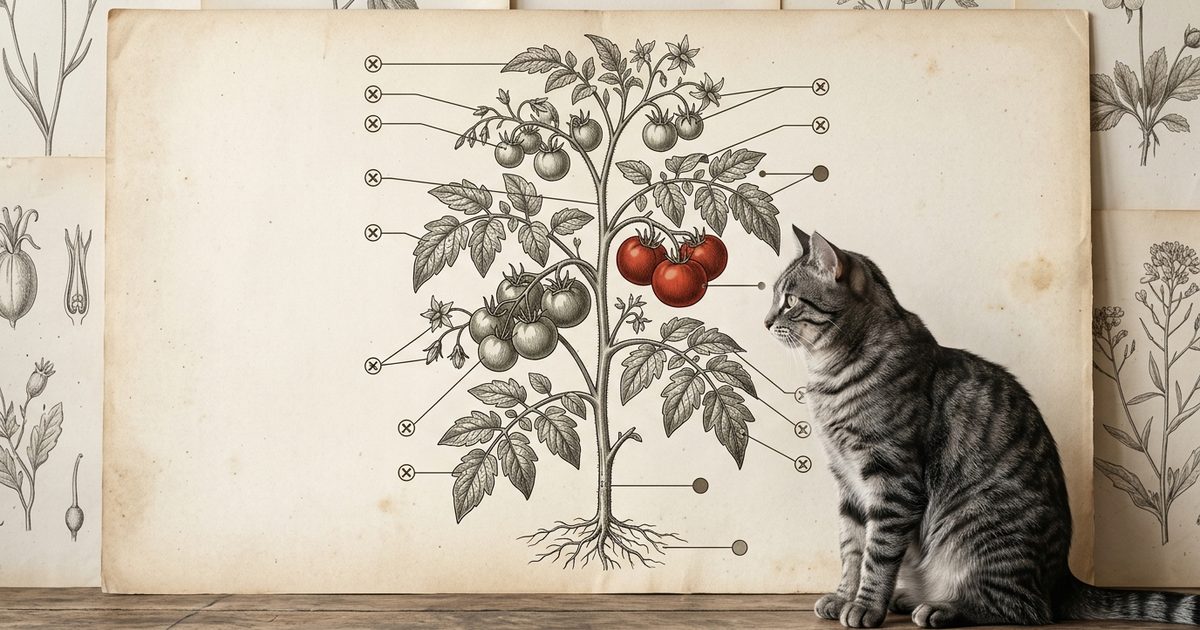
The difference between a safe tomato and a dangerous one isn't the variety, the size, or how it's prepared — it's how ripe it is. Ripening is a chemical process, and on a tomato plant it's the process that drains the danger out of the fruit.
Solanine and tomatine
Solanine and tomatine are glycoalkaloid toxins produced by plants in the nightshade family as a natural defense against being eaten. In a tomato plant they concentrate heavily in the green tissue — the leaves, the stems, the vines, and the unripe green fruit — and then drop sharply as the fruit ripens red on the vine. That's the biochemistry behind the split verdict: the same fruit is toxic when green and safe when red, because ripening breaks down the very compounds that made it dangerous. In a cat, these toxins irritate the gastrointestinal lining first, and at higher doses they can affect the heart rate and the nervous system. The Cornell Feline Health Center is a reliable reference for feline diet and plant-toxicity questions, and the ASPCA Animal Poison Control center documents the tomato plant among plants toxic to companion animals.
Why green is the danger word
The simplest rule that holds across the whole plant is this: any green part of the tomato plant is the toxic zone. An unripe green tomato, a leaf, a stem, a vine — they all carry the same solanine and tomatine load, and none of them belong near your cat. It's the same pattern across the nightshade family — in potatoes, the green skin, the sprouts, and the leaves are the dangerous part for the same reason. And cooking doesn't rescue green tomatoes: solanine and tomatine are not reliably destroyed by normal cooking temperatures, so a green tomato stays unsafe whether it's raw or cooked. If it was green on the plant, it's off the table for your cat.
How Should I Serve a Ripe Tomato to a Cat?
If you share tomato with your cat, use a small piece of fully ripe red tomato — plain, washed, with no skin or seeds if she is sensitive. Never offer tomato sauce, soup, ketchup, or any seasoned tomato product, because these almost always contain garlic and onion, which are toxic to cats.
The safe serving
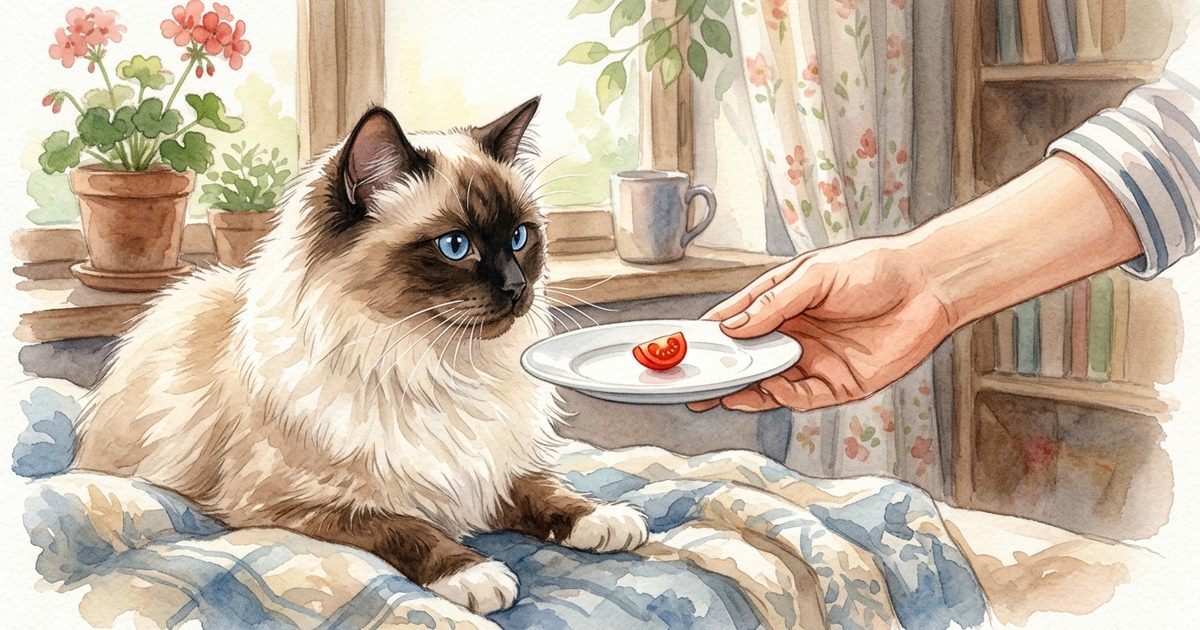
The only part of a tomato that belongs anywhere near your cat is the fully ripe red flesh. Wash it, remove the skin and seeds if your cat has a delicate stomach, and cut a piece about the size of a pea or a marble — a taste, not a portion. No salt, no oil, no butter, no seasoning, nothing on it at all.
Think of it as an occasional novelty, the way you might let a cat sniff a strawberry or lick a drop of milk. It is not a food to add to her diet, not a treat to repeat daily, and not a substitute for anything she actually needs. Cats are obligate carnivores; their nutrition comes from animal tissue, and tomato offers them almost nothing nutritionally. The value of the moment is curiosity and shared experience, not nourishment.
Watch the first taste. Some cats have sensitive gastrointestinal tracts, and even ripe, plain tomato can trigger mild vomiting or loose stool. If that happens, tomato simply is not agreeable to your cat, and that is the end of it. If she shows no reaction, an occasional pea-sized piece every so often is harmless — but it is never more than a small, plain, ripe-red curiosity.
Why tomato sauce is off-limits
This is where many well-meaning owners get into trouble. Marinara, pizza sauce, pasta sauce, ketchup, tomato soup — nearly every prepared tomato product on a human table contains garlic and onion, often in powdered form, which is the most concentrated and dangerous version of both. The danger in sauce is not the tomato. The tomato in marinara is the least concerning ingredient on the label. It is the alliums that make these foods genuinely hazardous to cats, along with salt and sugar levels that are completely unsuitable for a feline body.
So if you are wondering whether the tomato sauce on your pasta is safe to share, the answer is no — and the reason belongs to a different toxin entirely. Read our deep dives on can cats eat garlic and can cats eat onion for why those ingredients matter so much. Plain ripe tomato flesh and seasoned tomato sauce are not even the same conversation.
Why Are Tomatoes in the Nightshade Family?
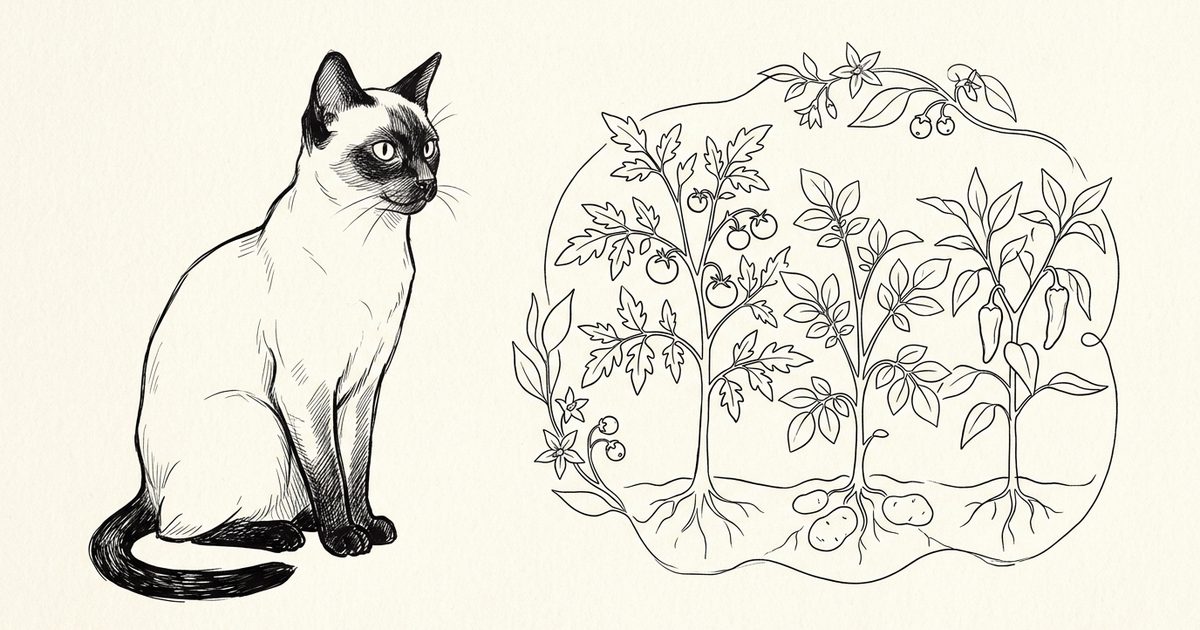
Tomatoes belong to the Solanaceae family, along with potatoes, peppers, and eggplant. Across this family, the green parts of the plant are toxic, while the ripe fruit is generally safe to eat — which is why the ripe red tomato is fine but its leaves are not.
The Solanaceae pattern
The nightshade family follows a remarkably consistent rule. Glycoalkaloid toxins — solanine, tomatine, and their relatives — concentrate in the leaves, stems, and unripe tissue of these plants as a natural chemical defense against being eaten. As the fruit ripens, the plant withdraws these compounds, and the ripe fruit becomes palatable and safe. This is why a red tomato is harmless while its green vine is not, and why the same logic applies across the whole family.
Potatoes, peppers, eggplant, and tomatoes all share this architecture. The green parts of the plant — the leaves, the stems, the unripe fruit, the sprouts — are where the toxins live. The ripe fruit or the mature tuber is where they drop away. Botanically, it is a defense strategy: the plant protects its vulnerable growing tissue with chemical weapons, then makes the ripe fruit safe so animals will eat it and disperse the seeds. The Cornell Feline Health Center and International Cat Care both note that this ripe-versus-green distinction is the central principle for understanding nightshade toxicity in pets.
What this means for cat owners
For any nightshade vegetable you might consider sharing with your cat, the question is always the same one: is this the ripe fruit, or is it a green part of the plant? Ripe red tomato flesh — fine in small amounts. Green tomatoes, leaves, stems, vines — toxic. The pattern repeats so reliably that once you understand it, you can reason about the whole family without memorizing each plant individually.
This is also why tomatoes and potatoes are best understood together. See our sister article on can cats eat potatoes — same family, same green-toxic rule, but a different edible part (the cooked tuber rather than the ripe fruit). Grasp the family-level principle and both foods become easy to navigate.
Do Tomatoes Have Any Nutritional Value for Cats?
Very little. Ripe tomatoes are mostly water with some vitamin C and lycopene, but cats synthesize their own vitamin C and cannot convert plant nutrients the way humans do. For a cat, a ripe red tomato is a low-value treat that may even upset the stomach.
What is actually in a ripe tomato
A ripe red tomato is about 94% water, with small amounts of vitamin C, the antioxidant lycopene (which gives the red color), potassium, and some fiber. That nutrient profile sounds healthy — and for a human, it is. The lycopene and vitamin C "antioxidant" story is a genuine piece of human nutrition science. But it is a human-health framing, not a cat-health framing.
Cats are obligate carnivores. Their metabolism is built around animal tissue: meat, organs, and the amino acids (like taurine) they cannot make themselves. They synthesize their own vitamin C internally, so the vitamin C in a tomato does them no measurable favor, and their bodies are not wired to extract much value from plant pigments like lycopene. The Cornell Feline Health Center is clear that a cat's nutritional needs are met by animal-based protein, not produce. So when you ask can cats eat tomatoes for the vitamins, the honest answer is: those vitamins were never meant for a cat.
Why it can backfire
Beyond being nutritionally marginal, a ripe tomato can actively irritate a cat's gut. The acidity and the fiber content can trigger mild gastrointestinal upset — a little vomiting or loose stool — even from a fully ripe red piece, particularly in cats with sensitive stomachs.
Because cats have no dietary need for plant matter at all, any upside from a tomato is marginal and any risk, however small, is not offset by a nutritional payoff. The same logic applies across the food safety cluster: the baseline diet that actually nourishes a cat is meat-based, and plant treats are, at best, neutral novelties rather than health additions.
What Should I Watch for If My Cat Eats Tomatoes?
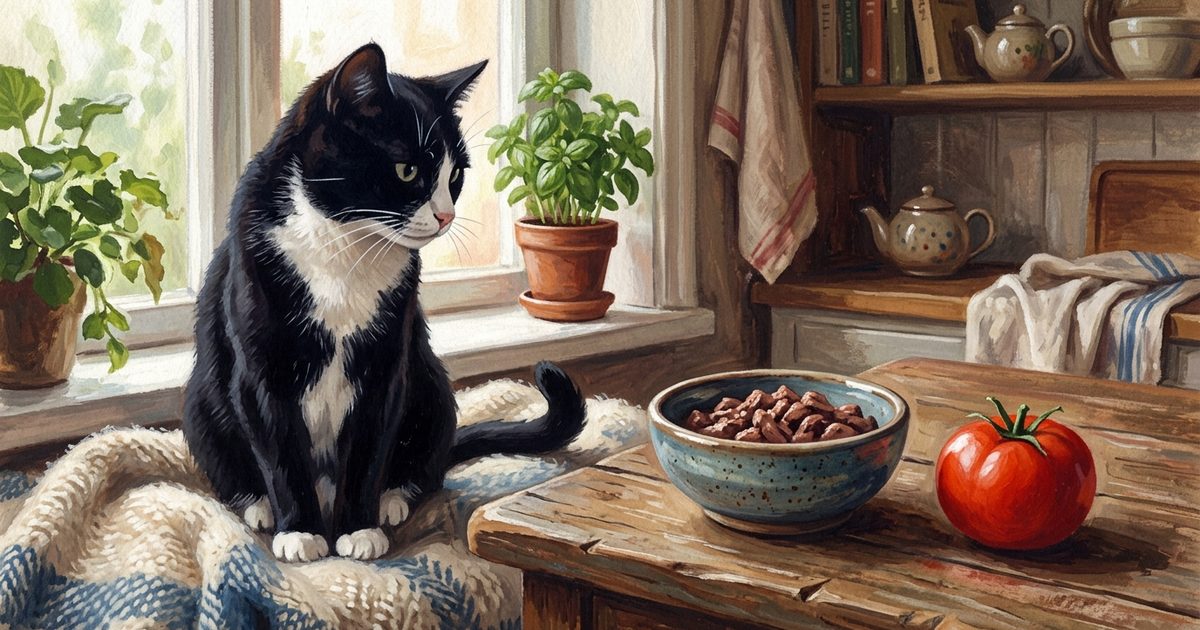
If your cat ate a small piece of ripe red tomato, watch for mild stomach upset and otherwise there is little to worry about. If your cat chewed on the plant — leaves, stems, vines, or a green tomato — call your vet or a poison helpline right away.
The response splits cleanly along the same line as the verdict itself: ripe red fruit is a watch-and-wait situation, while any green part of the plant is a call-the-vet situation. Knowing which one you're dealing with is the whole job here.
Ripe red tomato — monitor
Most cats who sneak a small piece of ripe red tomato show nothing at all, or only mild, self-limiting GI upset — a single bout of vomiting or a slightly loose stool that resolves on its own within a day. Offer fresh water and their normal food, keep an eye on them, and resist the urge to overreact. A one-off taste of ripe red flesh rarely amounts to much.
Reach out to your vet only if the symptoms persist beyond a day, if your cat refuses food, or if your cat already has a reputation for a sensitive stomach and you want to be cautious. For broader context on when an upset stomach crosses the line from "normal" to "worth a visit," our guide to cat vomiting walks through the signs that warrant a call.
Green tomato or plant — vet
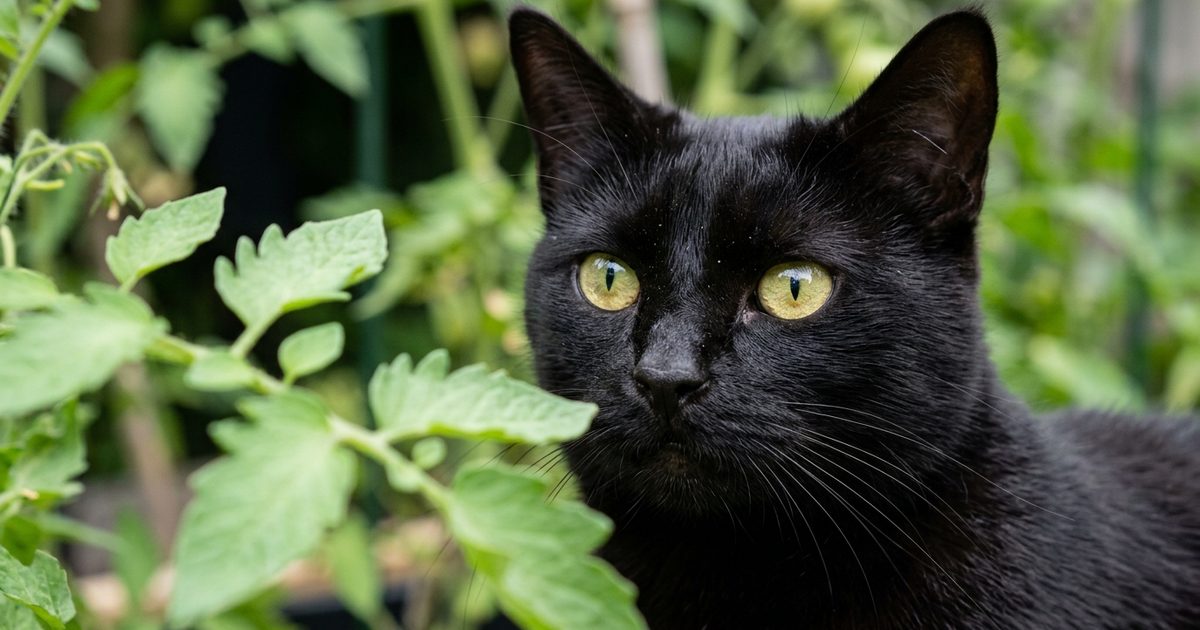
This is the scenario that actually warrants urgency. If your cat chewed on a green, unripe tomato or any part of the plant — leaves, stems, or vines — the solanine and tomatine those tissues carry can cause real poisoning. Symptoms include drooling, severe vomiting, diarrhea, weakness, confusion or disorientation, dilated pupils, a slowed heart rate, and, in serious cases, collapse. Onset can happen within hours of the nibble, so time matters.
Call your vet or the ASPCA Animal Poison Control immediately, and have the details ready: which part of the plant was eaten (leaf versus green fruit), roughly how much, and when. Do not induce vomiting unless a veterinarian or poison-control specialist explicitly tells you to — doing it wrong can cause more harm than the original nibble. The ASPCA also confirms the tomato plant's toxicity, so this is a well-established, not a fringe, concern.
Tomatoes and Cats — At a Glance
| Question | Short answer |
|---|---|
| Can cats eat ripe red tomatoes? | Yes — a small piece of plain, fully ripe red tomato is non-toxic in small amounts as an occasional treat. |
| Are tomato leaves and stems toxic to cats? | Yes. The leaves, stems, and vines contain concentrated solanine and tomatine and are the most dangerous parts of the plant. |
| What happens if a cat eats a green tomato? | Green, unripe tomatoes carry the same toxins and can cause drooling, vomiting, diarrhea, and weakness — call your vet. |
| Can cats eat tomato sauce or ketchup? | No. Sauces almost always contain garlic and onion, which are toxic to cats — the danger is the alliums, not the tomato. |
| Are tomatoes in the same family as potatoes? | Yes. Both are Solanaceae (nightshades), where green plant parts are toxic and only the ripe fruit is safe. |
| What should I do if my cat chewed on my tomato plant? | Call your vet or a poison helpline right away. Note which part was eaten and how much, and do not induce vomiting unless told to. |
The single rule that holds it all together: ripe red fruit is the only safe part, and only in small amounts — anything green on the plant stays off the menu. Keep your tomato plants out of reach, share no sauces or seasoned tomato foods, and when in doubt, a quick call to your vet settles it.
Curious What Your Cat Would Say?
Upload a photo and get a warm, personalized reading from your cat's perspective.
Start Your Free ReadingFrequently Asked Questions
Can cats eat ripe red tomatoes?
Yes. A small piece of plain, fully ripe red tomato is non-toxic in small amounts and safe as an occasional treat. Only the ripe red flesh is safe — green tomatoes and the plant itself are toxic to cats.
Are tomato leaves and stems toxic to cats?
Yes. The leaves, stems, and vines of the tomato plant contain concentrated solanine and tomatine, the two glycoalkaloid toxins that make the green parts dangerous. They are the most toxic part of the whole plant and should never be accessible to your cat.
What happens if a cat eats a green tomato?
Green, unripe tomatoes carry the same solanine and tomatine as the leaves. A cat that eats one can drool, vomit, have diarrhea, and become weak or disoriented. Call your vet or a poison helpline right away rather than waiting it out.
Can cats eat tomato sauce or ketchup?
No. Marinara, pizza sauce, pasta sauce, ketchup, and tomato soup almost always contain garlic and onion, often as powder, which are toxic to cats. The danger in these products is the alliums, not the tomato itself.
How much ripe tomato can a cat eat?
Only a small taste — a piece about the size of a pea or a marble of fully ripe red flesh, plain with no skin or seeds if her stomach is sensitive. It is an occasional novelty, never a daily treat or a regular part of her diet.
Are tomatoes in the same family as potatoes?
Yes. Both are Solanaceae, the nightshade family, where the green parts of the plant concentrate glycoalkaloid toxins and the ripe fruit or cooked tuber is the safe part. The same green-toxic, ripe-safe rule applies across the family.
What are the symptoms of tomato plant poisoning in cats?
Solanine and tomatine poisoning can cause drooling, severe vomiting, diarrhea, weakness, confusion, dilated pupils, a slowed heart rate, and in serious cases collapse. Symptoms can begin within hours, so time matters once you notice them.
What should I do if my cat chewed on my tomato plant?
Call your vet or the ASPCA Animal Poison Control immediately. Note which part was eaten — a leaf versus a green fruit — roughly how much, and when. Do not induce vomiting unless a veterinarian or poison specialist explicitly tells you to.
Sources & References
You Might Also Like
Kitten Teething: Timeline, Symptoms & How to Help
Kitten teething runs from 3 to 7 months as baby teeth fall out. Learn the timeline, signs to watch for, and how to soothe a teething kitten safely.
15 min readWhen Do Cats Stop Growing? A Complete Timeline
When do cats stop growing? Most cats reach adult size by 12-18 months, but large breeds like Maine Coons keep growing until 3-4 years. Full timeline inside.
14 min readCan Cats Eat Cherries? Flesh, Pit & Toxicity Facts
Can cats eat cherries? Pitted flesh is safe in tiny amounts — but the pit, stem, and leaves are toxic (cyanide precursors). Learn what's safe and what isn't.
15 min read