
Are Peonies Toxic to Cats? What Owners Need to Know
Yes — peonies are toxic to cats. That single question — are peonies toxic to cats — sits at the heart of every spring bouquet and wedding floral that lands on a kitchen table, and the honest answer matters when a curious tortoiseshell is eyeing the petals. Peonies and cats are a poor mix: the plant carries a compound called paeonol that irritates a cat's digestive tract. Understanding peony toxicity in cats means knowing which parts are worst, what the signs look like, and how the risk compares to genuinely lethal blooms like lilies. This guide walks through all of it, plainly and without alarm, so you can keep the beauty and keep your cat safe.
Key takeaways
- Yes, peonies are toxic to cats — the toxin paeonol is concentrated in the roots and stems, but all parts of the plant can cause harm.
- Symptoms are usually mild-to-moderate vomiting, diarrhea, and lethargy that begin within a few hours of chewing.
- Call your vet if your cat eats any part of a peony, and bring a sample of the plant with you.
Peonies and Cats — Quick Reference
| Question | Short answer | Action |
|---|---|---|
| Are peonies toxic to cats? | Yes — all parts contain the irritant paeonol | Treat any ingestion as a vet-call situation |
| Which part is most toxic? | Roots and stems (highest paeonol concentration) | Keep bulbs, roots, and cut stems out of reach |
| What is the toxin called? | Paeonol, a phenolic compound | Mention it to your vet for faster ID |
| What are common symptoms? | Vomiting, diarrhea, drooling, lethargy within hours | Monitor closely; note onset time |
| How do peonies compare to lilies? | Far less deadly — GI upset vs. fatal kidney failure | Lilies are an ER; peonies are a vet call |
| What should I do? | Remove plant material, keep a sample, call the vet | Don't induce vomiting unless directed |
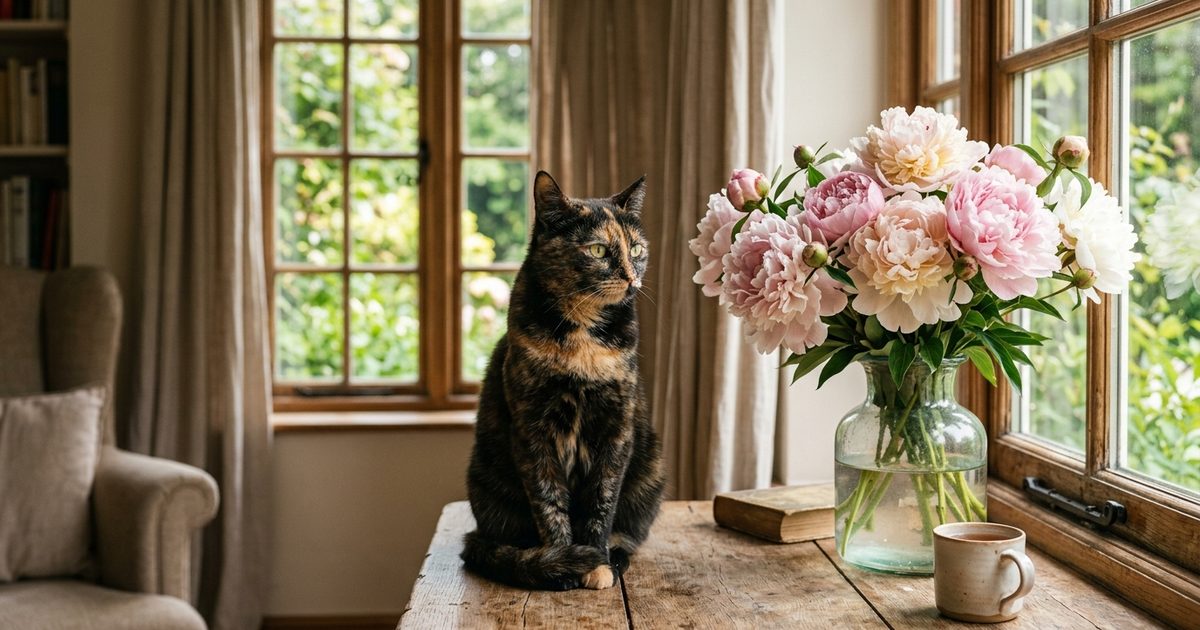
Are Peonies Toxic to Cats? The Short Answer
Yes — peonies are toxic to cats. They contain paeonol, concentrated most in the roots and stems but present throughout the plant. Chewing any part, or drinking the vase water, can cause vomiting, diarrhea, and lethargy. Rarely deadly, but genuinely poisonous and worth a vet call.
If you landed here because your cat just sampled a peony from a Mother's Day bouquet or a garden border, take a breath but take it seriously. The straightforward answer to are peonies toxic to cats is yes — and the reason is a specific compound called paeonol, which irritates a cat's gastrointestinal lining the moment it is chewed or swallowed. The good news is that peony ingestion is usually mild to moderate and very rarely life-threatening. The honest news is that "mild to moderate" still means an uncomfortable, vomiting cat and a call to your veterinarian.
It's easy to underestimate peonies precisely because they look so soft and harmless — lush ruffled petals, no thorns, no alarming scent. But toxicity in plants rarely advertises itself. The ASPCA lists peonies as toxic to cats, dogs, and horses, naming paeonol as the offending compound and gastrointestinal upset as the hallmark effect. So the caution is well-founded, not alarmist.
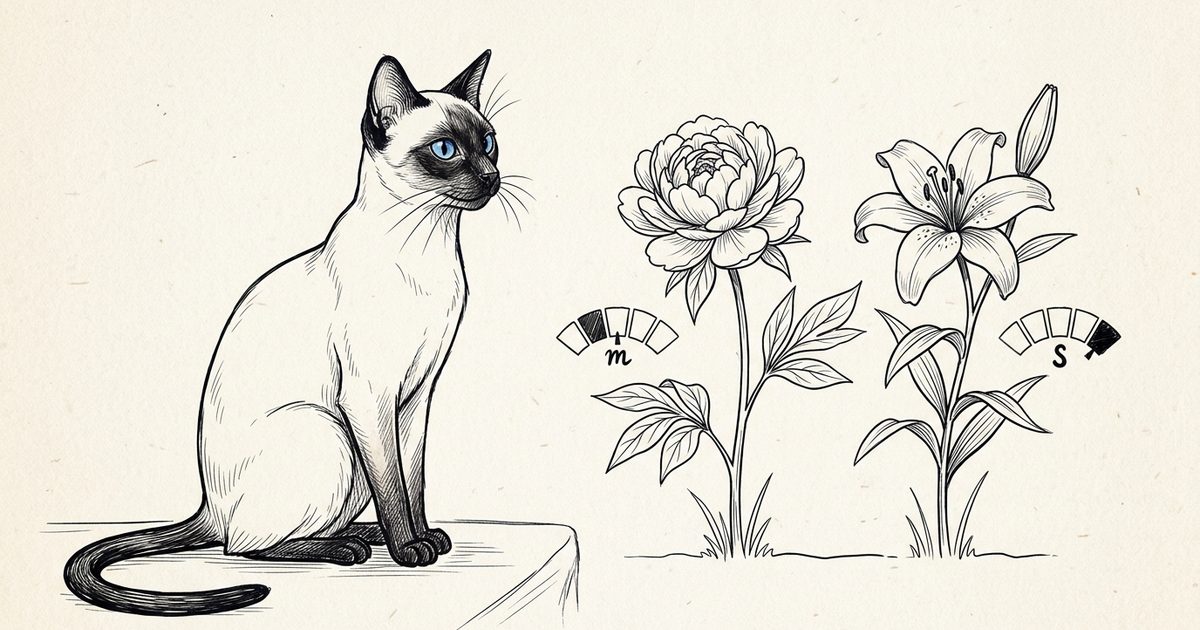
A useful way to frame the risk: peonies sit in the middle of the common-bouquet danger scale. They are more harmful than genuinely non-toxic blooms, but far less lethal than the plants that send cats to the emergency clinic. Knowing where peonies fall on that scale is what lets you respond with the right level of urgency — concerned and proactive, not panicked.
A beloved garden and bouquet flower
Peonies (Paeonia) are one of the most beloved ornamental flowers in the world, and for good reason. Their brief but extravagant early-summer bloom — May into June — produces enormous, ruffled, intensely scented blossoms in shades of blush, coral, white, and crimson. They anchor wedding florals, Mother's Day arrangements, graduation bouquets, and perennial home gardens, and a single mature peony bush can be the pride of a backyard border.
That popularity is exactly why cats cross paths with them so often. The same qualities we love — soft texture, strong fragrance, petals that shatter and fall — are invitations to a curious cat. Fallen petals on the floor get batted at and groomed off paws; a low vase invites a sniff or a nibble; even the scent of a fresh bloom can draw a cat's attention during peak season. Novelty spikes interest too, which is why a brand-new bouquet is more tempting than one that's been sitting on the table for days.
How toxic compared to other common flowers?
Peonies occupy the moderate-risk tier of the houseplant and bouquet spectrum. They are clearly more harmful than roses or orchids, which are generally considered non-toxic to cats and usually cause at most mild stomach upset from the physical irritation of eating plant material. But they are dramatically less lethal than true lilies — and that gap is enormous. Where lilies can cause acute, often fatal kidney failure from a single leaf or a lick of pollen, peonies cause gastrointestinal upset that is uncomfortable but very rarely life-threatening. A parallel moderate-risk bloom is the tulip, where the toxin sits in the bulb rather than the root.
The practical takeaway: a peony in the home is a plant to keep out of reach, not a plant to banish entirely. It deserves respect, caution, and a watchful eye — but not the emergency-level alarm that lilies warrant.
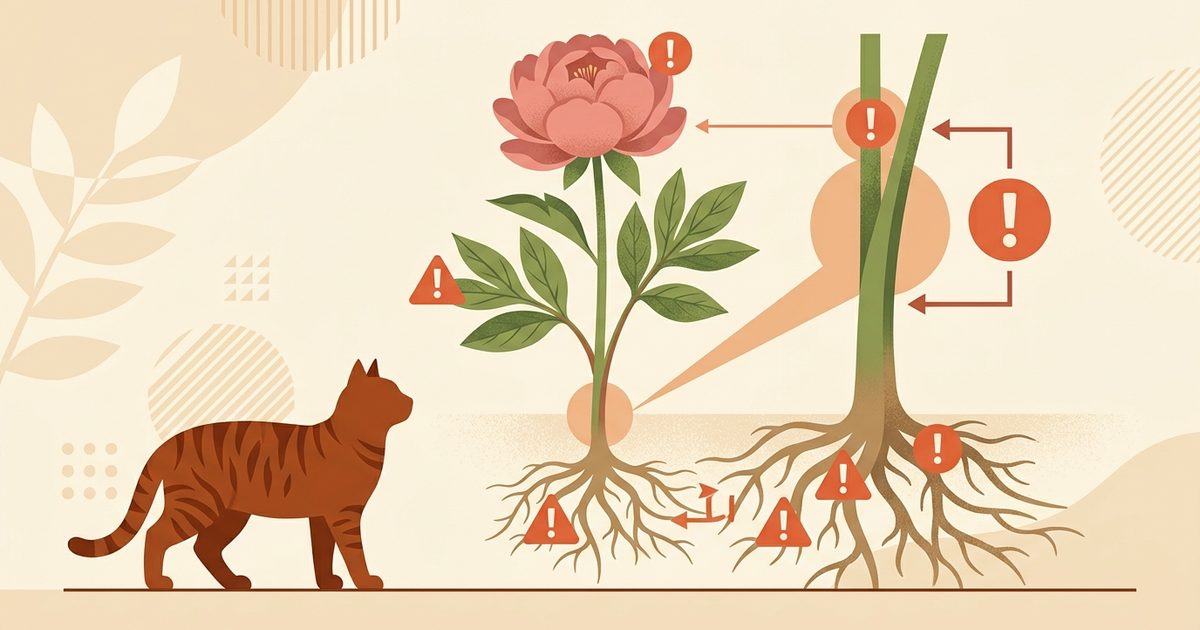
What Makes Peonies Toxic to Cats?
The main toxin in peonies is paeonol, a phenolic compound found throughout the plant but most concentrated in the roots and stems. It irritates a cat's gastrointestinal lining, causing the vomiting and diarrhea typical of peony ingestion.
Understanding why peonies cause trouble helps you make smarter decisions about which parts to worry about and which forms of the plant are genuinely safe. The short version: the offender is a single, well-characterized compound, and a cat's biology stacks the deck against it clearing that compound quickly.
Paeonol — the phenolic irritant
Paeonol belongs to a family of compounds called phenolics — the same broad class that gives many plants their protective chemistry. In a peony, paeonol isn't evenly distributed; it concentrates most heavily in the roots and the lower stems, with progressively smaller amounts in the leaves and petals. That gradient is why the part your cat chews matters: a nibble of a fallen petal is a much smaller dose than a mouthful of stem or, worst case, a tug at the root crown of a garden plant.
Mechanically, paeonol is an irritant. When it contacts the lining of the stomach and intestines, it triggers the same defensive response any GI irritant does — nausea, vomiting, and diarrhea as the body tries to expel the offending substance. The ASPCA's peony listing names this gastrointestinal upset as the characteristic sign.
One myth worth correcting directly: dried peonies are not a safe workaround. Paeonol is a stable phenolic compound that survives the drying process, which means dried peony arrangements, potpourri, and preserved blooms still carry the toxin. The form changes; the chemistry doesn't. Assume any part of the plant, fresh or dried, is a potential exposure.
Why cats are extra sensitive
Part of the reason peonies bother cats more than they bother us is simple body size — a three-kilogram cat eating a stem is taking in a far larger dose per kilogram than a human would. But there's a deeper, species-specific reason. Cats have notoriously limited glucuronyl transferase pathways, the liver enzyme family responsible for conjugating and clearing many plant phenolics and other compounds. This is the same metabolic gap that explains feline sensitivity to a wide range of substances that other mammals handle without trouble.
The practical consequence: a compound like paeonol lingers longer in a cat's system, giving it more time to irritate the gastrointestinal lining and produce symptoms. For broader guidance on plant ingestion and when to involve your vet, the Cornell Feline Health Center is a reliable, cat-specific authority. None of this means peony exposure is an emergency in the lily sense — but it does explain why "just a little plant" can still make a cat clearly unwell.
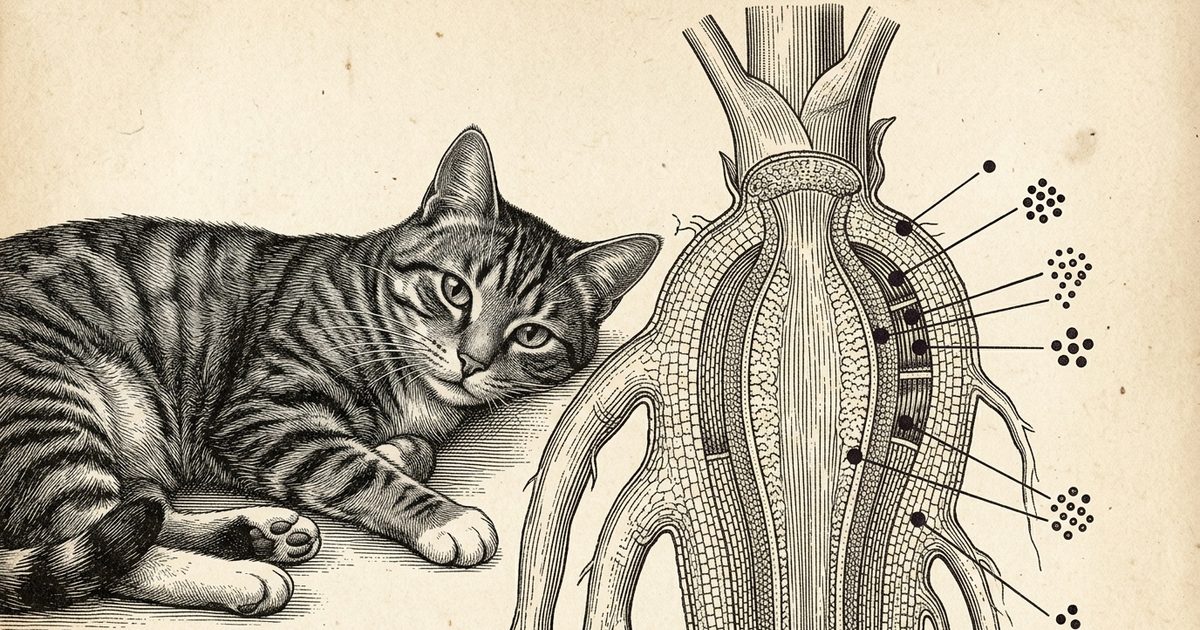
Can Peonies in Bouquets Harm Cats?
Yes. Peonies are common in wedding florals, gift bouquets, and seasonal arrangements — exactly where an indoor cat can reach them. Fallen petals, accessible vases, and the vase water all create exposure. Keep cut peonies out of a cat's reach.
This is one of the trickier things about peony toxicity in cats: the danger rarely arrives on its own. It arrives as part of a celebration — a wrapped bouquet handed to you at the door, a centrepiece on a table your cat likes to patrol, a single stem in a bedside glass. The plant itself is the same one we cover throughout this article, but the context changes how a cat meets it, and that's where owners get caught off guard.
Weddings, gifts, and bloom-season exposure
Peonies peak in May and June, which overlaps neatly with Mother's Day, graduation season, and the summer wedding circuit. That timing means a surge of fresh peonies enters homes during a narrow window — often sitting on kitchen counters, dining tables, or hall consoles that a determined cat can reach. Novelty is part of the draw: a brand-new arrangement is interesting in a way that familiar houseplants are not, and curious cats (especially kittens and young cats) will investigate by sniffing, batting, and mouthing. The seasonal spike matters because it's predictable — if you know peonies are coming into the house in spring, you can plan around it.
Hidden risks: petals, water, and dried blooms
Beyond the obvious risk of a cat chewing the blooms themselves, peonies create several quieter exposure paths. Fallen petals on the floor can be batted at and groomed off paws during a cat's routine cleaning. Vase water is easy to overlook — a thirsty cat may drink from it, and paeonol leaches out of the stems into the water over a day or two. And while some owners assume dried flowers are a safe workaround, the toxin doesn't disappear on drying: dried peony arrangements and potpourri still carry the compound. The safest generalization is to treat any form of the plant — fresh, cut, or dried, petals, stems, or vase water — as a potential exposure, not just the intact flower. If you're swapping arrangements entirely, our cat-safe plants guide covers non-toxic alternatives.

What Are the Symptoms of Peony Poisoning in Cats?
Most peony poisonings are mild. Within hours of chewing a peony, a cat may drool, vomit, have diarrhea, and act subdued. Severe signs like repeated vomiting or collapse are rare but can follow larger ingestions, especially of roots or stems. Worsening signs mean call the vet now.
Symptoms matter because they tell you how urgently to act, and with peonies the picture is reassuring in the sense that serious outcomes are uncommon — but they are not zero. Knowing the typical timeline and the mild-to-severe range lets you watch your cat calmly rather than panic at the first sign of drool. The Cornell Feline Health Center and International Cat Care both emphasise prompt veterinary contact after any suspected plant ingestion, even when signs look mild.
Mild to moderate signs (most cases)
The most common symptoms appear within roughly 2–6 hours of ingestion. You might notice drooling and lip-smacking (oral irritation from paeonol touching the mouth lining), a bout of vomiting, loose stools or diarrhea, and a cat that's quieter than usual — hiding, sleeping more, or less interested in food. Lethargy and mild depression are typical, because the gastrointestinal lining is inflamed and uncomfortable. These signs are usually self-limiting, meaning they resolve on their own as the irritant passes through, but they're genuinely uncomfortable for your cat in the meantime. Vomiting as a single symptom has many causes in cats — for the broader picture, see our guide to cat vomiting; peony ingestion is just one trigger on that list.
When to treat it as urgent
A smaller fraction of cases escalate, and that's where you stop observing and start moving. Call your vet or head in if you see repeated or bloody vomiting, persistent diarrhea that won't let up, severe depression or unresponsiveness, a cat that refuses to drink, or clear signs of dehydration (sunken eyes, tacky gums, skin that doesn't snap back when gently lifted). Ingestion of roots or stems — the most concentrated parts — raises the likelihood of a more severe course. At this tier there is no useful "wait and see"; the longer dehydration runs, the harder it is on a cat's body.
How much is too much?
Dose matters, but the math is approximate. A nibble of a petal is very different from a mouthful of root or lower stem, and most mild cases fall into the former category. Individual sensitivity varies too — age, size, and underlying health all shift where a cat lands on the mild-to-severe range. Because of that variability, the honest guidance is that any confirmed ingestion of any part of a peony warrants at least a phone call to your vet. Not panic, but not assumption either — a quick professional read on whether home monitoring or a visit is the right call.
Peonies vs Lilies — How Dangerous Are Peonies Really?
Peonies are far less deadly than true lilies. Lilies cause acute, often fatal kidney failure from a single leaf or a lick of pollen. Peonies cause gastrointestinal upset that is usually mild and rarely life-threatening. Lilies are an emergency; peonies are a vet call.
When you read that peonies are "toxic to cats," it's easy to picture the same dread lilies carry. The two plants sit at opposite ends of the risk scale, and understanding that difference changes everything about how you respond. If you want the full kidney-failure picture, our guide to are lilies toxic to cats breaks down why even pollen on fur can be lethal — here we're calibrating peonies against that benchmark.
Different toxin, different mechanism
Lilies and peonies harm cats through completely different pathways. True lilies contain a toxin that destroys the renal tubular cells of the kidney; even a small exposure — a chewed leaf, pollen groomed off fur, or sips of vase water — can trigger acute, often fatal kidney failure within hours. The specific toxin remains unidentified, but the damage is swift and severe. Peonies, by contrast, work through paeonol, a phenolic compound that irritates the lining of the stomach and intestines rather than attacking the kidneys. The result is gastrointestinal upset — vomiting, diarrhea, and discomfort — that is miserable for your cat but usually recoverable.
Calibrating your response
The risk gap should reshape your urgency. A confirmed or suspected true lily exposure is an immediate emergency-room trip — no waiting, no watchful waiting at home, because kidney damage can become irreversible within hours. A peony exposure is a different category: call your vet, describe what and how much was eaten, and follow their guidance. Many mild cases can be observed at home under veterinary direction, with the clinic reserved for worsening signs like repeated vomiting, lethargy, or dehydration. The principle is simple — never dismiss either plant, but match your urgency to the real risk. Treating a peony nibble like a lily emergency wastes calm you'll need; treating a lily nibble like a peony mishap can cost your cat's life.
What Should I Do If My Cat Eats a Peony?
Call your vet or a pet poison helpline right away. Remove plant material from your cat's mouth and fur, keep a peony sample or photo, and note how much was eaten and when. Do not induce vomiting unless the vet says so. Worsening signs need clinic care.
The minutes after you realize your cat has chewed a peony matter less for panic than for precision. Most peony ingestions are mild, but the right first steps protect your cat whether the case turns out to be trivial or more serious. International Cat Care's page on poisonous plants and cats walks through first-aid and prevention in detail, and it's a reliable resource to bookmark before you ever need it.
Immediate first steps
Start by removing any remaining plant material — gently clear your cat's mouth of leaves or petals, and wipe down fur and paws so she doesn't groom off more toxin. Move her away from the plant and isolate the peony so there's no second exposure. Then gather information: snap a clear photo of the plant (or keep a physical sample in a bag), and jot down roughly how much was eaten and when you think it happened. Finally, call. Reach your vet directly; if it's after hours, a pet poison helpline (such as the ASPCA Animal Poison Control Center) can triage over the phone. Having the sample and timeline ready means faster, more accurate advice.
What the vet may do
If the vet brings your cat in, expect a focus on decontamination and support. They may rinse the mouth, and in some cases induce vomiting under their direction — never do this yourself without instruction. Supportive care often follows: fluids to prevent dehydration from vomiting and diarrhea, antiemetics to settle the stomach, and monitoring for any escalation in symptoms. Bringing the plant sample speeds identification, which speeds the right treatment — especially useful if you're unsure whether the bouquet contained peonies, lilies, or both.
When home monitoring might be enough
Home monitoring is only appropriate after a vet confirms it — never an assumption you make on your own. If your cat took a small nibble of a petal, shows no symptoms within the first few hours, and your vet agrees, watchful waiting at home may be reasonable: keep her hydrated, keep an eye on litter box output and energy, and check in if anything shifts. The line is vet-directed. A cat who vomits repeatedly, refuses water, or grows lethargic crosses out of "monitor at home" and into "bring her in now." Our piece on cat vomiting covers the broader symptom picture if you're weighing what you're seeing.
Cat-Safe Alternatives to Peonies (and How to Cat-Proof Bouquets)
Cat-safe lush blooms include roses, orchids, snapdragons, sunflowers, and freesia — all far less risky than peonies. If you keep peonies in the home, place them out of reach, discard fallen petals promptly, change vase water cats can reach, and never leave cut stems accessible. A dedicated cat-safe plant list is the simplest fix.
If the worry of a peony in the house outweighs the joy of having one, you don't have to give up fresh flowers — you just have to choose differently. Some of the most romantic, photogenic blooms are genuinely safe for cats, and a little planning around the risky ones lets you enjoy the season without a poison-control moment.
Safer flowers to grow or bring home
If you want lush, beautiful arrangements without the anxiety, lean on these cat-friendly options:
- Roses — classic, elegant, and non-toxic to cats; a reliable centerpiece swap for any peony-heavy bouquet. See our full breakdown at are roses toxic to cats.
- Orchids — graceful and long-lasting, and considered non-toxic; a sophisticated alternative to peonies for special occasions. Details in are orchids toxic to cats.
- Sunflowers — bold and cheerful, and safe for curious cats who might investigate.
- Snapdragons and zinnias — colorful, textural, and cat-friendly for gardeners and florists alike.
- Freesia — fragrant and gentle, a lovely scent-forward substitute.
For a wider catalog of plants you can keep without worry, our cat-safe plants guide is the resource to browse before your next trip to the florist or garden center.
Cat-proofing if you must keep peonies
If peonies are non-negotiable — a wedding, a sentimental gift, a prized garden plant — cat-proofing comes down to denying access. Place vases where your cat can't jump: high shelves, closed rooms, behind glass. Discard fallen petals the moment they drop, since cats groom them off paws and floors. Change vase water frequently and never leave it where a cat can drink it — and remember dried peonies and potpourri still carry paeonol. For gardeners, store roots and tubers in sealed containers well out of reach, and fence off peony beds if your cat roams the garden. None of this is foolproof against a determined cat, which is why the simplest fix is still choosing cat-safe blooms.

Peonies and Cats at a Glance — Summary
| Question | Short answer |
|---|---|
| Are peonies toxic to cats? | Yes — all parts contain paeonol and can cause harm |
| Which part is most toxic? | Roots and stems hold the highest concentration |
| What is the toxin? | Paeonol, a phenolic compound that irritates the GI tract |
| Common symptoms? | Drooling, vomiting, diarrhea, and lethargy within hours |
| How do they compare to lilies? | Far less deadly — GI upset, not acute kidney failure |
| What should I do? | Call your vet, keep a sample, and don't induce vomiting |
Curious What Your Cat Would Say?
Upload a photo and get a warm, personalized reading from your cat's perspective.
Start Your Free ReadingFrequently Asked Questions
Are peonies toxic to cats if they just brush against them?
No — brief contact alone won't harm your cat. The toxin paeonol only causes trouble when it's swallowed, usually from chewing petals, stems, or roots, or from drinking vase water. Brushing past a bloom is harmless.
How much peony does a cat need to eat to get sick?
There's no fixed threshold, because dose per kilogram and the part eaten both matter. A nibble of a petal may cause nothing, while a mouthful of stem or root can trigger vomiting. Any confirmed ingestion warrants a vet phone call.
Which part of the peony is most toxic to cats?
The roots and lower stems carry the highest concentration of paeonol. Leaves and petals are less concentrated but still harmful, and even the vase water can hold enough dissolved toxin to upset a small cat's stomach.
What are the first symptoms of peony poisoning in cats?
Drooling and lip-smacking from mouth irritation are usually the earliest signs, often within two to six hours. They're quickly followed by vomiting, loose stools, and a quieter, more subdued demeanor as the gastrointestinal lining becomes inflamed.
Are dried peonies still toxic to cats?
Yes. Paeonol is a stable phenolic compound that survives the drying process, so dried peony arrangements, preserved blooms, and potpourri still carry the toxin. Treat dried peonies with the same caution as fresh ones.
Can a cat die from eating peonies?
It's very rare. Peonies cause uncomfortable gastrointestinal upset rather than organ failure, and most cats recover fully with supportive care. Severe dehydration from prolonged vomiting is the main serious risk, which is why a vet call matters.
How dangerous are peonies compared to lilies?
Far less dangerous. True lilies can cause fatal kidney failure from a single leaf or a lick of pollen, while peonies cause mild-to-moderate stomach upset. A lily exposure is an emergency; a peony exposure is a vet call.
What should I do right away if my cat chews a peony?
Remove any plant material from your cat's mouth and fur, keep a sample or a clear photo, note how much was eaten and when, and call your vet or a pet poison helpline. Don't induce vomiting unless the vet tells you to.
Sources & References
You Might Also Like
Kitten Teething: Timeline, Symptoms & How to Help
Kitten teething runs from 3 to 7 months as baby teeth fall out. Learn the timeline, signs to watch for, and how to soothe a teething kitten safely.
15 min readWhen Do Cats Stop Growing? A Complete Timeline
When do cats stop growing? Most cats reach adult size by 12-18 months, but large breeds like Maine Coons keep growing until 3-4 years. Full timeline inside.
14 min readCan Cats Eat Cherries? Flesh, Pit & Toxicity Facts
Can cats eat cherries? Pitted flesh is safe in tiny amounts — but the pit, stem, and leaves are toxic (cyanide precursors). Learn what's safe and what isn't.
15 min read