
Can Cats Eat Shrimp? Safety, Cooking Rules, and How Much
Can cats eat shrimp? The short answer is yes — but only as a small, occasional treat of plain cooked peeled shrimp, never raw, never seasoned, and never with the shell or tail on. Understanding whether cats can eat cooked shrimp safely, or whether cats can eat raw shrimp at all, comes down to how the shrimp is prepared and how often you offer it. (Why it's a treat rather than a meal is covered below in Is Shrimp Good for Cats?)
Shrimp is one of those foods cats go genuinely wild for, which makes it tempting to share. But a cat's enthusiasm is not the same thing as nutritional fit, and the way humans usually eat shrimp — garlic-butter, fried, salty, shell-on — is exactly the form that's unsafe. The version your cat can have is much plainer: cooked, peeled, unseasoned, and tiny. If you've ever wondered where shrimp fits alongside other treats like salmon or tuna, the same treat-not-meal rule applies, with a few extra safety steps shrimp demands on its own.
Key takeaways
- Cats can eat plain cooked peeled shrimp as a rare treat — never raw, and never with shell, tail, head, or legs attached.
- Shrimp must be served plain: no salt, butter, oil, garlic, onion, or seasoning of any kind.
- Keep it to well under 10% of daily calories — roughly half of one small shrimp, once or twice a week at most.
Shrimp for Cats — Quick Reference
| Shrimp form | Safe for cats? | Notes |
|---|---|---|
| Plain cooked shrimp | Yes, as a rare treat | Peeled, deveined, no seasoning, tiny portion |
| Raw shrimp | No | Bacteria (Salmonella, Vibrio) and parasites; cook fully |
| Shrimp shells, tail, legs | No | Choking and blockage hazard; sharp when cooked |
| Shrimp with salt or seasoning | No | Excess sodium; many seasonings are harmful |
| Garlic-butter shrimp | No | Garlic is toxic to cats; butter adds unsafe fat |
| Fried or breaded shrimp | No | Indigestible breading, frying oil, usually salted |
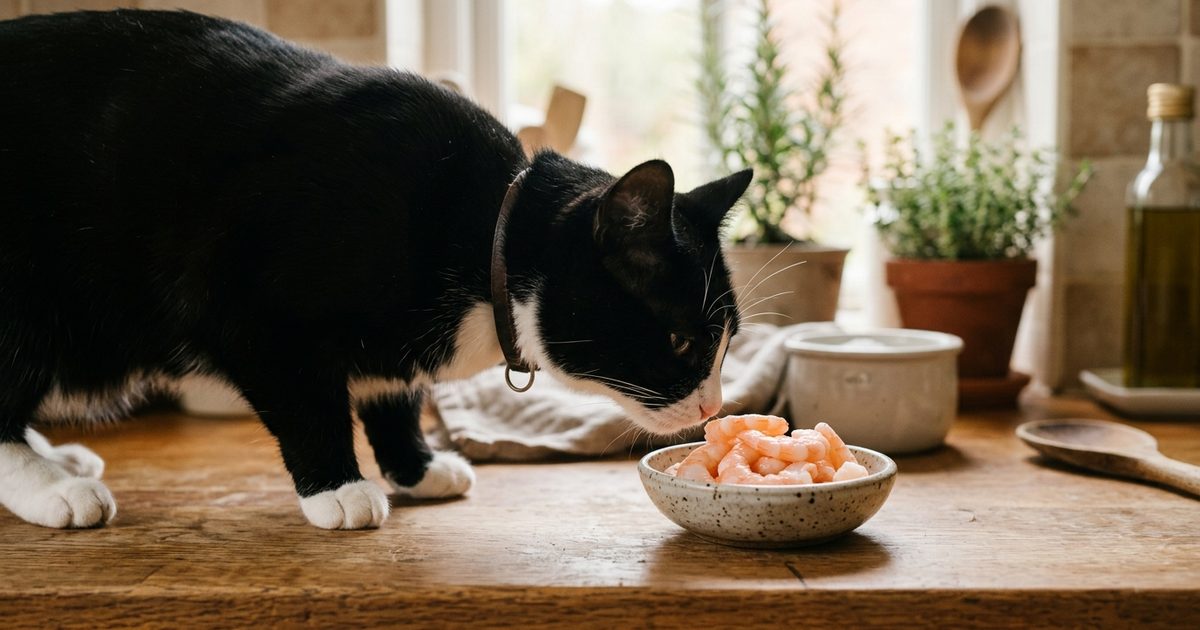
Can Cats Eat Shrimp?
Yes — cats can eat shrimp, but only plain cooked peeled shrimp in tiny amounts as an occasional treat. Keep it well under 10% of daily calories, since shrimp is nutritionally incomplete and cannot replace a complete cat food.
If you came here wondering specifically whether cats can eat cooked shrimp, the answer is the same: cooked is the only safe form, and only when it's plain and peeled. Raw, seasoned, or shell-on shrimp each carry their own risks, which we walk through in the sections below.
The short answer
Plain cooked peeled shrimp is safe for cats in moderation — and "moderation" is doing a lot of work in that sentence. We're talking about half of one small shrimp, offered occasionally as a treat, not folded into the daily meal. The verdict up front: treat, not meal. The reason cats go wild for shrimp is the strong, marine scent — it hits the same scent-driven excitement that makes cats enthusiastic hunters and picky eaters all at once. Enthusiasm is real; it just isn't a signal that shrimp belongs in the food bowl.
Why cats love shrimp
The pull is almost entirely olfactory. Cats are wired to detect the intense marine smell of shrimp and other shellfish — it registers as high-value prey scent, the kind of signal that would, in a hunting context, mean fresh protein worth pursuing. Add the chewy, yielding texture and it's easy to see why a cat will beg, paw, and vocalize for a piece. The trap is letting that enthusiasm rewrite the diet: because a cat loves shrimp does not mean shrimp is good for her in any quantity, any more than a child's love of sweets makes dessert a balanced meal. International Cat Care is clear that a cat's food preference is not the same as nutritional adequacy — a complete diet is what keeps a cat healthy, and high-value treats are best kept genuinely rare so they stay treats, not expectations.
Can Cats Eat Raw Shrimp?
No — raw shrimp is not safe for cats. Raw shrimp and other raw shellfish can carry harmful bacteria like Salmonella and Vibrio, along with parasites that cooking reliably destroys. Always cook shrimp fully before offering even a small piece to your cat.
So can cats eat raw shrimp? The honest answer is no — and this is one rule where enthusiasm should not override caution. A cat's nose lights up at the smell of raw seafood, but the same freshness that calls to them is exactly what makes raw shrimp a genuine health risk. Cooking is the step that turns a potential hazard into a safe treat, and there is no shortcut around it.
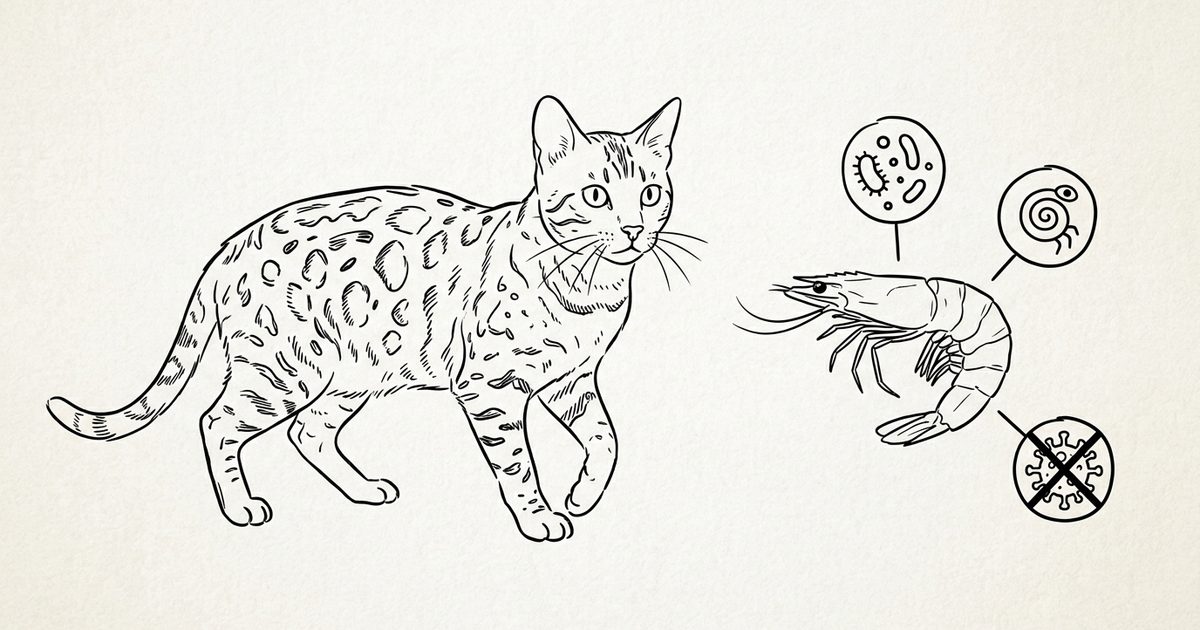
Bacteria and parasites
Raw shrimp can carry a lineup of organisms you do not want in your cat's gut — Vibrio species from coastal waters, Salmonella, Listeria, and parasites such as roundworm larvae. None of these are visible, and a shrimp that looks and smells pristine can still be contaminated. The key point is body size: a cat weighs a fraction of what you do, so a bacterial dose a human might shrug off can sicken a cat far more quickly. International Cat Care treats raw meat and shellfish as a recognized food-safety concern for exactly this reason. Cooking shrimp until it is fully opaque throughout is the reliable kill step for both bacteria and parasites — nothing else matches it.
Sushi-style raw shrimp is still risky
Some owners assume that if a shrimp is "sushi-grade," it must be cat-safe. Sushi-grade refers to freezing and handling standards set for human consumption — they target human-parasite risks and a human's body weight, not every bacterial pathogen a cat's smaller system has to cope with. Likewise, the citrus marinade in ceviche does not actually cook the shrimp; the acid only denatures surface proteins, leaving most bacteria alive deeper in the flesh. Even human-grade raw shrimp should never go into your cat's bowl. The grade protects people dining in small portions, not a small animal eating it regularly.
Why cooking is non-negotiable
Boiling, steaming, or baking plain shrimp until it is completely opaque and firm is the single most important safety step — more important than the cut, the breed of shrimp, or where it was bought. Heat is what reliably destroys the pathogens and parasites that raw shellfish can carry, and no other method (freezing at home, acid, "freshness") substitutes for it. Once the shrimp is cooked plain and cooled, you can move on to peeling and portioning. Think of cooking as the gate every piece of shrimp must pass through before it earns a place in your cat's treat rotation.
Should Shrimp Be Peeled and Plain?
Yes — always peel shrimp and remove the tail, head, and legs before giving any to your cat. The shell and tail are choking hazards that can splinter or cause blockages, and shrimp must be served plain with no salt, oil, garlic, butter, or seasoning of any kind.
Once the shrimp is cooked, the next question is how to serve it. The serving form matters as much as the cooking — the way humans eat shrimp (shell-on, seasoned, dunked in sauce) is precisely the form a cat should never get. Peel it, strip every hard part away, and keep it plain. This is also where the common query about whether cats can eat shrimp shells gets a firm no.
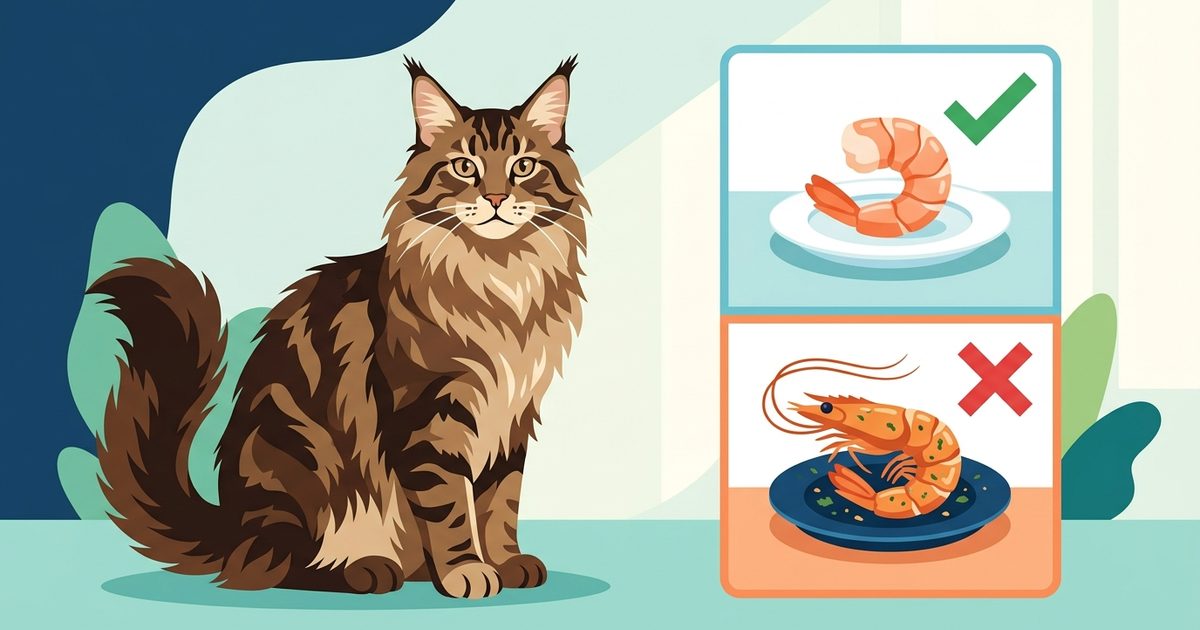
Remove shell, tail, and legs
The shrimp's exoskeleton is hard and sharp, and once cooked it does not soften — it turns brittle, splintering into shards that can choke a cat or scratch the throat and lining of the gut. The tail and legs carry the same risk, and the head offers no benefit either, so all of it comes off before the shrimp reaches your cat. Take a moment to devein the shrimp as well: the dark vein along the back is the digestive tract, and removing it is a simple cleanliness step. What is left — plain cooked peeled shrimp — should be cut into small, bite-sized pieces appropriate to your cat's size, the same way you would prepare chicken as a rotation protein.
What to never add
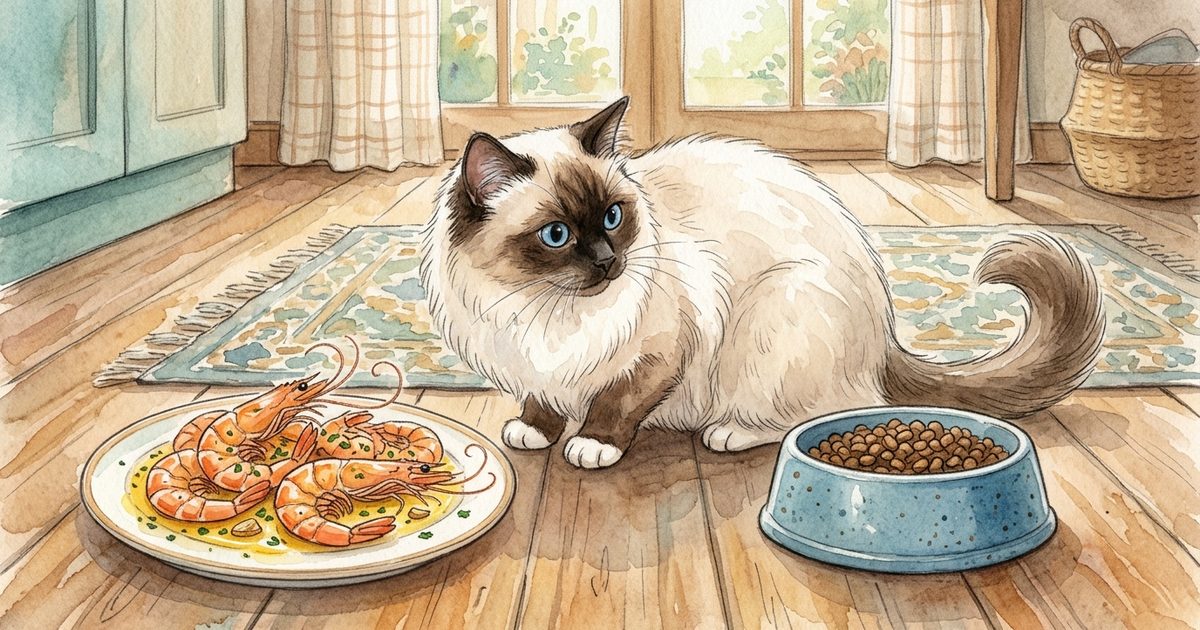
Plain means genuinely plain: no salt, no oil, no butter, no garlic, no onion, no lemon, no chili, no sauces. Many of these are outright harmful rather than merely unnecessary. Garlic and onion are alliums that damage a cat's red blood cells and can lead to serious illness even in small repeated amounts — we cover this in depth in our guides on whether cats can eat garlic and whether cats can eat onion. Butter and cooking oils add fat a cat does not need and, in sufficient quantity, can trigger pancreatitis. The cleanest version — nothing added, ever — is the only safe one. The shrimp dishes people love most are the worst offenders for cats: garlic-butter shrimp is a double hazard (allium toxicity from garlic, fat load from butter, plus salt), while fried and breaded shrimp add indigestible breading and frying oil that offer nothing nutritionally. Cocktail sauce and prepared dips are salty, spiced, and sometimes onion-based. None of these belong in your cat's bowl, even as a one-off — only plain cooked peeled shrimp, nothing added, is appropriate.
Is Shrimp Good for Cats?
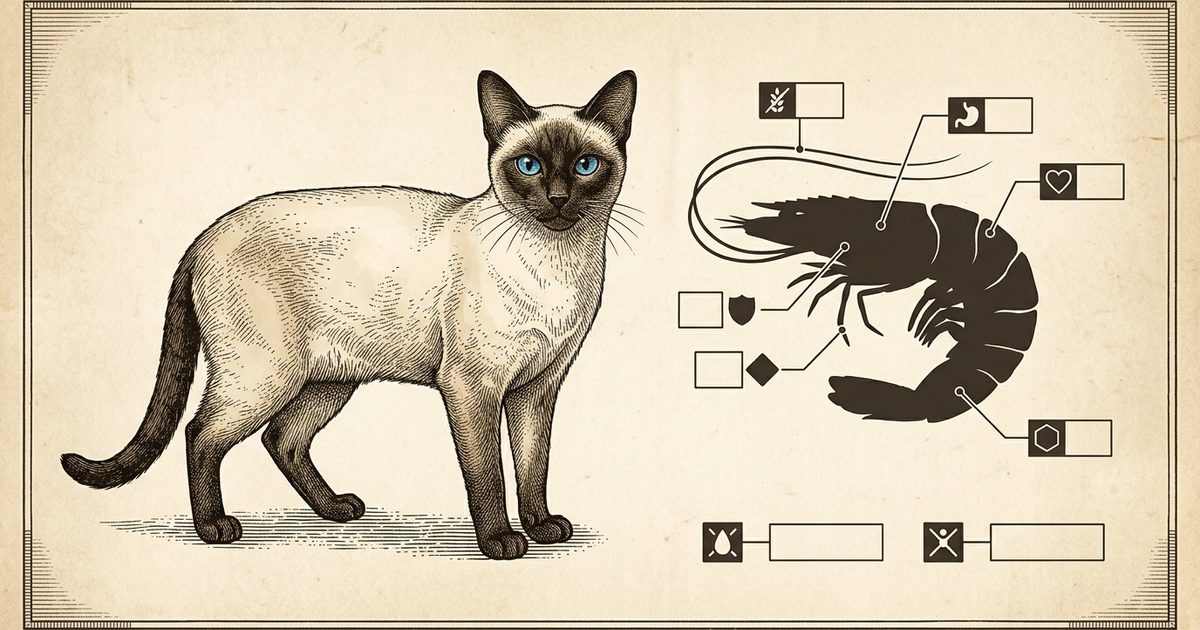
Shrimp is a lean source of animal protein and supplies some selenium, vitamin B12, and iodine, which can be a nice bonus in a treat. But shrimp is nutritionally incomplete and not necessary — a complete cat food already provides everything your cat needs, so shrimp is a bonus, not a benefit you must supply.
Protein and minerals
Shrimp is genuinely high-quality, lean animal protein, and it carries a few minerals worth knowing about. It's a notable source of selenium (an antioxidant mineral that helps protect cells), vitamin B12, phosphorus, choline, and iodine. For a cat that has gone off its food, a tiny amount of warm, plain cooked peeled shrimp can work as an appetite stimulant or a topper for picky eaters — the strong marine scent does a remarkable job of coaxing a reluctant nose toward the bowl. Used this way, in truly small amounts, shrimp earns its place. What it does not do is replace a complete food: the protein is good, but it rides along without the full nutritional balance a meal needs.
Why it is not nutritionally necessary
Here's the part that surprises most people: shrimp adds no essential nutrient that a balanced diet lacks. A complete commercial cat food is already formulated to meet every one of a cat's nutritional needs, including the very minerals shrimp is praised for. The Cornell Feline Health Center, a leading authority on feline nutrition, is clear that a complete and balanced diet is what keeps a cat healthy — single-ingredient additions are extras, not requirements. It's also worth a comparison: unlike salmon, shrimp does not supply meaningful marine omega-3 oils (EPA and DHA), so its nutritional upside is genuinely modest next to other fish treats. Shrimp is a "nice to have," not a "must supply."
Why it is still not a complete diet
This is the line that matters most: shrimp alone is not a complete diet, and a shrimp-heavy menu will sicken a cat over time. Shrimp does not contain enough taurine, calcium, or the full vitamin and mineral balance an obligate carnivore requires. Cats evolved on small whole prey — mice, birds, insects — eaten bones, organs, and all, not peeled shellfish. "Natural" is not the right frame here; a peeled shrimp is about as far from a cat's evolutionary prey as a kitchen can get. If you want the full picture of how a cat's diet actually works, see our guide on what cats eat and why no single seafood item — however much your cat loves it — can stand in for a balanced meal.
How Much Shrimp Can a Cat Eat?
Keep shrimp to a rare small treat — roughly half of one small plain cooked peeled shrimp for a healthy adult cat, and never more than 10% of daily calories. Feed it only occasionally; frequent shrimp raises cholesterol intake and, if any seasoning slips in, sodium as well.
The 10% treat rule
The standard veterinary guidance is that treats of all kinds should stay under about 10% of a cat's daily calories. For an average adult cat eating around 200 calories a day, that 10% ceiling is roughly 20 calories — and a single small plain cooked peeled shrimp is only a few calories, so a half to one whole small shrimp sits comfortably within the limit. A whole platter, a handful, or the tail end of your own dinner is far, far too much. Shrimp also carries moderate dietary cholesterol, which is another reason to keep portions tiny rather than generous. The goal is a token taste, not a serving.
Frequency and portion size
Think of shrimp as an occasional treat, not a rotation item: once or twice a week at most, in half-shrimp to one-shrimp portions for an average cat. Smaller cats, seniors, and overweight cats should get the smaller end of that range — a single small chopped piece is plenty. In fact, many cats are perfectly happy with one tiny minced bit stirred into their regular food as a topper; you rarely need to offer a whole piece to deliver the joy. If your cat is the kind that goes wild for the scent, remember that more frequent feeding is how treat fixation takes hold — keep the schedule irregular and the amounts small, and shrimp stays the special treat it's meant to be.
What Are the Risks of Feeding Shrimp to Cats?
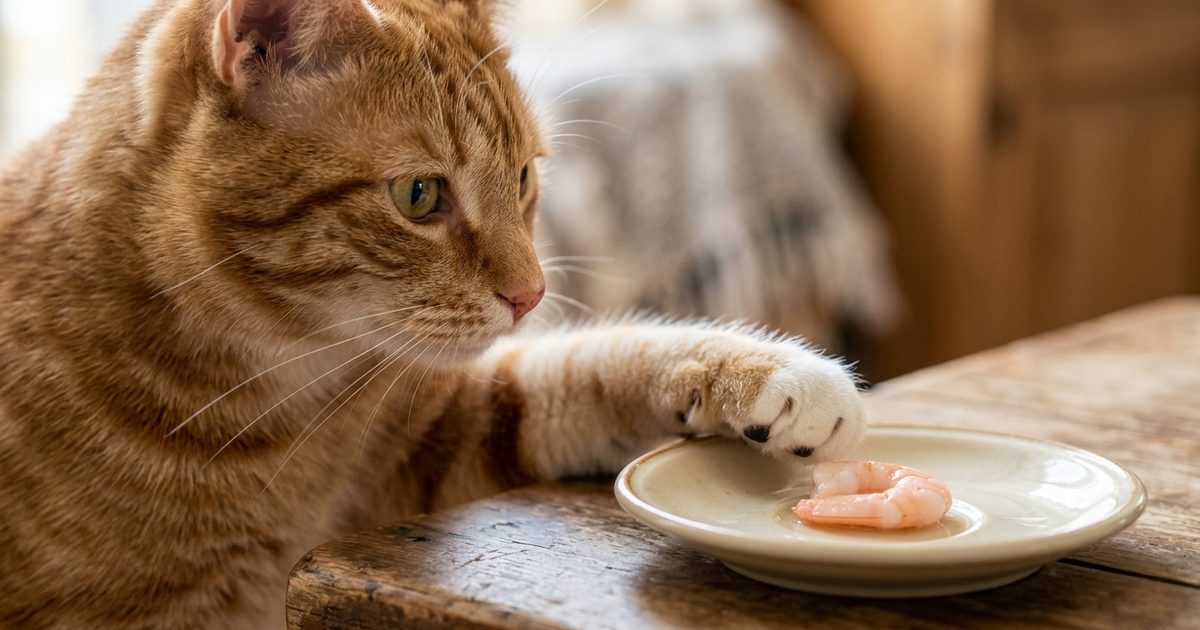
The main risks are shell, tail, head, and leg choking or intestinal blockage; hidden sodium and seasoning in prepared shrimp; shellfish allergy; and shrimp fixation, where a cat starts refusing its regular food. Any vomiting, facial swelling, lethargy, or refusal of normal food after shrimp warrants a vet call.
Choking and blockage
The hard exoskeleton is the headline hazard. Shrimp shell, tail, head, and legs are sharp, and once cooked they turn brittle and prone to splintering into shards that can scratch the throat or lodge in the gut and cause a blockage. This is exactly why the serving rule is non-negotiable: always peel the shrimp fully, devein it, and cut the cooked meat into small bite-sized pieces before any reaches your cat. The tiny mineral content of the shell is not worth the risk — a complete diet already supplies the calcium.
Sodium, seasoning, and additives
Prepared shrimp — cocktail, scampi, fried, or breaded — is high in sodium and often spiced, salted, or cooked in butter and oil. The same garlic-butter, fried, and breaded forms flagged above in What to never add apply here, so this section focuses on the sodium and allergy angles. Salt poisoning in cats shows up as vomiting, lethargy, and excessive thirst, and in serious cases tremors or seizures. This is the same sodium trap that makes prepared tuna a treat-only food, and it applies equally to seasoned shrimp.
Allergy and fixation
Shellfish sit in a recognized feline food-allergen category, so watch closely on a cat's first exposure for itching, vomiting, diarrhea, or any facial swelling — and call your vet if any appear. The subtler risk is behavioral: shrimp is intensely fragrant and high-value, and a cat that learns it exists can start holding out for shrimp and refusing regular food. That fixation is avoided the same way every treat trap is: keep portions tiny, offer shrimp on an irregular schedule, and never let it replace a meal. If your cat's enthusiasm for shrimp starts crowding out balanced nutrition, step the treat back — and when in doubt, generalize the concern with your vet rather than diagnosing it yourself.
Shrimp for Cats at a Glance — Summary
| Question | Short answer |
|---|---|
| Can cats eat shrimp? | Yes — plain cooked peeled shrimp, small amounts, occasional treat only |
| Can cats eat raw shrimp? | No — raw shrimp can carry bacteria and parasites; always cook it fully |
| Can cats eat shrimp shells? | No — shell, tail, head, and legs are choking and blockage hazards; always peel |
| Is shrimp good for cats? | A bit — lean protein and some minerals, but nutritionally incomplete and not necessary |
| How much is safe? | Roughly half a small plain cooked peeled shrimp, well under 10% of daily calories |
| What are the main risks? | Choking on shell, sodium in seasoned forms, shellfish allergy, and food fixation |
Curious What Your Cat Would Say?
Upload a photo and get a warm, personalized reading from your cat's perspective.
Start Your Free ReadingFrequently Asked Questions
Can cats eat shrimp?
Yes — cats can eat shrimp, but only plain cooked peeled shrimp in tiny amounts as an occasional treat, never raw, never seasoned, and never with the shell or tail on. Keep it well under 10% of daily calories, with the rest of the diet from a complete cat food.
Can cats eat raw shrimp?
No. Raw shrimp and other raw shellfish can carry harmful bacteria like Salmonella and Vibrio, along with parasites that cooking reliably destroys. A cat's smaller body makes even a small bacterial dose dangerous, so always cook shrimp fully until opaque.
Can cats eat cooked shrimp?
Yes — cooked shrimp is the only safe form, but only when plain, peeled, and unseasoned. Boiling, steaming, or baking until fully opaque is the step that kills pathogens; serve it with no salt, butter, oil, garlic, or seasoning of any kind.
Can cats eat shrimp shells?
No. Shrimp shells, tails, heads, and legs are hard and sharp, and once cooked they turn brittle and splinter into shards that can choke a cat or block the gut. Always peel and devein shrimp fully before offering any to your cat.
How much shrimp can I give my cat?
Keep it to roughly half of one small plain cooked peeled shrimp for a healthy adult cat, once or twice a week at most — well under 10% of daily calories. Smaller, senior, or overweight cats should get even less, often just one tiny minced piece as a topper.
Can kittens eat shrimp?
It's best to wait. Kittens need a complete, balanced kitten-formulated food to support rapid growth, and their smaller bodies are more sensitive to sodium, fat, and food-borne pathogens. If you do offer a taste, keep it to a tiny piece of plain cooked peeled shrimp and only occasionally.
Can cats eat garlic-butter shrimp?
No. Garlic-butter shrimp is a double hazard: garlic is an allium that damages a cat's red blood cells, butter adds fat that can trigger pancreatitis, and the dish is almost always salted. Only plain cooked peeled shrimp with nothing added is safe.
Is shrimp good for cats?
A little. Shrimp is lean protein with some selenium, vitamin B12, and iodine, which is a nice bonus in a treat. But it's nutritionally incomplete and not necessary — a complete cat food already supplies everything your cat needs, so shrimp is a bonus, not a benefit you must provide.
Are cats allergic to shrimp?
Shellfish sit in a recognized feline food-allergen category, so some cats react. On a first exposure, watch closely for itching, vomiting, diarrhea, or facial swelling, and call your vet if any appear. Introduce any new treat in a tiny amount and stop at the first sign of a reaction.
Sources & References
You Might Also Like
Kitten Teething: Timeline, Symptoms & How to Help
Kitten teething runs from 3 to 7 months as baby teeth fall out. Learn the timeline, signs to watch for, and how to soothe a teething kitten safely.
15 min readWhen Do Cats Stop Growing? A Complete Timeline
When do cats stop growing? Most cats reach adult size by 12-18 months, but large breeds like Maine Coons keep growing until 3-4 years. Full timeline inside.
14 min readCan Cats Eat Cherries? Flesh, Pit & Toxicity Facts
Can cats eat cherries? Pitted flesh is safe in tiny amounts — but the pit, stem, and leaves are toxic (cyanide precursors). Learn what's safe and what isn't.
15 min read