Do Cats Fart? Why It Happens, When It Smells & When to Worry
Yes, cats do fart — and if you've ever caught a faint, suspicious whiff near your peacefully sleeping cat and wondered whether it was real, it almost certainly was. A cat fart is a normal, healthy byproduct of feline digestion, just as it is in humans and dogs. (Why most owners never notice is covered below in Do Cat Farts Smell or Make Noise?.)
What matters is the change. Occasional, mild gas in a bright, eating, energetic cat is nothing to worry about. But sudden smelly or excessive gas usually traces back to something tangible — dairy, an abrupt food change, eating too fast, or a food that doesn't agree with your cat's gut. And when persistent gas shows up with the red-flag patterns detailed later in this article, that's the signal that warrants a vet visit rather than another round of guesswork.
Key takeaways
- Yes, cats fart — intestinal gas is a normal part of feline digestion, produced by gut bacteria and swallowed air.
- Most cat gas is silent and barely noticeable, but sudden smelly or excessive gas usually traces to diet (dairy, food changes, eating too fast).
- Persistent gas paired with diarrhea, vomiting, or weight loss warrants a vet visit rather than home troubleshooting.
Do Cats Fart? — Quick Reference
| Question | Short answer |
|---|---|
| Do cats fart? | Yes — gas is a normal byproduct of feline digestion |
| Why do cats fart? | Swallowed air plus bacterial fermentation in the colon |
| Why is my cat farting so much? | Usually diet — dairy, high-fiber foods, abrupt changes, eating too fast |
| Do cat farts smell? | Often barely; can be pungent on protein- or sulfur-rich diets or after dairy |
| Is gas normal or a sign of illness? | Occasional mild gas is normal; persistent foul gas with other signs needs a vet |
| How do I reduce my cat's gas? | Diet review, gradual food transitions, slow-feeder bowl, vet if it persists |
Do Cats Fart?
Yes — cats do fart. Gas is a normal byproduct of feline digestion, produced when gut bacteria ferment food and when cats swallow air while eating. Most cat flatulence is silent and mild enough that owners never notice, but it absolutely happens.
It's one of those questions that feels almost silly to type into a search bar, and then you catch a whiff and realize you very much need an answer. The short version: yes, cats produce intestinal gas, and yes, they pass it. This isn't a quirk or a sign that something is wrong with your cat — it's the same normal digestive process that happens in every mammal with a fermentative hindgut, humans included. The reason it surprises so many owners is that cats are quiet about it, and the volumes involved are small.
Gas is normal digestion, not a flaw
Digestion is not a perfectly clean process. When food reaches the colon, some of what the small intestine didn't fully break down — certain fibers, sugars, and starches — meets the bacteria that live there. Those bacteria ferment the leftovers, and fermentation releases gas as a byproduct. That gas has to go somewhere, and in a living animal it travels onward and exits. Every cat with a functioning gut does this. It's not a defect in your cat's plumbing; it's the plumbing working exactly as mammalian digestion works. Framing flatulence as "gross" or "broken" misses the point — it's a sign the gut microbiome is alive and doing its job.
Do kittens fart too?
Yes — kittens have the same digestive plumbing as adult cats, so the same biology applies. If anything, kitten gas is often more noticeable to owners, and the reason is practical rather than anatomical. Kittens go through rapid diet changes — weaning onto solid food, transitioning between breeders and new homes, trying new treats — and their gut microbiomes are still developing and adjusting. Each of those shifts can temporarily increase fermentation and gas output. A kitten with a mildly noisy tummy during a food transition is usually just adapting. That said, gas in a very young kitten that comes with diarrhea, lethargy, or poor weight gain is a different matter and should go to the vet promptly — kittens are small enough that GI upset can dehydrate them quickly. Generalize the pattern, but let a vet pin down the cause when anything looks off.
Why Do Cats Fart? The Science of Feline Flatulence
Cat flatulence comes from two sources: air swallowed while eating or grooming (aerophagia), and gases — methane, hydrogen, and sulfur compounds — released when gut bacteria ferment undigested food residues in the colon. More fermentable substrate means more gas, which is why diet matters.
If you've ever wondered whether cats fart, the mechanism is the same one at work in nearly every mammal with a digestive tract. Gas is not a flaw in your cat's design — it's a side effect of how a gut full of bacteria breaks down a meal. Once you understand the two pathways that produce it, the occasional toot starts to make a lot more sense.
Swallowed air (aerophagia)
Not all the gas in your cat's gut is brewed inside it — some of it gets carried in from the outside. When a cat eats quickly, gulps its food, pants from excitement or heat, or even grooms vigorously, it swallows small amounts of air along the way. That air — mostly nitrogen and oxygen — travels down through the stomach and into the intestines, where it's eventually pushed out as gas. It's the same reason humans can feel bloated after a rushed meal. Aerophagia is one of the most modifiable causes of cat gas: a cat that inhales its dinner in thirty seconds is swallowing far more air than one that eats at a calm pace, which is why slowing a fast eater down is often the single most effective fix. The Cornell Feline Health Center notes that rapid eating is a common contributor to mild digestive upset in otherwise healthy cats.
Bacterial fermentation in the colon
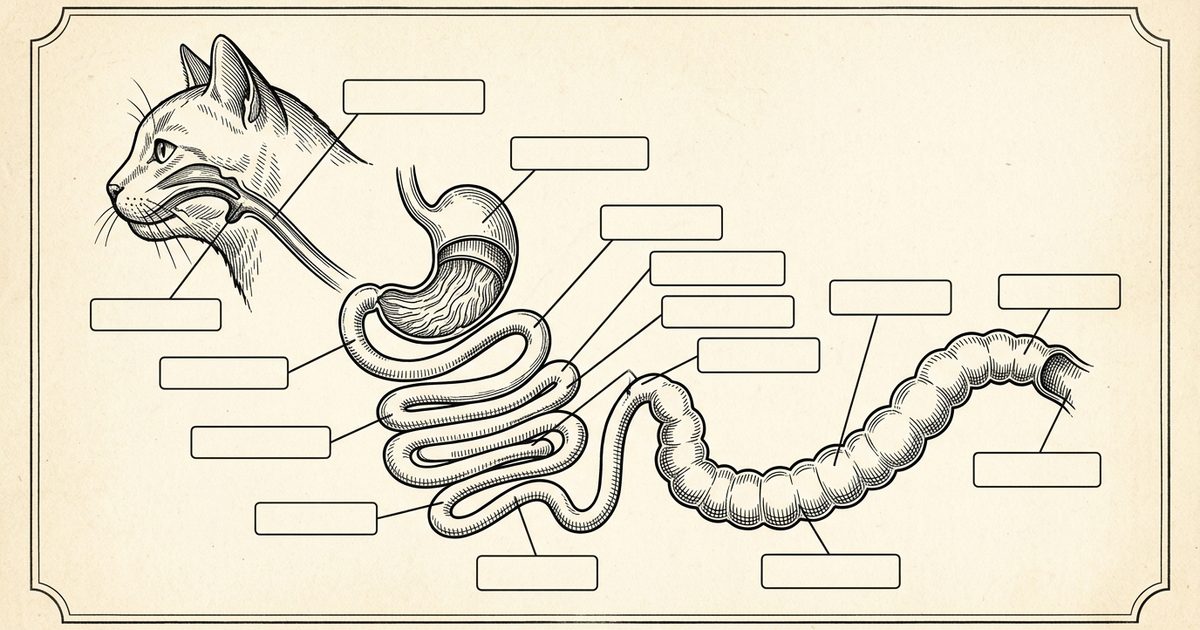
The larger share of feline flatulence is manufactured on-site, by the bacteria that live in your cat's large intestine. A cat's gut hosts a whole microbiome of microbes that help extract energy from food the small intestine couldn't fully digest. When fiber, certain sugars, and starches escape digestion upstream, they arrive in the colon and become a feast for those bacteria — and the byproduct of that fermentation is gas: methane, hydrogen, and small amounts of sulfur compounds.
This is why the composition of your cat's diet matters so much for how much gas it produces. High-fiber foods, carb-heavy meals, or treats loaded with plant starch give the colon's bacteria more fermentable substrate to work with, and more fermentation means more gas. It's also why a cat on a species-appropriate, well-balanced diet tends to produce less than one eating fillers and table scraps. International Cat Care explains that because cats are obligate carnivores, their digestive system is tuned for animal protein and fat — foods they ferment relatively efficiently — while carbohydrates are the substrate most likely to reach the colon undigested and trigger gas.
Why protein-heavy cat diets still produce some gas
Owners are sometimes surprised that a cat eating a high-meat, low-carb diet still farts at all. The reason is that protein isn't gas-free. Animal protein is rich in sulfur-containing amino acids like methionine and cysteine, and when bacteria break those down they release sulfur-based gases — the same compounds responsible for the more pungent end of the flatulence spectrum. A little of this is the entirely normal cost of digesting a meat-based diet, not a sign that the food is wrong or that something is off. A cat on a quality diet will produce modest amounts of gas from protein fermentation, and most of it will be mild enough that neither you nor the cat ever notices.
If your cat is suddenly gassy, the next section walks through the dietary causes — and most of them are simple to fix. For a related deep dive into why cats knead before settling in, see why cats knead.
Why Is My Cat Farting So Much? Common Causes
Excessive or sudden cat gas is almost always dietary: dairy (most adult cats are lactose-intolerant), high-fiber or carb-rich foods, abrupt food changes, food intolerance, eating too fast, and hairballs. Most of these causes are fixable at home with simple diet adjustments.
A step up from the occasional unremarkable fart to genuinely noticeable, frequent, or smelly gas usually points to something your cat ate — or how it ate it. The good news is that the vast majority of these triggers are benign and reversible, and once you identify which one is at play, the fix is often a small change in routine. Here are the most common culprits, in roughly the order owners encounter them.
Dairy and lactose intolerance
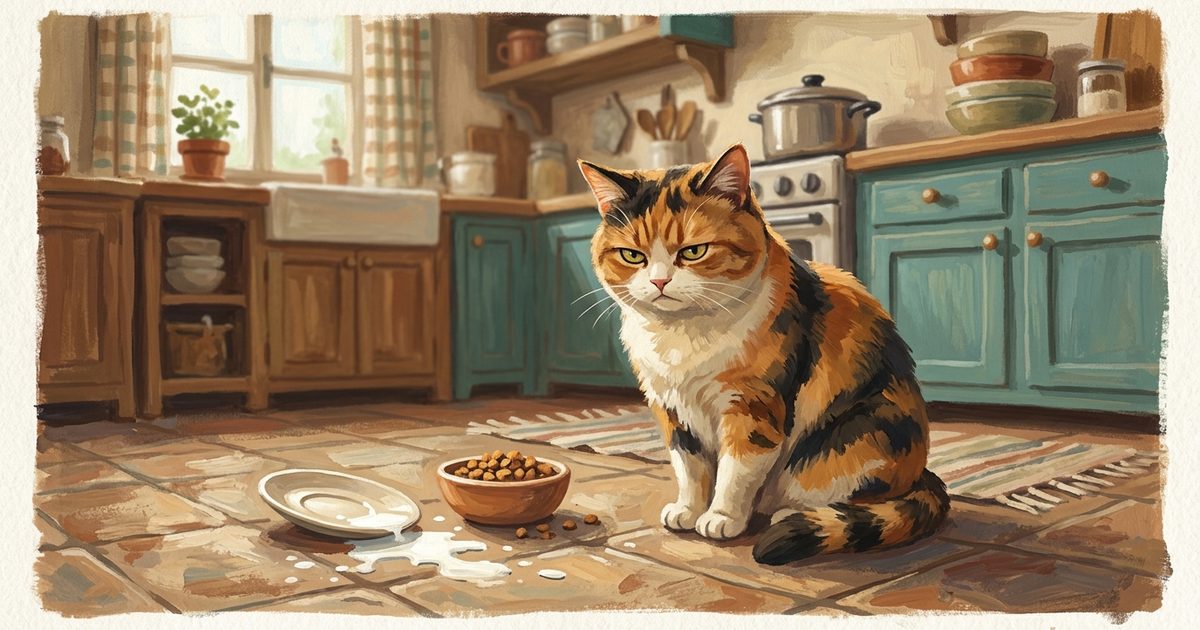
Dairy is the single most classic cause of cat gas, and it comes down to a simple enzymatic fact: most adult cats produce very little lactase, the enzyme needed to break down lactose, the sugar in milk. When a cat laps up a saucer of milk, a slice of cheese, or a dab of cream, that undigested lactose passes straight through to the colon, where bacteria ferment it enthusiastically — and gas is the result, often accompanied by diarrhea. This is the same lactose-intolerance mechanism at work in many adult humans. If you want to understand the full picture of whether cats can handle dairy safely, our deep-dive on whether cats can drink milk covers it in detail, and the same logic applies to whether cats can eat cheese. For a gassy cat, the first question worth asking is whether anyone in the household has been slipping it dairy treats.
High-fiber and carb-rich foods
Not all cat gas comes from the obviously rich stuff. Some commercial diets, dental treats, prescription weight-management foods, and even small nibbles of human food can be surprisingly high in fermentable carbohydrates and fiber. Bread, rice, certain vegetables, and the plant-based fillers in some budget kibbles all add substrate that reaches the colon undigested and feeds gas-producing bacteria. The relationship is straightforward: more fermentable material in, more gas out. If your cat has access to human foods like bread or leftovers containing rice, that alone can explain a sudden uptick in flatulence — even if the rest of its diet looks fine.
Abrupt food changes and food intolerance
A cat's gut microbiome is a delicate, adapted ecosystem. It calibrates itself over time to whatever diet the cat has been eating, and when that diet changes suddenly — a new brand, a new protein source, a switch from dry to wet — the existing bacterial population suddenly faces food it isn't optimized to process. The result is often a temporary burst of excess gas, sometimes with looser stools, while the microbiome rebalances itself. The fix is patience and gradual transition: mix the new food into the old in increasing proportions over 7–10 days rather than swapping overnight. That slow ramp lets the bacterial population adapt to new proteins and ingredients without the fermentation spike. Beyond simple transitions, some cats have genuine intolerances to specific ingredients, which can produce chronic low-grade gas — these are individual sensitivities rather than textbook allergies, and worth discussing with a vet if they persist rather than diagnosing at home.
Curious what your cat's tummy really thinks of dinner? Get a MeowMind reading — upload a photo and let her tell you, in her own words, what's brewing.
Eating too fast and hairballs
The last two common causes are mechanical rather than chemical. A cat that bolts its food swallows large gulps of air along with each mouthful — aerophagia again — and that air has to exit somewhere. Slowing the meal down with a puzzle feeder or a slow-feeder bowl often reduces gas noticeably, because the cat simply isn't taking in as much air. The second factor is fur. Cats are fastidious groomers, and swallowed hair doesn't always pass cleanly through the gut; it can irritate the stomach and intestines, contributing to mild upset and gas alongside the occasional hairball. The link runs through why cats groom so much in the first place — the more a cat grooms, the more fur it ingests.
Do Cat Farts Smell or Make Noise?
Most cat farts are silent and barely smell, because cats produce only small volumes of gas. But they can occasionally be audible and pungent — especially on protein- or sulfur-rich diets, after dairy, or during gut-microbiome shifts. Odor and frequency are the real signals to watch.
Because cats produce only small volumes of gas, pass it silently, and are discreet by nature, most owners never register a fart. What's worth your attention is the shift — gas becoming smellier, louder, or more frequent than usual. (This is also why most owners go years without ever noticing: cats are quiet, low-volume digesters by nature.)
When cat farts smell bad
So do cat farts smell? Yes — and when cat farts smell bad, the culprit is almost always chemistry. As gut bacteria ferment food residues in the colon, they release gases including sulfur compounds like hydrogen sulfide, which is the same molecule responsible for the infamous "rotten egg" odor. Protein-rich diets, with their sulfur-containing amino acids, naturally produce more of these odoriferous gases — a normal byproduct of digesting meat, not a sign the food is wrong. Dairy is the other classic trigger (dairy fermentation, covered above), and sudden food changes can do the same thing, temporarily shifting the gut microbiome toward more pungent fermentation. If your cat's gas suddenly reeks, diet is the first place to look.
Can cat farts be loud?
Occasionally, yes — and if you've heard your cat fart and jumped a little, you're not imagining things. Cats have the same basic sphincter anatomy as other mammals, and the physics of gas passing through a narrow opening is the same for them as for anyone else. Most of the time the volume is small enough that the release is silent, but a larger pocket of gas, or a particularly relaxed moment, can produce an audible sound. It's rare, it's usually harmless, and it often happens when a cat is deeply asleep or just waking up — the sphincter relaxes, and out it comes. If your cat looks mildly startled by its own noise, that's the full extent of the drama. Frequency, not volume, is what tells you whether anything is worth investigating.
Is My Cat's Gas Normal or a Sign of Illness?
Occasional mild gas in a bright, eating cat is normal and needs no action. Gas becomes a medical concern when it is persistent, suddenly foul-smelling, or accompanied by the red-flag cluster — diarrhea, vomiting, weight loss, appetite change, or lethargy — which warrants a vet visit.
When gas is nothing to worry about
Most cat flatulence is a harmless byproduct of normal digestion. If your cat farts occasionally, the smell is mild, and the gas lines up with something explainable — a richer meal, a new treat, a slice of stolen cheese — there's usually no reason for concern. The cat to worry about least is the one who is otherwise completely themselves: eating well, bright-eyed, playful, maintaining weight, using the litter box normally. In that picture, occasional gas is just digestion doing its job, the same way it does in any mammal. You don't need to fix it, and you don't need to feel guilty for the odd pungent moment after dinner.
Red-flag patterns
The signal that turns gas from "normal" into "worth a vet visit" is change plus company. Sudden-onset gas in a cat that never had it, gas that persists for more than a couple of weeks, or foul-smelling flatulence paired with other symptoms — diarrhea, vomiting, weight loss, loss of appetite, or lethargy — together these patterns can point to conditions like inflammatory bowel disease, intestinal parasites (such as giardia or worms), bacterial overgrowth, or a food allergy. When gas shows up alongside diarrhea or vomiting, the picture is no longer "a gassy cat" but a GI tract that's struggling with something specific. The vet diagnoses the cause; your job is to notice the cluster and make the call. Caught early, most of these conditions are very manageable. This is the same red-flag list referenced at the top of this article and again under When to call the vet.
Senior cats and chronic gas
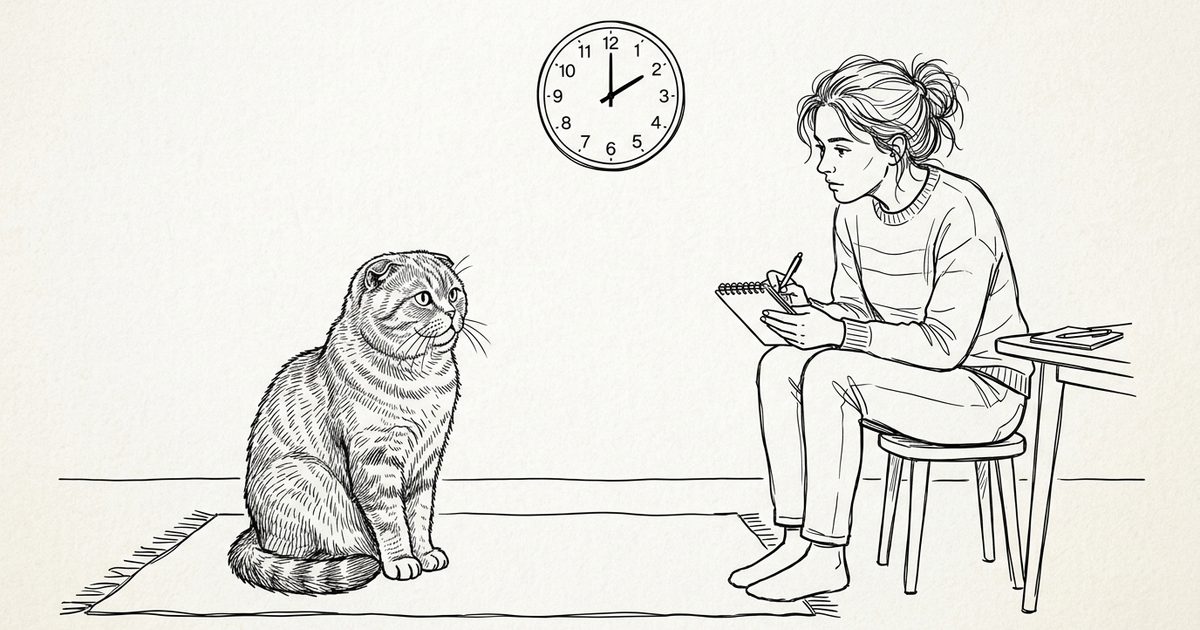
Older cats deserve a little extra attention. As cats age, their digestive tracts can become more sensitive, and chronic conditions — inflammatory bowel disease, food sensitivities, reduced digestive efficiency — become more common. A senior cat that develops persistent gas it never had before, even without other obvious symptoms, is worth a check. New or changing digestion in an older cat is often the first whisper of something a vet can address early, before it escalates. The Cornell Feline Health Center offers reliable guidance on feline digestive health and the behavior changes that signal it's time to call your vet — a good reference point whenever an older cat's habits shift. Trust the pattern over any single episode: one gassy evening is nothing, but a new normal is worth investigating.
How Can I Reduce My Cat's Gas?
To reduce cat gas, start with the diet: cut dairy, limit high-fiber treats, and feed a complete balanced food. Transition new foods gradually over 7-10 days, use a slow-feeder bowl if your cat eats fast, and see the vet if gas persists beyond a week or two.
Most cat flatulence is fixable at home, and the highest-leverage fixes are the simplest ones. Here's how to work through them in order.
Diet review and gradual transitions
This is where almost all excessive gas starts, and where it most often stops. Pull back dairy first — milk, cream, cheese, and yogurt are the classic triggers (dairy fermentation, covered above). Cut table scraps and random human-food nibbles too, since bread, rice, and other carbs add fermentable substrate that gut bacteria turn into gas. Instead, choose a complete and balanced commercial food suited to your cat's age and condition — kittens, adults, and seniors have different nutritional needs, and the right baseline diet prevents a lot of avoidable gas.
When you do change foods, transition gradually (see above) rather than swapping overnight. For the broader picture of what a healthy feline diet actually looks like, see our guide on what cats eat.
Slow-feeder bowls and portioning
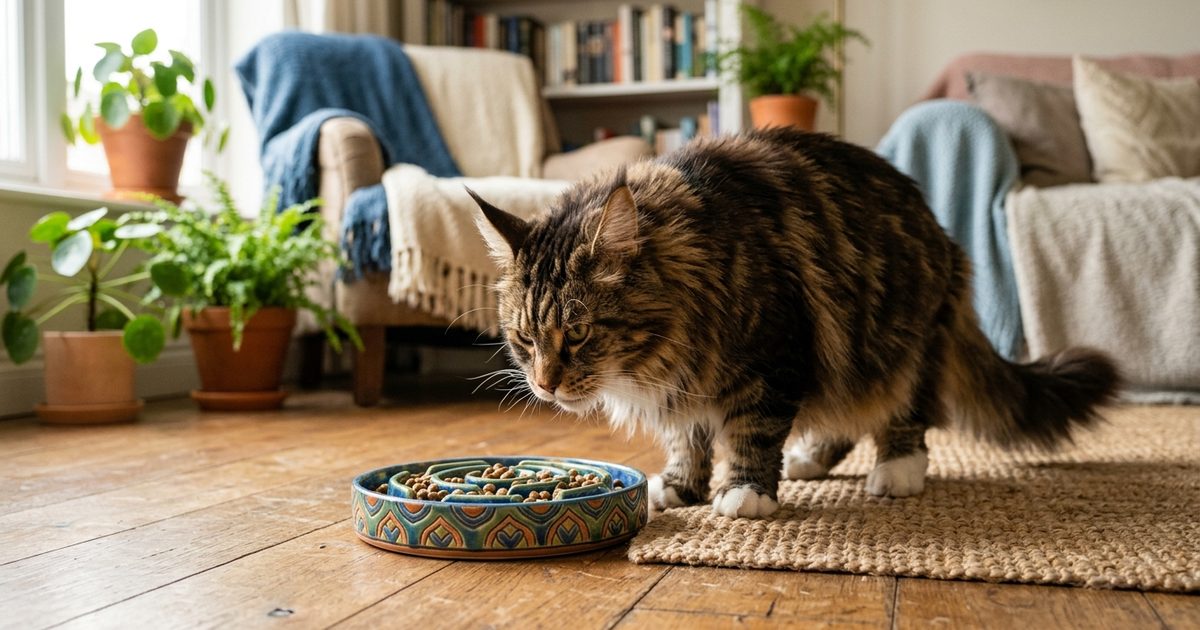
A slow-feeder bowl (introduced above) is the starting point for a fast eater. Beyond reducing swallowed air, the bigger lever is how you structure the meal. Dividing the daily portion into three or four smaller meals instead of one or two large ones means less food — and less air — taken in at a time. Food-dispensing mats and puzzle toys add a second layer, turning a thirty-second inhale into a slow foraging task that keeps the gut calm. These changes resolve a surprising amount of gas in fast eaters.
Probiotics and gut support
After a course of antibiotics, a bout of diarrhea, or a stressful dietary upset, the gut microbiome can end up out of balance — and that imbalance sometimes shows up as lingering gas. A vet-approved probiotic formulated for cats may help repopulate the beneficial bacteria and settle digestion back down. The key word is vet-approved: human probiotics and random pet-store products aren't standardized for feline guts, so ask your vet for a specific recommendation rather than DIY-ing it. Probiotics are a supporting tool, not a replacement for fixing the underlying diet.
When to call the vet
If you've cleaned up the diet, slowed the eating, given it a week or two, and the gas is still excessive, smelly, or frequent, it's time to stop troubleshooting at home and call your vet. The same goes for any red-flag signs appearing alongside the gas (see the red-flag patterns above). For the symptom-specific deep dives, see our articles on cat diarrhea and cat vomiting. The Cornell Feline Health Center also offers reliable guidance on when digestive changes warrant a veterinary visit.
Cat Fart at a Glance — Summary
| Question | Short answer |
|---|---|
| Do cats fart? | Yes — gas is a normal byproduct of feline digestion |
| Why do cats fart? | Swallowed air plus bacterial fermentation of undigested food in the colon |
| Why so much all of a sudden? | Usually diet — dairy, high-fiber foods, abrupt changes, or eating too fast |
| Do cat farts smell? | Often barely; can be pungent on sulfur- or dairy-heavy diets |
| Is gas normal or a sign of illness? | Occasional mild gas is normal; persistent foul gas with other signs needs a vet |
| How do I reduce it? | Diet review, slow transitions, slow-feeder bowl, vet-approved probiotic |
| When should I call the vet? | Gas lasting beyond 1-2 weeks despite diet fixes, or with diarrhea, vomiting, or weight loss |
Curious What Your Cat Would Say?
Upload a photo and get a warm, personalized reading from your cat's perspective.
Start Your Free ReadingFrequently Asked Questions
Do cats fart?
Yes. Cats produce intestinal gas as a normal byproduct of digestion, just like humans and dogs. Most cat gas is silent and barely noticeable, so many owners never realize it happens — but it absolutely does.
Why does my cat fart so much?
Sudden excessive gas is almost always dietary. The usual triggers are dairy (most adult cats are lactose-intolerant), high-fiber or carb-rich foods, abrupt food changes, eating too fast, or hairballs. Reviewing the diet usually reveals the culprit.
Do cat farts smell bad?
Often barely at all, but they can be pungent. Smellier gas usually comes from sulfur-rich proteins in meat, dairy fermentation, or a recent food change. Persistent foul gas alongside other symptoms warrants a vet visit.
Is it normal for cats to fart?
Occasional mild gas is completely normal in a cat that is eating, bright, and energetic. It becomes a concern only when it is persistent, suddenly foul-smelling, or paired with diarrhea, vomiting, weight loss, or lethargy.
Can cat farts be loud?
Rarely, yes. Cats have the same sphincter anatomy as other mammals, so a larger pocket of gas or a relaxed moment can produce an audible sound. It's usually harmless and tends to happen when a cat is deeply asleep or just waking.
What foods make cats gassy?
The top offenders are dairy (milk, cheese, cream), high-fiber or carb-rich foods like bread and rice, plant-based fillers in some budget kibbles, and any abrupt diet change. These give gut bacteria extra fermentable substrate to turn into gas.
How do I stop my cat from farting?
Cut dairy and table scraps, feed a complete balanced food, transition any new diet gradually over 7 to 10 days, and use a slow-feeder bowl if your cat eats fast. A vet-approved probiotic can help after antibiotics or gut upset.
When should I take my gassy cat to the vet?
If gas persists beyond a week or two despite diet fixes, or shows up with diarrhea, vomiting, weight loss, appetite change, or lethargy. These patterns can point to inflammatory bowel disease, parasites, or infection and need a proper diagnosis.
Sources & References
You Might Also Like
Kitten Teething: Timeline, Symptoms & How to Help
Kitten teething runs from 3 to 7 months as baby teeth fall out. Learn the timeline, signs to watch for, and how to soothe a teething kitten safely.
15 min readWhen Do Cats Stop Growing? A Complete Timeline
When do cats stop growing? Most cats reach adult size by 12-18 months, but large breeds like Maine Coons keep growing until 3-4 years. Full timeline inside.
14 min readCan Cats Eat Cherries? Flesh, Pit & Toxicity Facts
Can cats eat cherries? Pitted flesh is safe in tiny amounts — but the pit, stem, and leaves are toxic (cyanide precursors). Learn what's safe and what isn't.
15 min read