
Do Cats Like Being Kissed? The Honest Answer
So — do cats like kisses? It's one of the most common questions cat owners ask, and the honest answer is that most cats tolerate kisses rather than truly enjoy them. While we explore whether cats like being kissed, it helps to understand that cats don't instinctively know what kisses are — they learn, over time, to associate our human gesture with safety and affection. Do cats have feelings? Absolutely — they just express them on their own terms.
Key takeaways
- Most cats tolerate kisses rather than truly enjoy them — stillness is often acceptance, not pleasure.
- Cats show love their own way — the slow blink, the head-bunt, the purr against you. See the full catalog of feline affection.
- Watch the body language and respect the cat's preference — your cat will tell you, if you know how to read it.
Reading Your Cat During a Kiss — Quick Reference
| Sign | What it means | Keep kissing? |
|---|---|---|
| Leans in, purrs | Genuine acceptance | Yes, gently |
| Holds still, no lean | Tolerance, not enjoyment | Ease off |
| Turns head away | Mild discomfort | Stop soon |
| Ears back, tail flick | Clear discomfort | Stop now |
| Growl, swat, pull back | Hates it | Never |
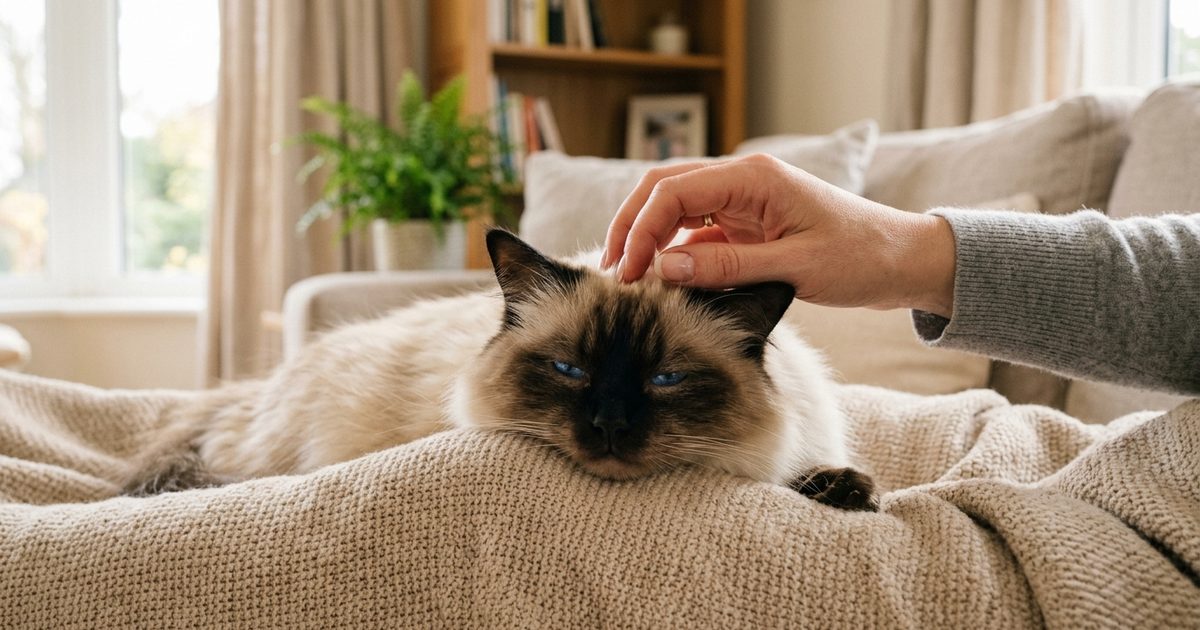
Do Cats Like Being Kissed?
Most cats do not genuinely enjoy being kissed the way dogs often do — many tolerate it, a few accept it from trusted people, and only rare individuals actively seek out face contact. Whether a cat likes kisses depends on personality, early handling, and how the human delivers them.
Tolerance is not the same as enjoyment
The most common mistake people make is reading stillness as pleasure. A cat that holds still while you lean in for a kiss is very often choosing not to flee — not choosing to be kissed. Cats freeze when they feel cornered or uncertain; it's a low-grade stress response, a way of waiting the moment out. Holding still and genuinely enjoying something look nearly identical to a human watching, which is why so many owners are convinced their cat "loves" kisses when the cat is, in fact, simply enduring them.
This is the core reason the question "do cats like being kissed" has such a messy answer: absence of resistance is not presence of pleasure. The cat that sits motionless under your kiss may be relaxed, or it may be tolerating the interaction because the alternatives — pulling away, swatting, leaving — feel more costly to it in that moment. International Cat Care reminds owners that cats prefer to control contact on their own terms, and a cat that can't easily leave usually won't.
Some cats do learn to accept it
That said, it isn't uniformly negative. Cats that were handled gently and consistently from kittenhood, cats deeply bonded to one particular person, and cats with naturally placid temperaments can — and do — lean into a kiss rather than away from it. A cat that purrs, softens its eyes, or presses closer while you kiss the top of its head is giving you genuine acceptance, not just tolerance.
The honest framing is that this varies by individual. Some Ragdolls, with their famously floppy, people-oriented temperament, are more likely to accept close face contact than a more reserved breed, but personality within a breed matters more than the breed label itself. Generalize, don't promise: a cat can come to enjoy kisses from a trusted person, but nothing about being a cat makes that the default.
Do cats know what kisses mean?
Here's where it helps to be precise about what cats actually understand. A kiss is a human symbol for love. Cats don't instinctively read a kiss as affection — there is no feline gesture shaped like a kiss, so the meaning has to be learned. Through repetition, a cat can come to associate this particular human motion with safety, warmth, and a person it trusts. Over time, "do cats know what kisses are" gets a qualified yes: they learn the association, the way they learn that the can-opener sound predicts food.
What they don't acquire is the symbolic meaning we attach to it. Your cat isn't thinking "this is love" when you kiss her head; she's thinking, roughly, "this gesture from this person has always been safe before." It's an acquired, personal meaning — not a feline one — and it only develops with a cat who already trusts you. For a deeper look at how cats form emotional bonds, see our article on whether cats have feelings.
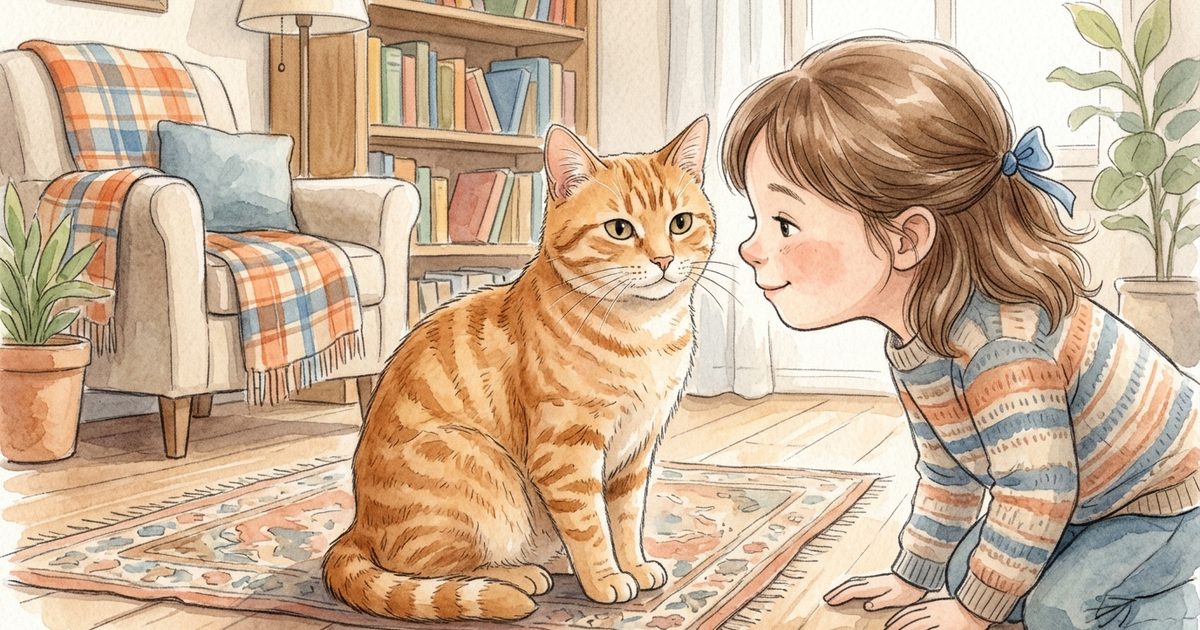
How Do Cats Show Affection Instead?
Cats show love through their own gestures, not ours — the slow blink, the head-bunt, purring against you, and grooming. Kissing is a human behavior; feline affection has its own vocabulary that cats use with each other and with the humans they trust.
The slow blink — a cat kiss
If there's a feline equivalent of a kiss, it's the slow blink. When a cat looks at you, half-closes its eyes, and slowly opens them again, that deliberate, relaxed gesture is one of the clearest signs of trust and affection in the feline repertoire. Cats don't half-close their eyes near something they perceive as a threat — exposing their vision that way is a vulnerability they only offer where they feel safe.
You can do it back. Sit at your cat's eye level, make soft eye contact, and slowly close and open your eyes. Many cats will return the gesture, and over time the exchange becomes a quiet back-and-forth between the two of you. It's a way of saying "I love you" in the cat's own language rather than imposing yours. To understand why a soft, half-lidded gaze means the opposite of a hard stare, see our piece on why cats stare.
Head-bunting and rubbing
When a cat bumps its forehead against your shin, your hand, or your face, that's a head-bunt — and it's affection with a purpose. Cats have scent glands along their cheeks, chin, forehead, and the base of the tail. By pressing into you, they're depositing pheromones that mark you as familiar, safe, and theirs. It's the same gesture they use on cats they live with peacefully.
So a head-bunt isn't just cute; it's a cat publicly filing you under "mine." The rubbing that follows — along your legs, against a corner of furniture you're near — extends that signature. We go deeper into this in our article on why cats rub against your legs, but the short version is: when your cat claims you with its scent, that's feline love language in action.
Purring, grooming, and following
The remaining affection signals are quieter but just as meaningful. A cat that settles beside you and purrs is choosing your proximity as its resting place — a genuine vote of confidence, since cats only relax fully where they feel safe. Read more on what that purr is actually communicating. A cat that licks your hand or hair is grooming you the way it would groom a trusted companion, which is exactly why we cover why your cat licks you as its own topic. And a cat that follows you from room to room isn't being needy — it's keeping a loved one in sight.
None of these gestures look like a kiss, and that's the point. Cats have a complete vocabulary of affection that predates humans entirely. For the full catalog of how cats say "I love you" in their own way — beyond just the gestures here — see our guide on how cats show affection.
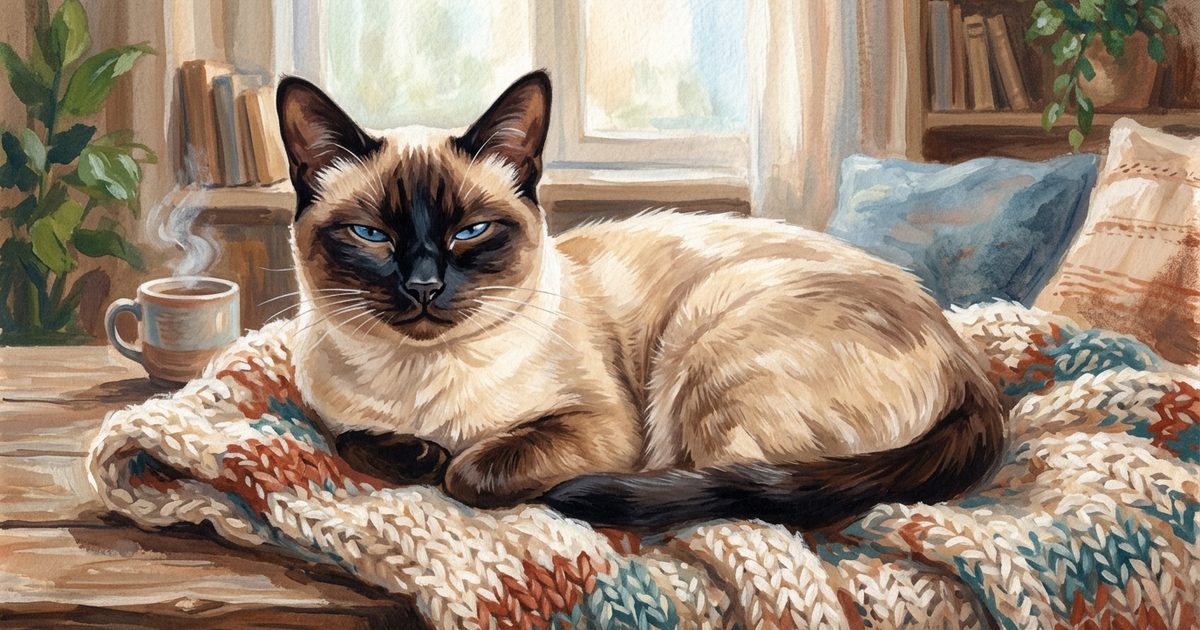
Why Do Some Cats Dislike Being Kissed?
Face-to-face contact feels confrontational to a cat — a human face looming toward theirs reads as a threat in feline body language. Add restraint, the breath on their sensitive face, and being held still, and many cats find kissing stressful even from a loved owner.
Face-to-face is cat confrontation
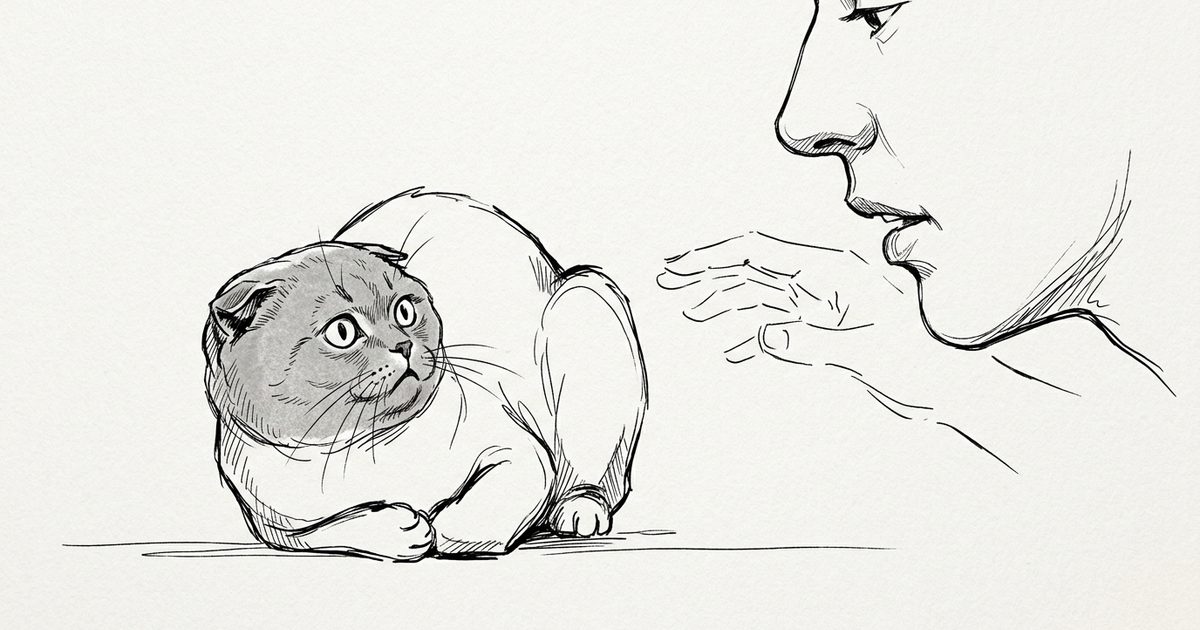
To a cat, a face coming straight at theirs doesn't look like affection — it looks like another feline squaring up. Direct eye contact, a looming head, and forward body posture are the exact signals cats use when they're about to challenge one another. That's why your cat instinctively pulls back, turns away, or flattens their ears the moment you lean in. It isn't rejection of you; it's a reflex built from thousands of years of social survival. If you want to read the warning signs before a kiss attempt goes wrong, our cat body language guide breaks down the threat-face, the slow blink, and every signal in between.
The restraint problem
Here's the part most owners miss: for many cats, the stress isn't the kiss itself — it's being trapped. Cats are escape-driven by nature, and when you hold them still or pin them gently to deliver a kiss, you remove their exit. A cat who can't leave is a cat who can't feel safe, no matter how much they trust you. The fix is simple: let them stay free to walk away, and the same cat may accept a kiss they'd otherwise refuse.
Sensory overload
A human face is a sensory bomb to a cat. Your breath, your scent, your skin warmth, and your closeness all land on a muzzle packed with sensitive whiskers that map the world in fine detail. For a laid-back cat this is manageable; for a shy or highly reactive one, it's simply too much input at once. Sensitive cats aren't being difficult — they're processing more than you realise.
Get a MeowMind reading — ever wonder whether your cat secretly loves your kisses or just puts up with them? Upload a photo and hear what your cat actually feels about your affection, in her own words.
Is Your Cat Tolerating or Hating the Kiss?
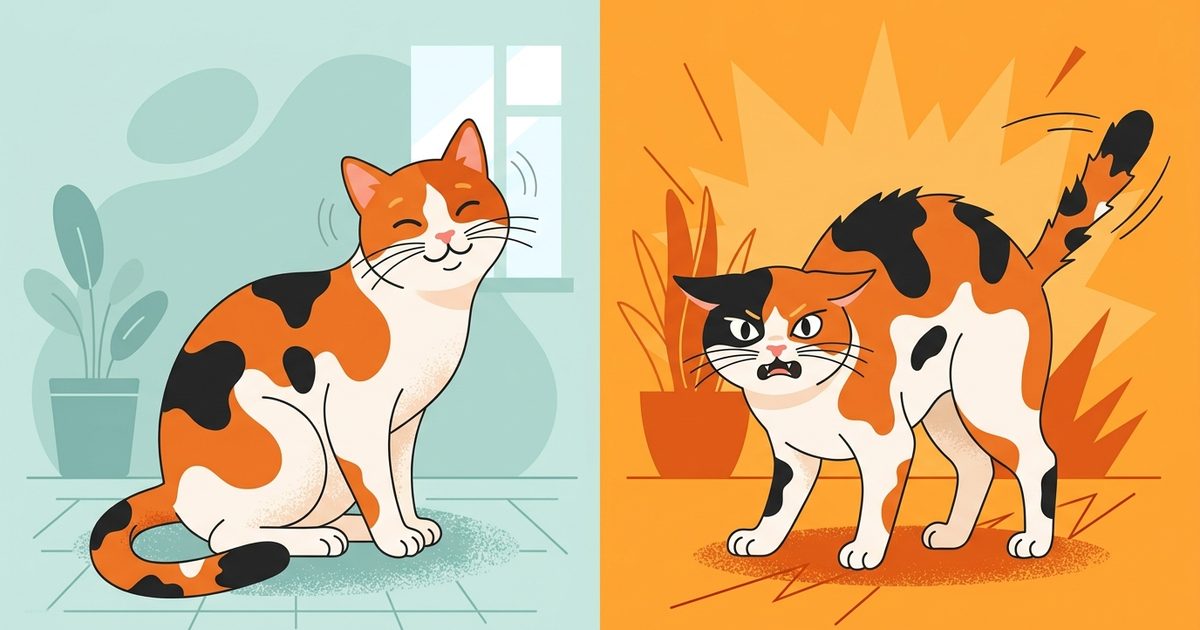
A cat that tolerates kissing stays still but neutral — no lean, no purr, often a slow turn of the head away. A cat that hates it flattens its ears, flicks or lashes its tail, tenses its body, pulls back, or swats. Read the whole cat, not just the face.
The single most useful skill you can build around kissing your cat is telling the difference between puts up with it and genuinely doesn't mind. Cats rarely telegraph discomfort the way dogs do — a quiet, still cat is not automatically a content cat. The signals are in the ears, the tail, the eyes, and whether the cat is leaning toward you or away from you. Below is a traffic-light breakdown to help you read what your cat is actually telling you in the moment.
Green-light signs
A cat that is genuinely okay with the kiss will lean into the contact rather than endure it. Look for a soft, relaxed face with half-closed eyes or a true slow blink — the feline equivalent of a kiss back. Purring, a loose body, ears facing forward, and a tail that's still or gently swaying all signal comfort. The clearest green light of all: the cat comes back for more after you stop, or nudges your face with its own. That's not tolerance; that's an invitation. If you see these signs, your cat is one of the few who has genuinely accepted the gesture from you.
Yellow-light signs
Yellow-light cats hold still but don't engage. They aren't fleeing, but they aren't leaning in either — the body is neutral, the eyes are open and watchful, and you may notice the head slowly turning away or one ear rotated to the side. There may be a single, deliberate tail flick. None of this is aggression; it's the polite feline version of "I'd rather you didn't." When you see yellow, ease off. Don't escalate, don't hold the cat in place, and give it the option to leave. Pushing a yellow-light cat into a red-light situation is how trust quietly erodes over time.
Red-light signs
Red-light signs are unambiguous, and the correct response is always the same: stop immediately and let the cat leave. Watch for ears flattened sideways or pinned back, a tail lashing or thumping, widely dilated pupils, a tense or rigid body, and the head pulling sharply back from yours. Hissing, growling, a swat, or a bite are the final, unmistakable warnings — by the time you see them, the cat has already tried every quieter signal first. International Cat Care, a leading authority on feline welfare, emphasizes that these defensive signals are the cat asking for space in the only language it has. Honoring that request is how you keep the relationship intact.
Safer Ways to Show Your Cat Love
Let your cat initiate contact — offer a hand and let the cat close the distance. Slow-blink back, pet where cats usually enjoy it (cheeks, chin, base of ears), and keep any kissing to the top of the head rather than the face. Respect is the real affection.
If the kissing question has you second-guessing how to show your cat you love it, the good news is that cats give us clear, reliable channels for affection — they just aren't the human ones. The approaches below work for nearly every cat, including the ones that hate being kissed, and they tend to deepen the bond faster than any imposed gesture.
Let the cat come to you
The most powerful affection move with a cat is also the simplest: offer an extended finger or a relaxed hand, and let the cat decide whether to close the gap. The cat will usually sniff first, then either rub its cheek against your finger (yes) or simply look away and move on (not right now). This consent-first ritual builds trust precisely because the cat retains the choice — there's no looming face, no restraint, no surprise. Cats are control-oriented animals, and affection that honors their autonomy tends to be rewarded with more of it over time, not less.
Pet where cats like it
Most cats have reliable safe zones: the cheeks, the chin, the base of the ears, and — for some cats — the top of the head and the base of the tail. These are the same areas cats groom and rub on each other, so they map onto the feline affection vocabulary rather than fighting it. Avoid the belly (a vulnerable zone even for cats that roll over) and the paws. If you're curious why your cat licks you in return, that reciprocal grooming is the cat's version of the same channel — see why does my cat lick me — and the full catalog of feline love signals lives in our guide on how cats show affection.
If you do kiss, kiss the head
If kissing matters to you and your cat tolerates it, the top of the head or the forehead is the least confrontational spot — far less threatening than the face, eyes, or mouth, which read as direct challenge in feline body language. Keep it brief and gentle, and — most importantly — watch the reaction right after. If the cat stays relaxed or leans back into you, the gesture landed. If it tenses, flicks a tail, or quietly steps away, you have your answer for next time. The goal isn't to stop loving your cat; it's to love it in a language it can actually read.
Is It Safe to Kiss Your Cat?
For most healthy adults, kissing a cat is safe — avoid the eyes, mouth, and any wounds, and wash your face after. For babies, the immunocompromised, and pregnant people, vets advise against mouth and face contact because of bacteria and parasites.
Where not to kiss
Keep your kisses to the fur on the top of the head, and steer clear of three spots. The eyes are the main one — cats carry bacteria that can cause conjunctivitis, and a kiss near the eye is an easy route for infection. The mouth and lips are the second, because the bacteria in a cat's mouth are not the bacteria you want in yours, and the transfer goes both ways. The third is any broken skin on you or the cat — a cut, a scratch, a sore — which is an open door for infection in either direction. If you want a simple rule: kiss fur, not membranes. The Cornell Feline Health Center covers zoonotic disease and everyday hygiene around cats in more depth, and it's a good reference if you want the full picture.
Who should be more careful
Some people should treat face contact with a cat as a cautious thing rather than a casual one. Pregnant people have a specific reason — toxoplasmosis, a parasite cats can shed in their feces, is the one genuine caution around cats in pregnancy, and the conservative move is to skip mouth-and-face contact and let someone else handle the litter box. Infants, whose immune systems are still developing, and anyone on immunosuppressants or living with a condition that weakens immunity, should also keep kisses to the top of the head and wash their hands after. This is caution, not alarm — most cats living indoors are low-risk, and the goal is sensible hygiene, not fear. If anyone in your household falls into one of these groups, your vet is the right guide for your specific situation, because they know your cat and your household.
Kissing Your Cat — Quick Summary
| Question | Short answer |
|---|---|
| Do cats like being kissed? | Most tolerate it rather than enjoy it; a few learn to accept it from trusted people |
| Do cats know what kisses mean? | Not instinctively — they learn the gesture predicts safety through repetition |
| How do cats show love instead? | Slow blink, head-bunt, purring, grooming, and following you |
| How do I tell if my cat hates it? | Ears flat, tail lashing, turning away, tensing — read the whole body |
| Where is it safe to kiss a cat? | The fur on the top of the head — avoid eyes, mouth, and broken skin |
| Should I stop kissing my cat? | Only if the cat dislikes it; otherwise keep it gentle and let the cat choose |
Curious What Your Cat Would Say?
Upload a photo and get a warm, personalized reading from your cat's perspective.
Start Your Free ReadingFrequently Asked Questions
Do cats like being kissed on the lips?
Most cats do not enjoy being kissed on the lips. Lips and mouth area carry bacteria, and direct mouth contact feels invasive in feline body language. If you want to kiss your cat, the top of the head or forehead is far better received than the face or mouth.
Do cats understand what a kiss means?
Not instinctively. Cats have no equivalent gesture of their own, so a kiss has to be learned through repetition — the cat comes to associate this particular human motion with safety and a person it trusts. It's an acquired personal meaning, not a feline one.
Why does my cat pull away when I kiss it?
A human face looming toward a cat reads as confrontation in feline body language — the same signals cats use when squaring up with each other. Pulling away is a polite request for space, not rejection of you personally. Let the cat come to you instead.
How can I tell if my cat likes being kissed?
Read the whole cat, not just the stillness. A cat that genuinely accepts a kiss leans in, purrs, softens its eyes, and may come back for more. A cat that only tolerates it holds still but neutral, often turning its head slowly away — that's tolerance, not enjoyment.
Where do cats like to be kissed?
If your cat tolerates kisses, the top of the head or forehead is the least confrontational spot. Avoid the face, eyes, mouth, and any broken skin. Some cats accept a brief kiss on the head; very few actively seek out closer face contact.
Is it safe to kiss my cat on the face?
For most healthy adults, kissing the fur on top of the head is safe — just avoid the eyes, mouth, and any wounds, and wash your face after. Pregnant people, infants, and anyone immunocompromised should keep kisses to the head and be extra cautious.
How do cats show love if not with kisses?
Cats show love through their own gestures: the slow blink, head-bunting and rubbing, purring beside you, grooming you, and following you from room to room. Kissing is human; feline affection has its own complete vocabulary that cats use with trusted people.
Should I stop kissing my cat?
Only if the cat dislikes it. Watch the body language — if your cat leans in and relaxes, a gentle kiss on the head is fine. If it flattens its ears, lashes its tail, or pulls away, respect that and show love the feline way instead, with slow blinks and petting the safe zones.
Sources & References
You Might Also Like
Kitten Teething: Timeline, Symptoms & How to Help
Kitten teething runs from 3 to 7 months as baby teeth fall out. Learn the timeline, signs to watch for, and how to soothe a teething kitten safely.
15 min readWhen Do Cats Stop Growing? A Complete Timeline
When do cats stop growing? Most cats reach adult size by 12-18 months, but large breeds like Maine Coons keep growing until 3-4 years. Full timeline inside.
14 min readCan Cats Eat Cherries? Flesh, Pit & Toxicity Facts
Can cats eat cherries? Pitted flesh is safe in tiny amounts — but the pit, stem, and leaves are toxic (cyanide precursors). Learn what's safe and what isn't.
15 min read